And why serious foodies should venture North of the border
By Sophie Brissaud for Luxeat Guide.
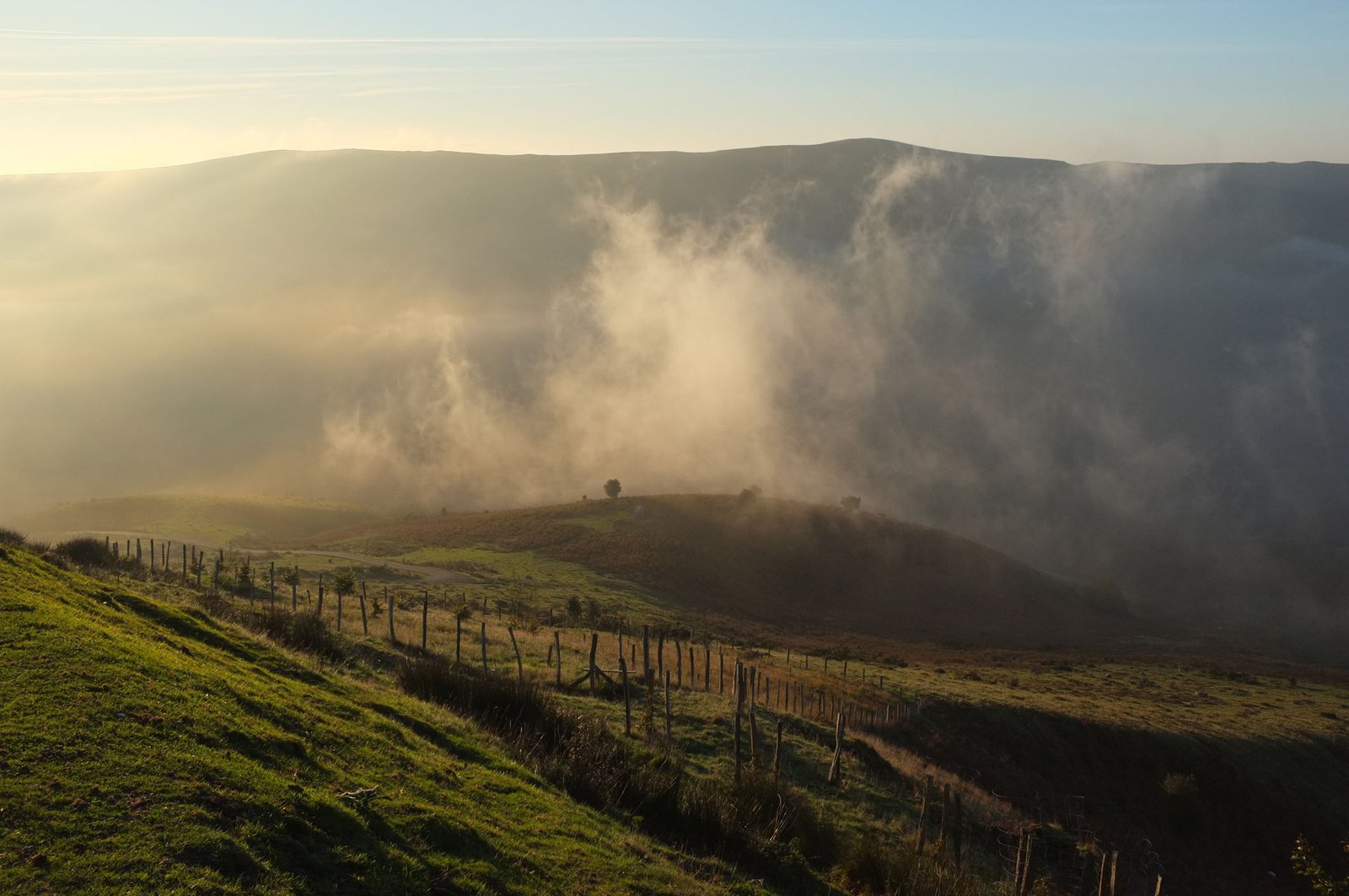
On a late afternoon of June 2012, I was ascending the col de Mehatze, a mountain pass in Larrau (Pyrénées-Atlantiques, France). It was a very Basque scenery: high hills covered with short, very green grass, the wind carrying the chime of sheep bells, and pottoka (small, semi-wild horses) roaming freely here and there. At a distance, the Pyrénées were still snowcapped. While the sheep, as they usually do, were minding their own business, the pottoka were gathering around me, gently poking me with their nose in case I had brought something to eat. Very cheeky for wild horses, I thought. Walking alongside me, a young man from nearby Saint-Jean-Pied-de-Port explained to me that pottoka have become familiar with tourists and the chunks of bread in their pockets. As wild as the place was, mass tourism refused to be forgotten.
He pointed to a small cubic stone barely emerging from the ground. “This, he said, is a border.”
“Right, the Spanish border”, I said absent-mindedly.
“We don’t talk like this here”, he said in a still soft, but firm voice.
The glorious Basque South, the humbler North
Following that trek to Mehatze, I stepped on eggshells for a few days trying to learn the linguistic subtleties of local topography. The Basque Country, el Pais Vasco, le pays Basque, Euskal Herria, covers a total of 20,700 square kilometers along the Bay of Biscay, overlapping France and Spain, and that’s how far the state-naming will go. The Basque people do acknowledge the legal and economic differences between both sides, but to them, there’s only one Basque country. Same language (with local dialects), same culture, and similar food. So how do you name it, really? In Basque, Egoalde is the South and Iparalde is the North. But if you don’t speak Basque? As a fish wholesaler in Saint-Jean-de-Luz told me, “We say ‘South pays Basque’ and ‘North pays Basque’. Or ‘up here’ and ‘down there’, or even ‘here’ and ‘there’ depending on which side of the border you’re on.” NEVER say, as nearly everyone in non-Basque France does, “pays Basque français” and “pays Basque espagnol”. You won’t be strangled on the spot if you do, but you’ll be met with a typical lowering of the chin, sharp look, and heavy silence.
If you wish to visit the Pays Basque (the one in the North), you’ve been warned. Egoalde, the South, is about seven times as large as Iparalde, the North, and is divided into four provinces: Guipúzcoa, Alava (Araba), Biscay (Bizcaia), and Navarra (Nafarroa). North pays Basque is divided into three provinces: Labourd (Lapurdi), Basse Navarre (Behe Nafarroa), and Soule (Zuberoa). And great food is something important that they do have in common.
NEVER say, as nearly everyone in non-Basque France does, “pays Basque français” and “pays Basque espagnol”. You won’t be strangled on the spot if you do, but you’ll be met with a typical lowering of the chin, sharp look, and heavy silence.
North Pays Basque is, nevertheless, overlooked by international food lovers, the South getting most of the attention, if not all. The North attracts more visitors from “up there in France”. Is the food really better down South? No, but it is more internationally famous, with zillions of foodies gobbling up pintxos in San Sebastian or Bilbao, feasting on grilled turbot in Getaria, enjoying kokotxas (cod chins) and txuletas (grilled beef ribs). It is quite remarkable that they never, or hardly ever, go North of the border to satisfy their tastebuds, and generally know very little about the place. They could claim that there’s already enough to eat on the South side, but they’re missing out.
Humbler, but not without charm (and taste)
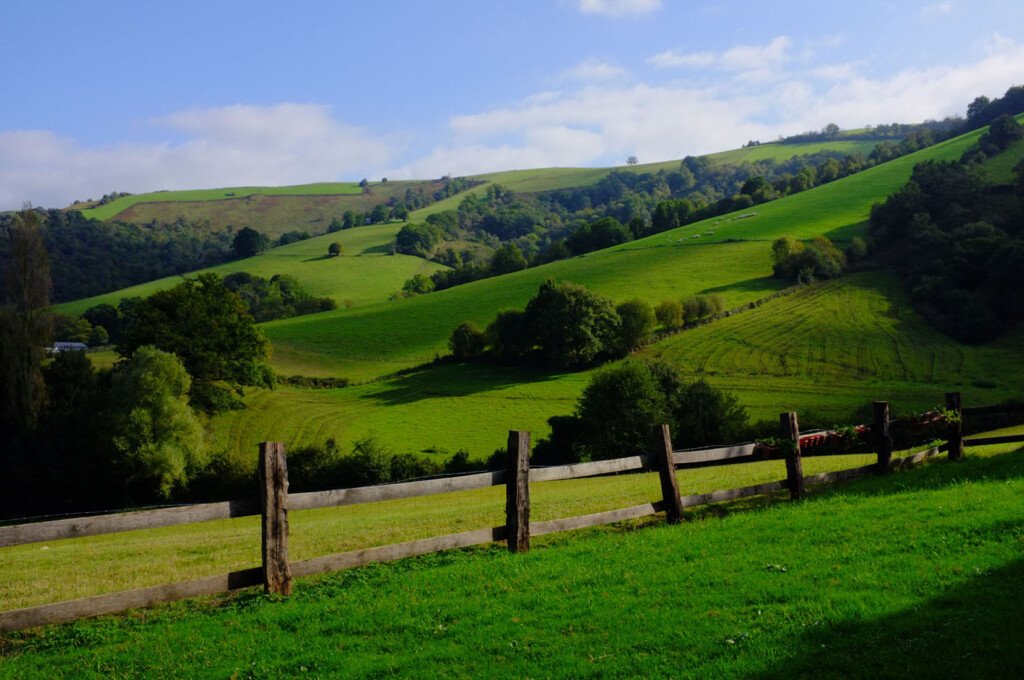
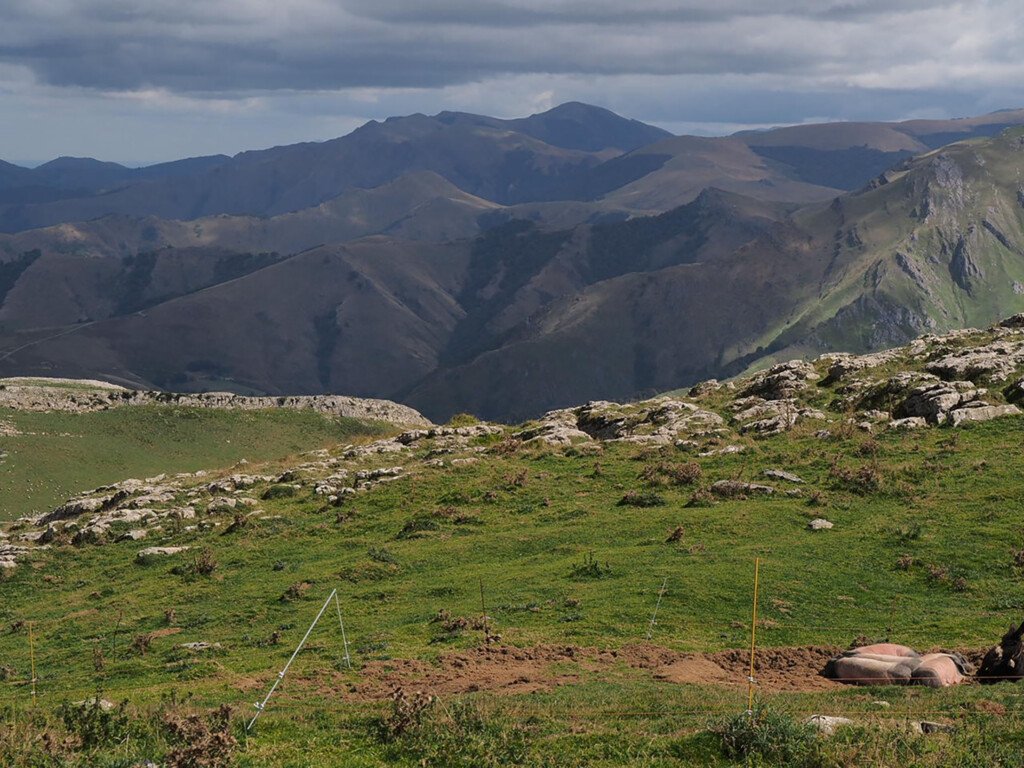
The scenery of Iparalde, the pays Basque – okay, the part that’s in France -, is slightly different from the South: long sandy beaches, a narrow coastal plain (much narrower than below the border), incredibly green pastures on soft rolling hills covered with sheep (plus a few cows and goats), and the Pyrénées in-between. The North Pays Basque is earthier, less urban and less industrially developed than the South. It is also, in terms of economy, distinctly poorer. This explains one of its main charms: its strong rural and agricultural character, with plenty of great food products, recipes and local specialties.
The hinterland is very alive with sheep farms, estives (Summer mountain retreats for sheep and their shepherds), vegetable gardens, green pastures and fruit orchards. You won’t find a village without at least one café-restaurant, and every one of them will probably be from very good to excellent. It will have a large, shady terrace or inner garden to eat and drink alfresco.
If the main cities of the North Pays Basque are worth visiting for their gorgeous beauty, their food markets and their restaurants, it would be a shame not to venture inland and discover that green, cool splendor. If you stick to the coast, from North to South, Biarritz shows up first. It used to be very popular during the Belle Époque and Art Deco eras, and has remained an elegant seaside resort, now cherished by surfers. It is possibly the most urban place in the North pays Basque; other cities tend to have a more rural atmosophere.
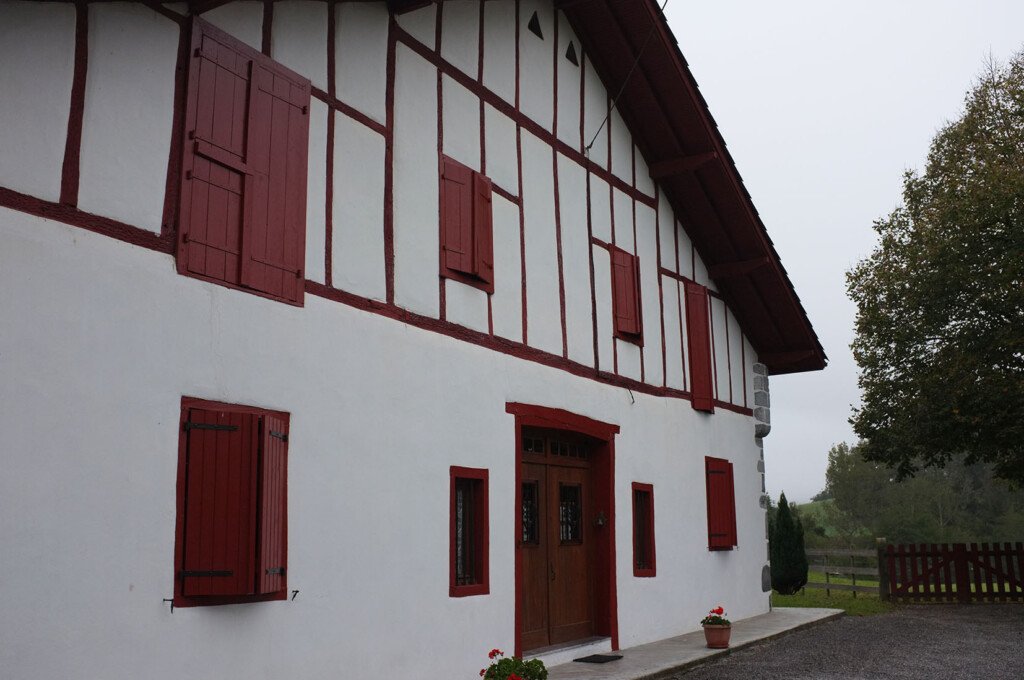
This is the case of Bayonne, with its lovely historical center built around the Nive river. Closer to the border, Saint-Jean-de-Luz and Ciboure are twin cities separated by a river. They both have the most spectacular local architecture of large half-timbered houses, a classic Basque style which can also be admired in the countryside. For instance in the beautiful mountain village of Saint-Jean-Pied-de-Port, quite worth visiting, not only because it is a good starting point for seeing the mountains and the pastoral estives, but also because it is also the original terroir of the best local wine, Irouléguy, which has known a great increase of quality in recent years.
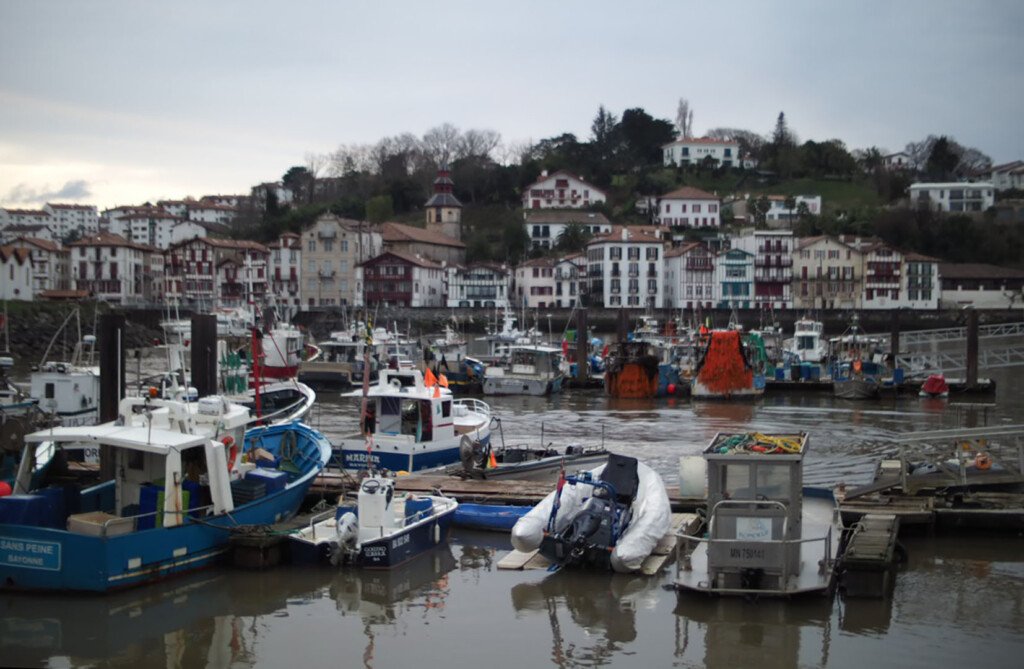
The food products of North Pays Basque
Yes, of course, the North also eats pintxos (Basque tapas). There may not be as many pintxo bars as there are in the South, but they’re just as delicious and, at times, innovative. What North and South also have in common is asadores (grill houses where delicious beef and fish may be enjoyed), apple cider (the sharp sagarno or apple wine), patxaran (a traditional drink obtained by macerating wild sloes in anise spirit), plenty of chocolate (chocolate entered France from Spain through Bayonne in the 17th century), and delicious peppers. However, are there some things, foodwise, that the North Pays Basque does better than the South? Indeed, there are a few.
Is the food really better down South? No, but it is more internationally famous, with zillions of foodies gobbling up pintxos in San Sebastian or Bilbao, feasting on grilled turbot in Getaria, enjoying kokotxas (cod chins) and txuletas (grilled beef ribs).
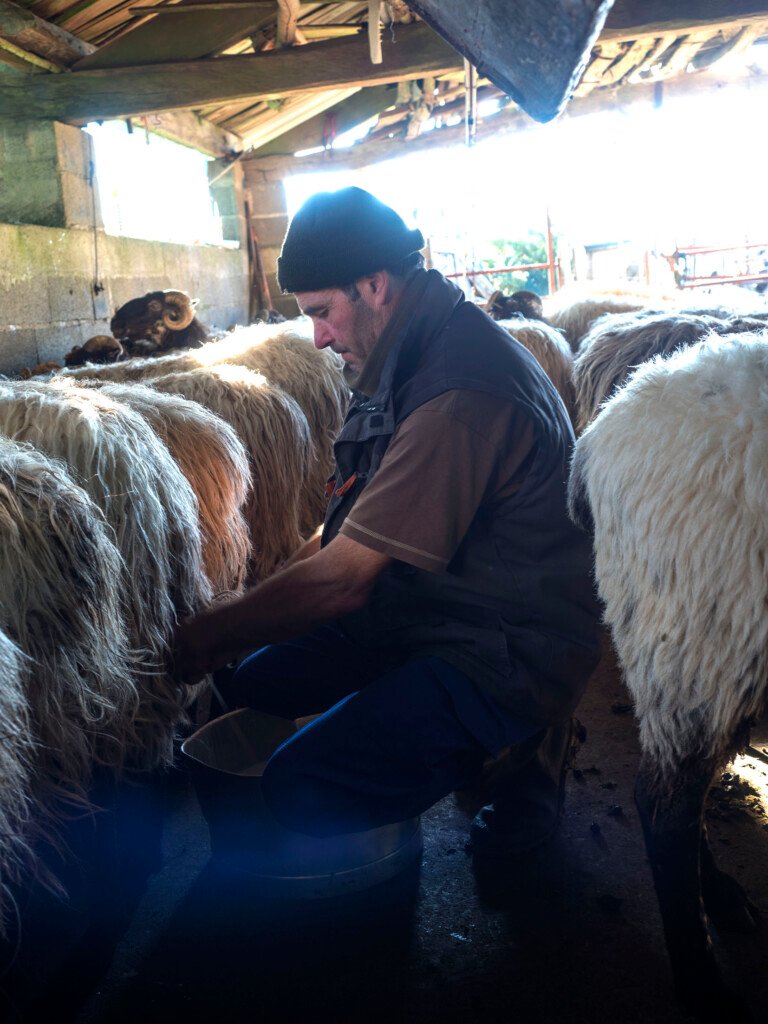
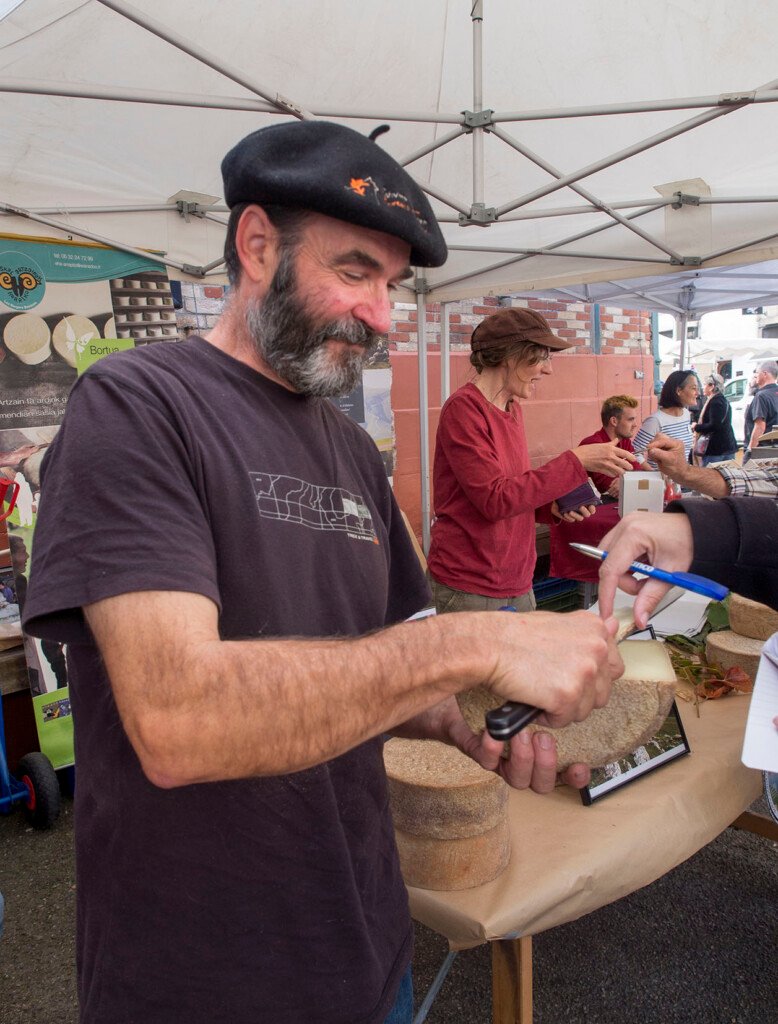
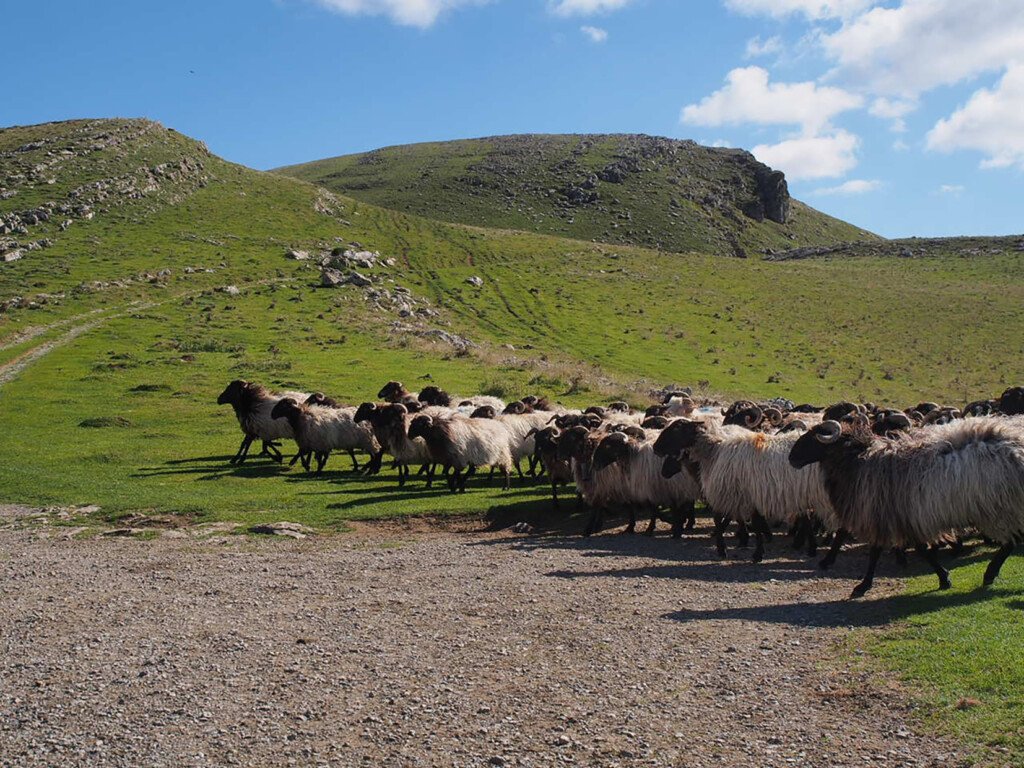
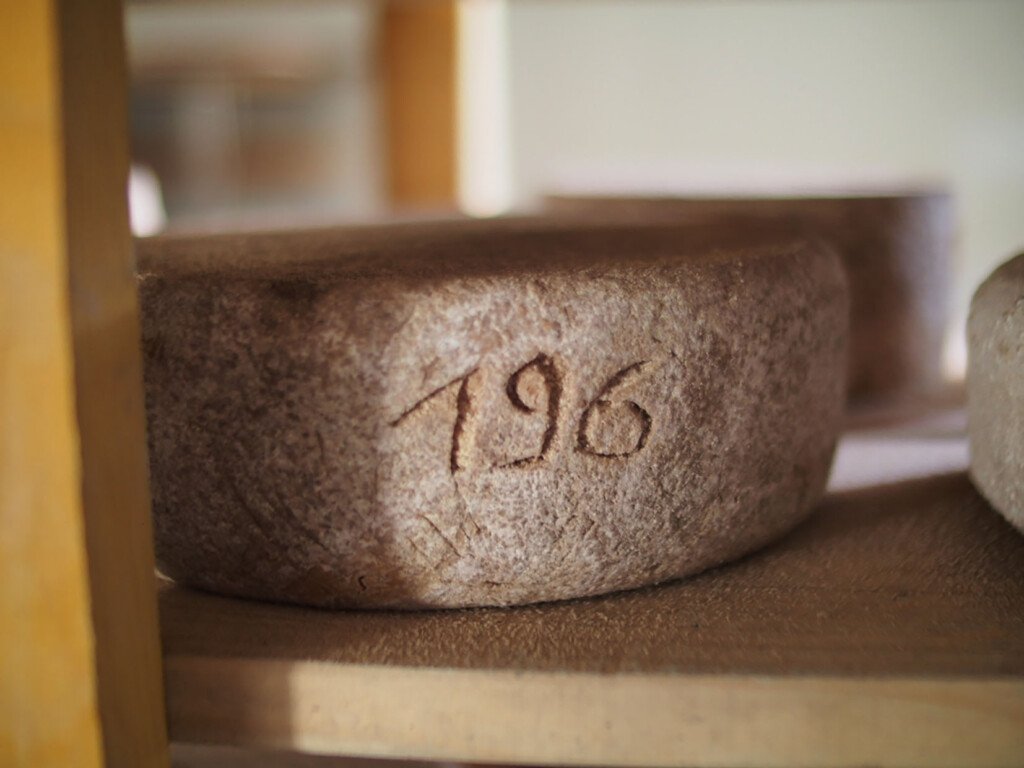
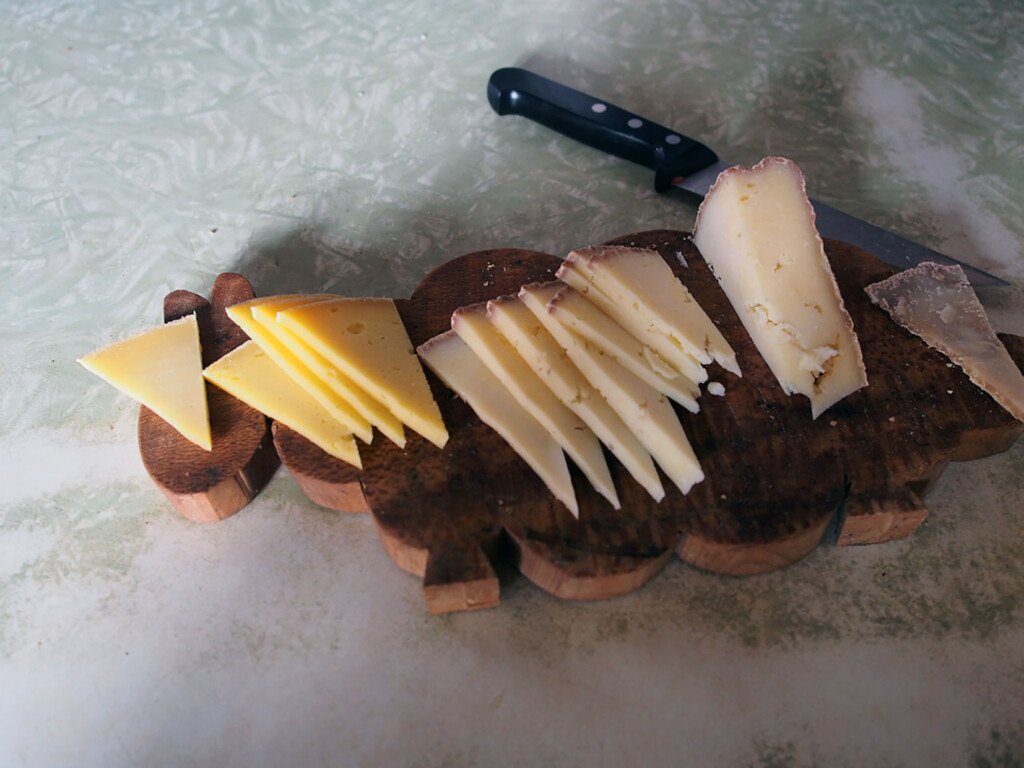
Cheese, primarily. It’s common knowledge in the whole Basque Country that the best cheese is made North of the border. The local tomme de brebis, a hard cheese made from the milk of heirloom sheep breeds (mostly black-headed manex, red-headed manex, and Basco-Béarnaise sheep), is a national teasure that has the Ossau-Iraty Denominated Protection of Origin (AOP in French). There are also tommes made from cow’s or goat’s milk. Tommes de brebis have as many flavor profiles as they have makers. Sheep farmers make them during the milking season. From April to October, the cheeses are made “en estive”, high in the mountains, where the sheep are milked by hand. The shepherds live, make and age their cheese in small houses called cayolars. In the Fall and Winter, the sheep are taken back to the shepherd’s farm, at a lower altitude, and tomme de plaine is made. The tastes of tomme d’estive and tomme de plaine are distinctly different: estive is fruitier and more herbaceous, plaine is creamier and milder. If you wish to taste the best tommes, go see cheesemonger Beñat in the Halles (covered market) of Saint-Jean-de-Luz.
Cherry and cherry preserves
This comes right after the cheese for a reason. Cherry preserves are served with tomme de brebis, and they are made in Itxassou, whose cherries are famous. There are many knockoffs of these delicious cherry preserves, so get them from a reliable place, preferrably from a cheesemonger.
The North also eats pintxos (Basque tapas). There may not be as many pintxo bars as there are in the South, but they’re just as delicious and, at times, innovative.
Cider and wine
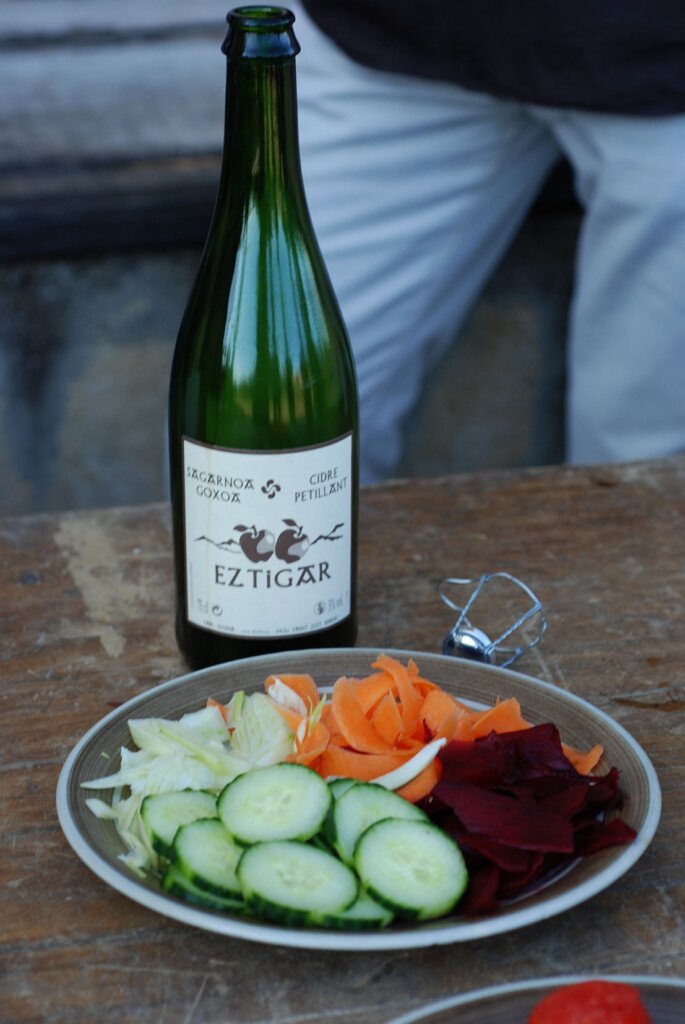
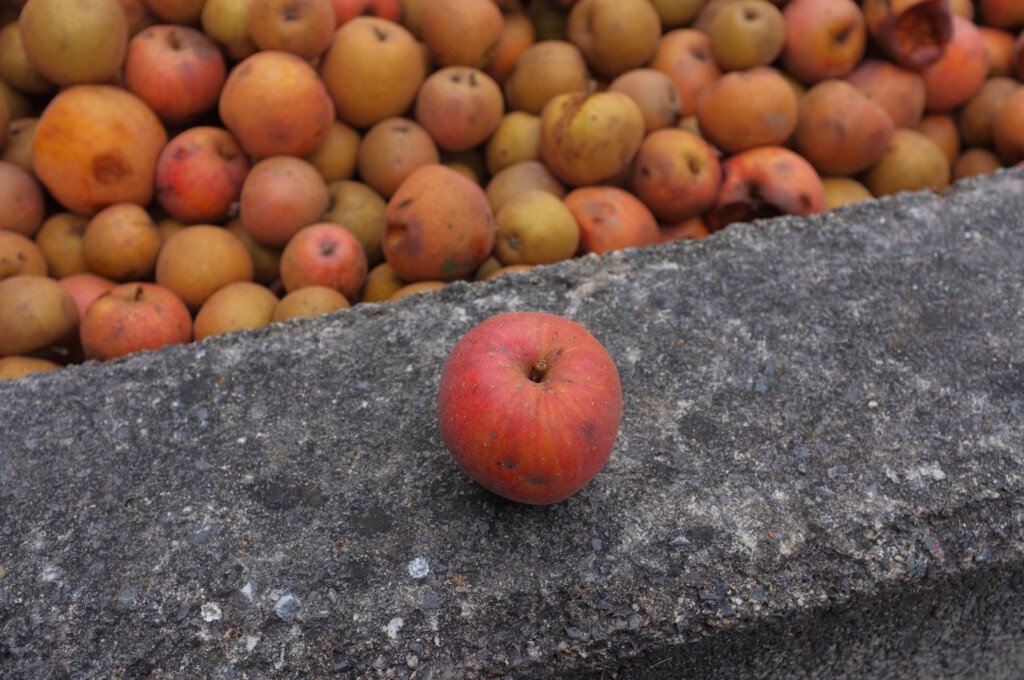
Just like the Asturias and South of the border, North Pays Basque is cider country. Normans and Bretons even got the trick from the Basques, although their ciders are sweeter. Made from many different local apple varieties, Basque slow-fermented ciders or sagarnoa (“apple wines”), are dry and sharp. The favorite Basque apple variety for cider is anisa, or “anise apple”, and some ciders are made only from that apple. Among the best cider brands in the Norh Pays Basque, look for Eztigar or Domaine Bordatto.
Irouléguy wines used to be a regional appellation with a relatively poor reputation – tannic reds and sharp whites. In recent years, some delicious versions have appeared. Our favorites are Domaine Arretxea, and particularly the enchanting white Hegoxurri, and Domaine Abotia which produces a very distinctive rosé.
Capsicums (peppers and chillies)
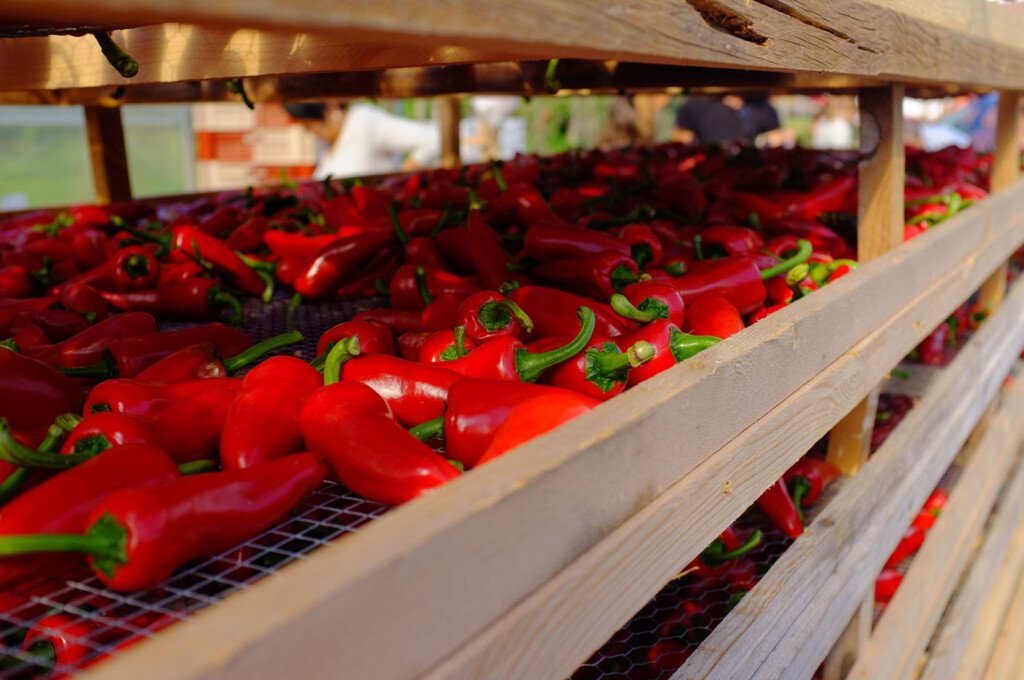
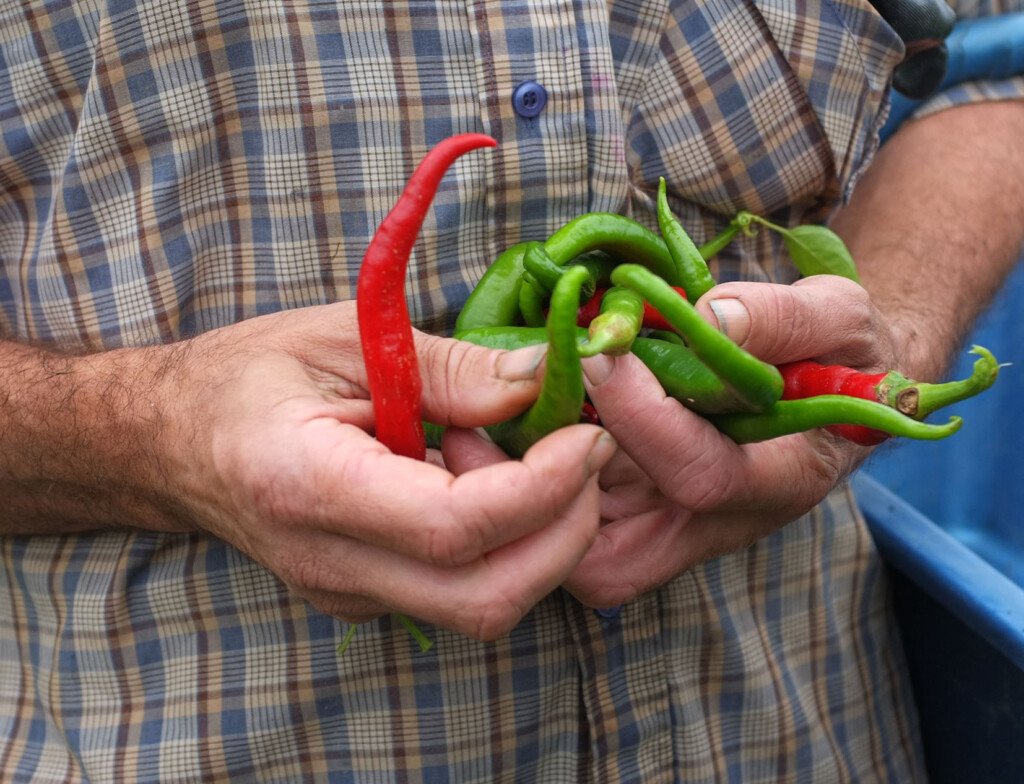
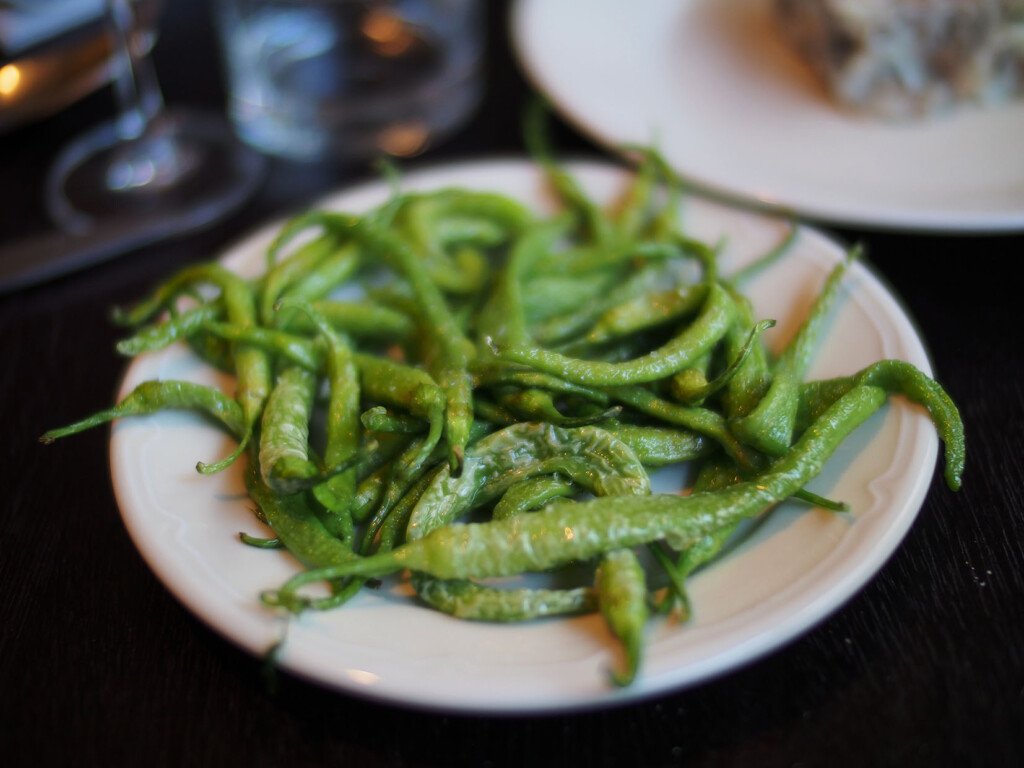
Spain inherited and developed many capsicum varieties from the New World, and the Basque Country did just the same. If, South of the Border, you can nibble on delicious deep-fried green Gernika or Del Padrón pimientos, or red piquillos (which you may also find on the North side), the North has its own heirloom varieties: the long, thin Basque pepper (piment basque) and the famous piment d’Espelette, the only French pepper with a denomination of origin, which is traditionally dried in wreaths on the front side of houses. Piment d’Espelette is medium-hot, or sometimes not hot at all, but it has the rare talent of being a taste enhancer: a mere sprinkle brings out the flavour in any dish. It doesn’t keep, so use that small jar quickly, and you can also enjoy its delicate taste in the form of paste, bottled sauce, or jelly (for foie gras).
Pigs and porky things
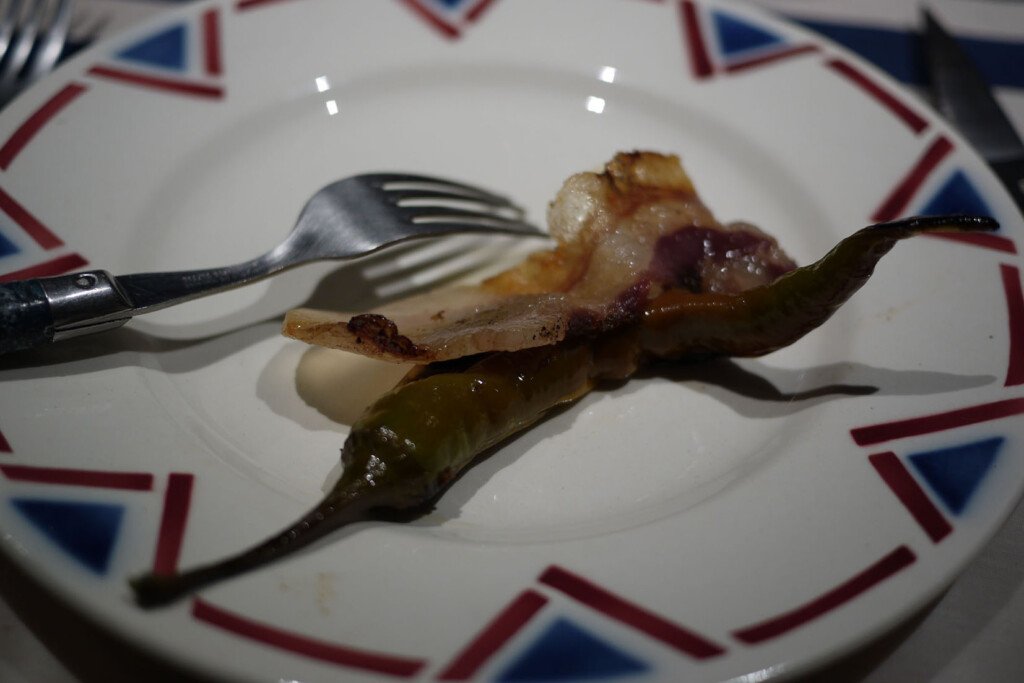
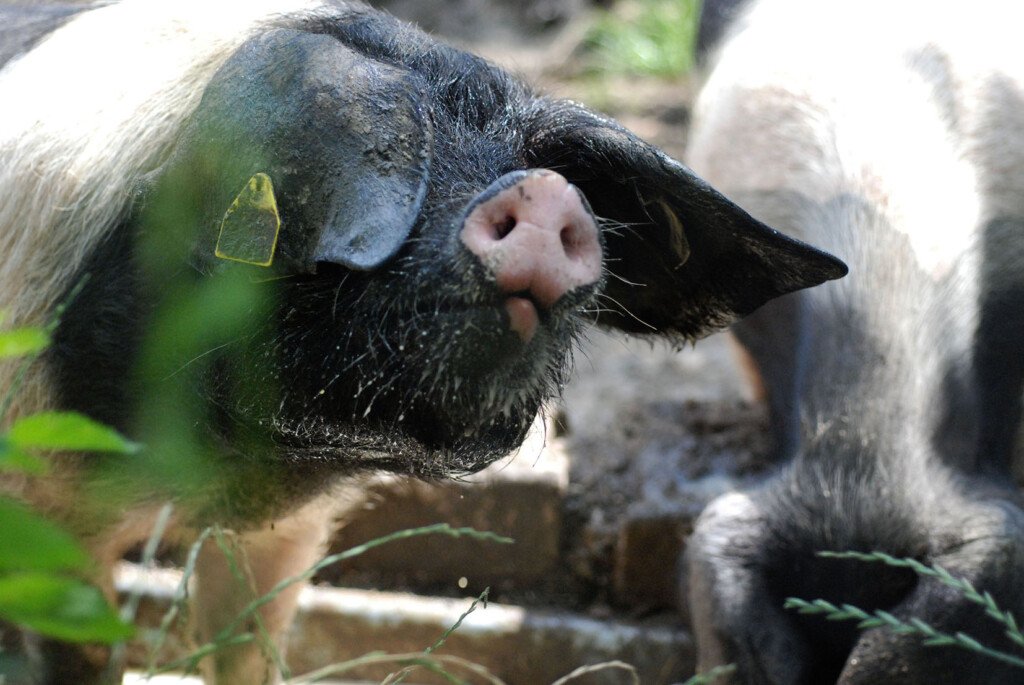
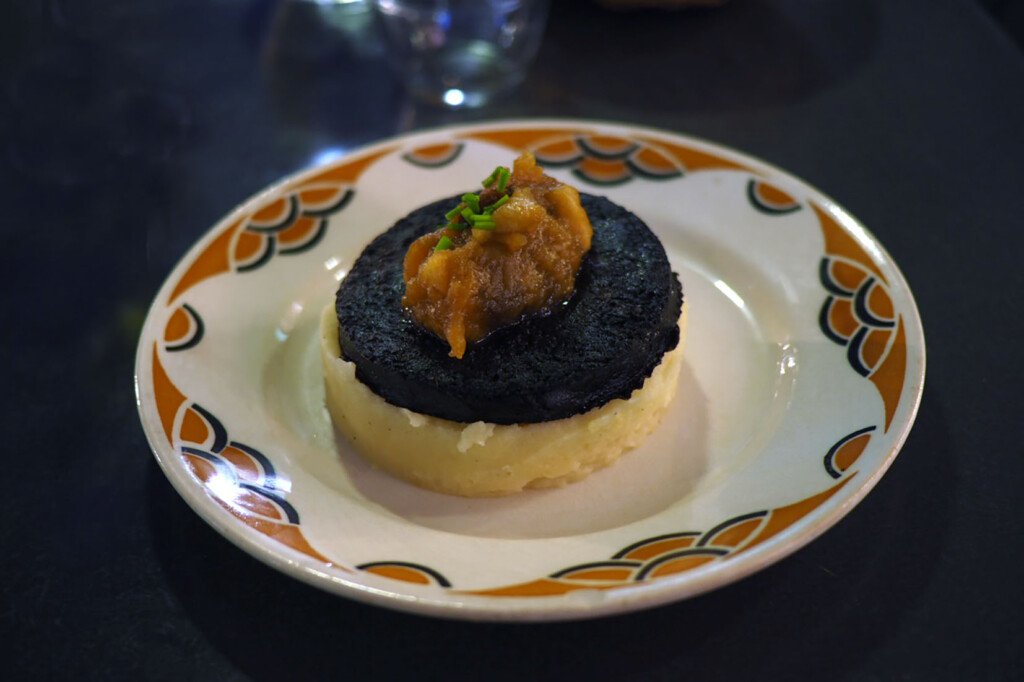
If the sheep is the woolly king of North Pays Basque, the pig is its fatty emperor. Not any kind of pig, mind you: the pink and black local Kintoa breed, or cochon pie-noir basque, is a close cousin of the Ibérico pata negra pig and of the porc noir gascon of the French Southwest. This means delicious meat, high-quality fat, and the ultimate cured meats. Like many heirloom breeds, the Kintoa pig nearly disappeared a few decades ago until some courageous pig farmers fought like lions to save it, also saving the art of Basque charcuterie in the bargain. You will hear of Bayonne ham, but this can be made from any porcine breed, while there is only one Kintoa, and the difference in taste is enormous. Look for the ham (jambon), the palette, the ventrèche (cured bacon), the maitraila (cured cheek), but also for cooked specialties like black pudding (boudin basque), sausage (txistorra) and the delicious andouille basque (chitterling sausage).
Ducks
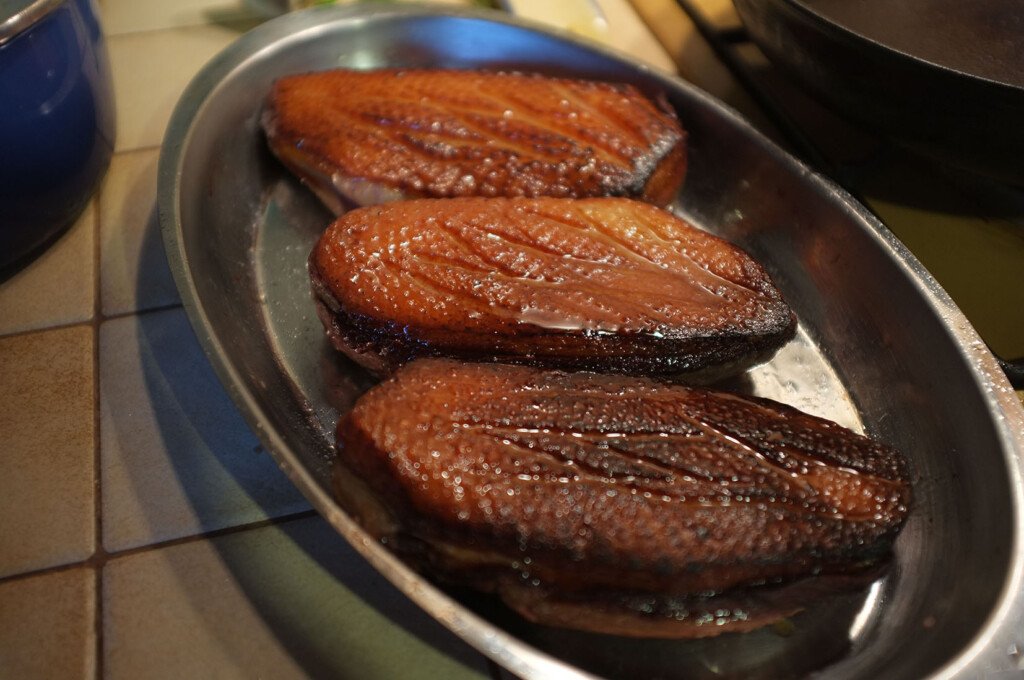
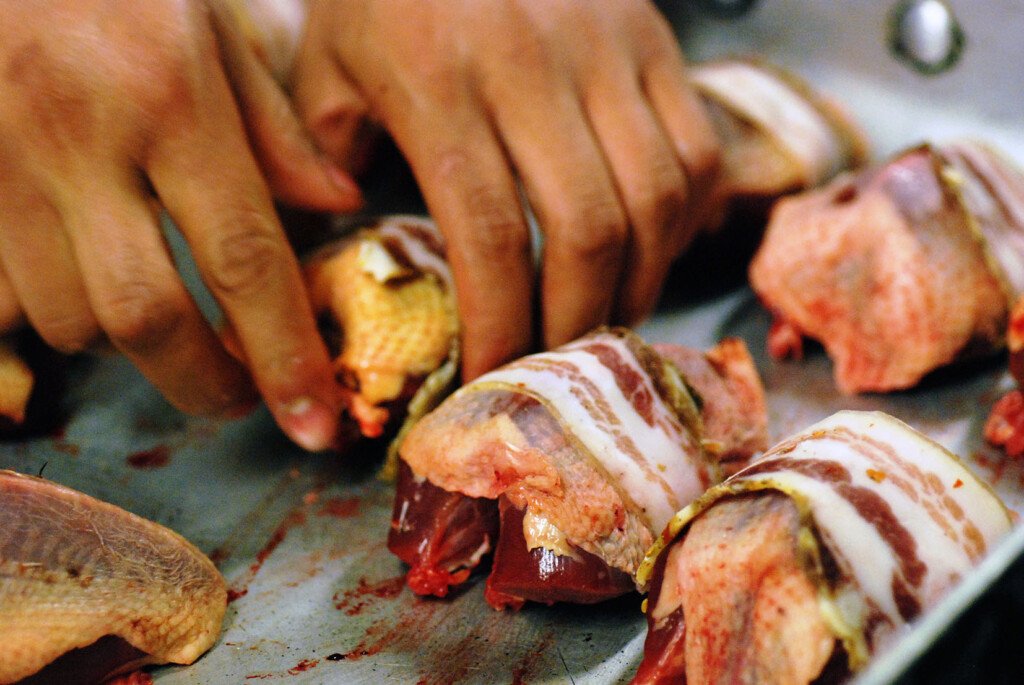
The local duck breed, the large kriaxera, inscribes the Pays Basque into the culinary French Southwest. Just like Languedoc, Périgord, Quercy, and all of Gascony, this is foie gras country. The kriaxera duck has very large magrets and a generous fattened liver, which is never better than in the mi-cuit (half-cooked) version with a generous seasoning of piment d’Espelette. That’s how they like it there.
Fish and seafood
The North Pays Basque is a fish and seafood haven just like the South, and the local love of merlu (hake) – particularly from Saint-Jean-de-Luz – , chipiron (squid), turbot, and txangurro (spider crab) is pretty much the same as it is in the South. The recipes are also similar, and seafood preparations are probably what the North and the South have the most in common in terms of food. Fillet of hake will often be pan-roasted with garlic, chipirons will be either simply grilled or stuffed, and served either in their ink or in a peppery tomato sauce; and txangurro will be simmered in a thick, tasty gravy. The epitome of all that is the ttoro, or fish stew, which includes prawns, hake, squid, and other seafood.
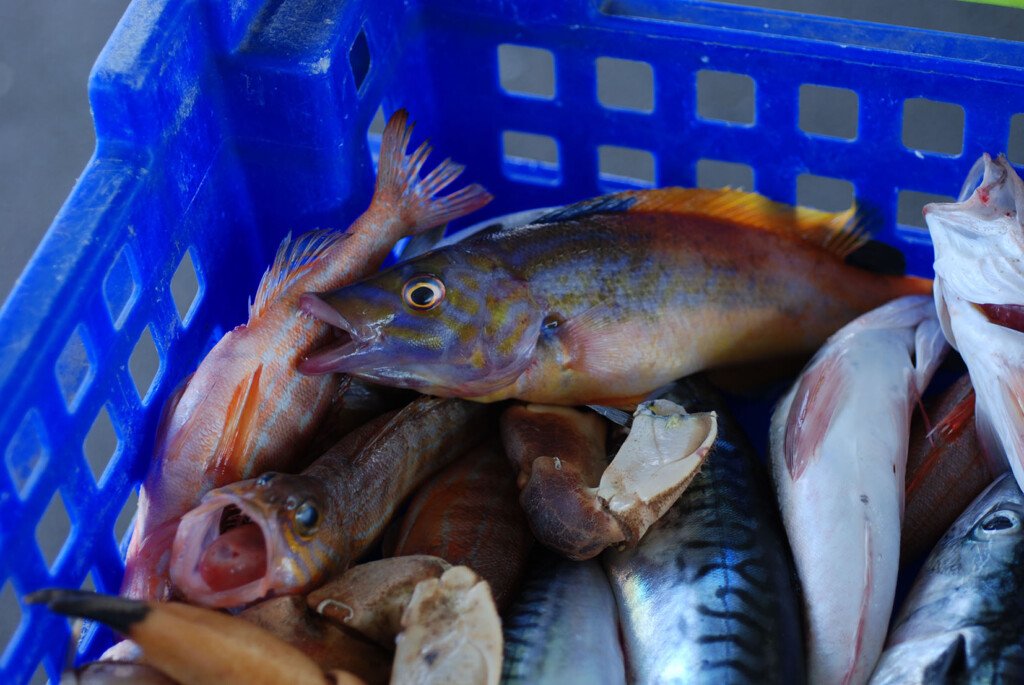
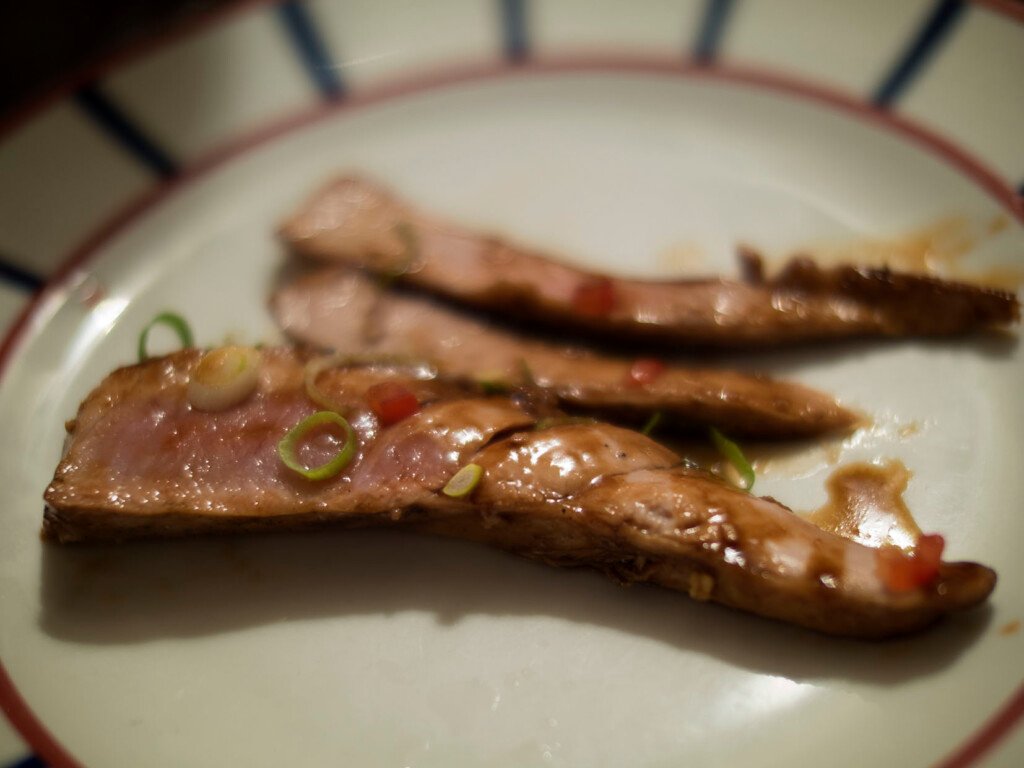
Although the place is slightly off-limits, slightly North of the Pays Basque in the Landes region, the fish market at Capbreton is a must-see. Fishermen, for centuries, have had the special privilege of running their own fish market, where they sell anything they caught in the morning, which includes unorthodox catch like wrasses, ballistas, stargazers, gurnards, and other creatures that you don’t usually see in other fish markets. Also, if you take a peek into the gorgeous covered fish market in Saint-Jean-de-Luz, you may find tuna belly, which is why it is wise to carry a little tin of wasabi powder and some soy sauce in your luggage.
The gâteau basque and the macaron
Let’s end on a sweet note and celebrate the delicious cakes and cookies of the North Pays Basque, where the famous Gâteau Basque dominates the scene. Gâteau Basque is quintessentially Northern, a thick, insanely buttery pie of crumbly pâte sablée folded over a filling of cherry preserves or pastry cream. That’s the classic type; the less classic types being filled with chocolate cream, hazelnut cream, or various jams. Either way, they are particularly delicious in Saint-Jean-de-Luz at three iconic pastry shops: Pariès, Maison Adam, or (my own favorite) Etchebaster.
You may have seen too many macarons of various shades in Paris, but you should discover the more traditional, simpler types of French macarons, and the ones of Saint-Jean-de-Luz are unequalled. Single-layered, they are made of pure, crispy-soft almond paste, sugar and egg white. Moderrn variations may be flavoured with chocolate, pistachio, hazelnut, or coffee. Just as irresistible are the mouchous (from the Basque muxu, “kiss”), developed by Maison Pariès – smaller, softer versions of the macaron.
WHERE TO SHOP FOR FOOD, AND WHERE TO EAT?
MARKETS
The covered markets (halles) in Saint-Jean-de-Luz, Bayonne, and Biarritz are rightly famous. They are open everyday except on Mondays, while the beautiful farmers’ market in Saint-Palais is only on Fridays. On Sundays, the urban covered markets grow larger, with local farmers selling their products on the square surrounding the main building.
If you’re really into Basque products, look for the Idoki label at markets, and follow the track. This network of local organic producers has it all.
A good tip for preserved seafood lovers: Jean de Luz, a good brand of tinned fish and other preserved food, has an outlet in Saint-Jean-de-Luz.
RESTAURANTS
You won’t go hungry in the Pays Basque, obviously. Naming all the good places would be impossible; here is a selection of our favourite addresses.
Rustic haute cuisine
Le Moulin d’Alotz
In Arcangues, in a former watermill, Chef Fabrice Idiart offers the best local products – don’t they all? But Fabrice applies a specifically green touch.
Maison Ithurria
In Ainhoa. Probably the earthiest, yummiest fine dining restaurant among the three, this upscale auberge (also a hotel) is run by the Isabal family. Cèpe mushrooms tend to hop into your plate very shortly after they are brought in from the woods.
L’Auberge Basque
In Saint-Pée-sur-Nivelle, near Saint-Jean-de-Luz, chef Cédric Béchade.
Traditional, pintxos, seafood, etc.
Chez Mattin
If you should stop at only one place, Mattin would be it. Chef Michel Niquet and his wife Céline have been running this Basque restaurant in a gorgeous Ciboure house for years and the magic doesn’t seem to stop. Don’t miss the grilled chipiron, the txangurro, the ttoro, and the wonderful desserts (unforgettable profiteroles).
Aux Pigeons Blancs
In Saint-Jean-de-Luz. Excellent creative asador – meats, seafood, pintxos.
Restaurant Gamia
In Bussunarits-Sarrasquette, near Saint-Jean-Pied-de-Port. You’ll have to go pretty far inland and drive up a mountain pass, but it’s totally worth it. This vast, casual restaurant serves rustic, local products simply prepared. You can’t be more Basque than this.
Le Petit Grill Basque
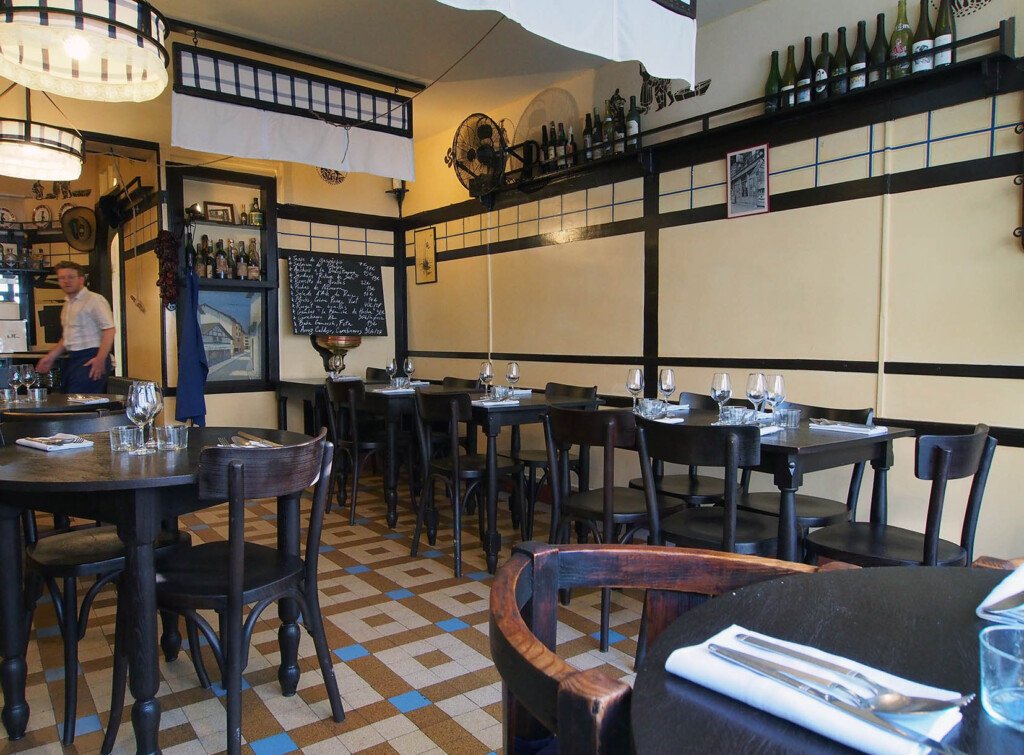
In Saint-Jean-de-Luz. Now run by Iñaki Aizpitarte of Le Châteaubriand fame (Paris), this lovely old renovated bistrot is an authentic back-to-the-roots experience and an evident foodie attractor. What happens there, actually? Well, those who have loved Iñaki for decades know that when he’s good, he’s very good, and when he’s less good, well… Le Petit Grill Basque shows no break in the tradition. Some plates are stellar, others less so, but just for the tuna pâté in Kintoa pork fat, and for a few other pintxos, it’s definitely worth going.
Asador Arroenia
In Behobie (Urrugne), an asador just like South of the border, and it is as good as they come. Txuleta, fish, excellent stuffed piquillos, and cider from the barrel.
Oillarburu
In Saint-Jean-Pied-de-Port. Generally good, but go there for the fried truitelles (local baby trout).
Also recommended
Xaya in Saint-Jean-de-Luz.
Txamara in Guéthary.
Hôtel-restaurant Kaliko in Bidart.
Chistera in Biarritz (in the covered market).
Hazia in the Halles Biltoki (covered market) in Anglet.
La Table Sébastien Gravé in Bayonne.
Le Bar du Marché in Bayonne