A Local’s Guide to the City’s Food Culture and Best Places
Come to think of it – taking a leap into this exercise of extreme distillation before diving into what we’re here for, which is, first and foremost, to eat – it all comes down to this simple fact: much of what one can learn, say, write about the city is bound to either of these elements. Most of the time, it’s bound to both.
A false dichotomy, as a matter of fact. Rather, a charming dialectic.

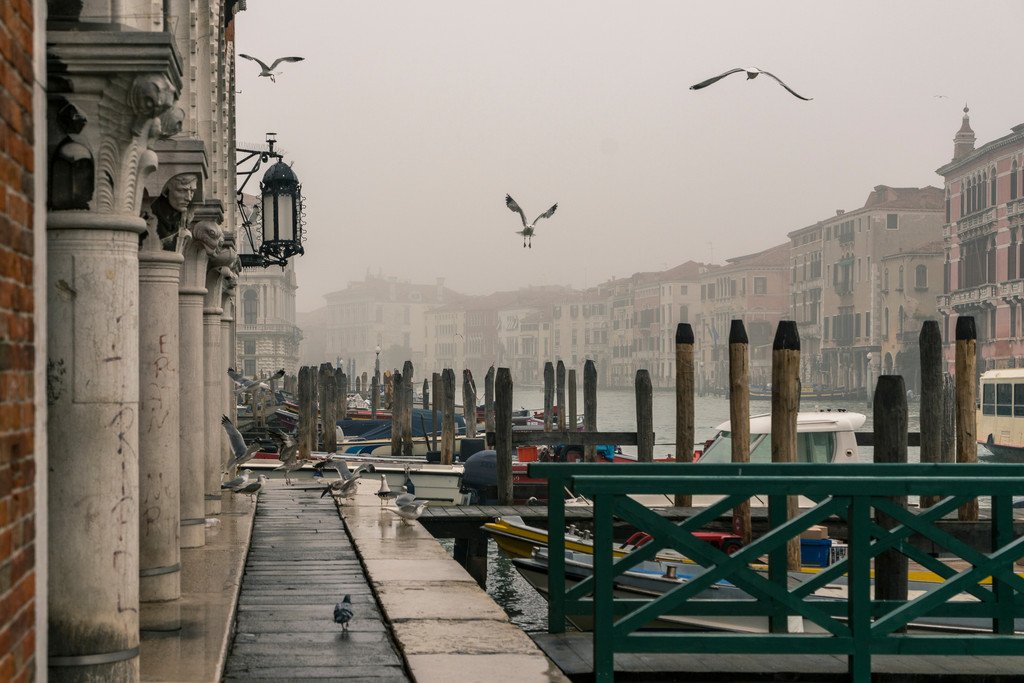
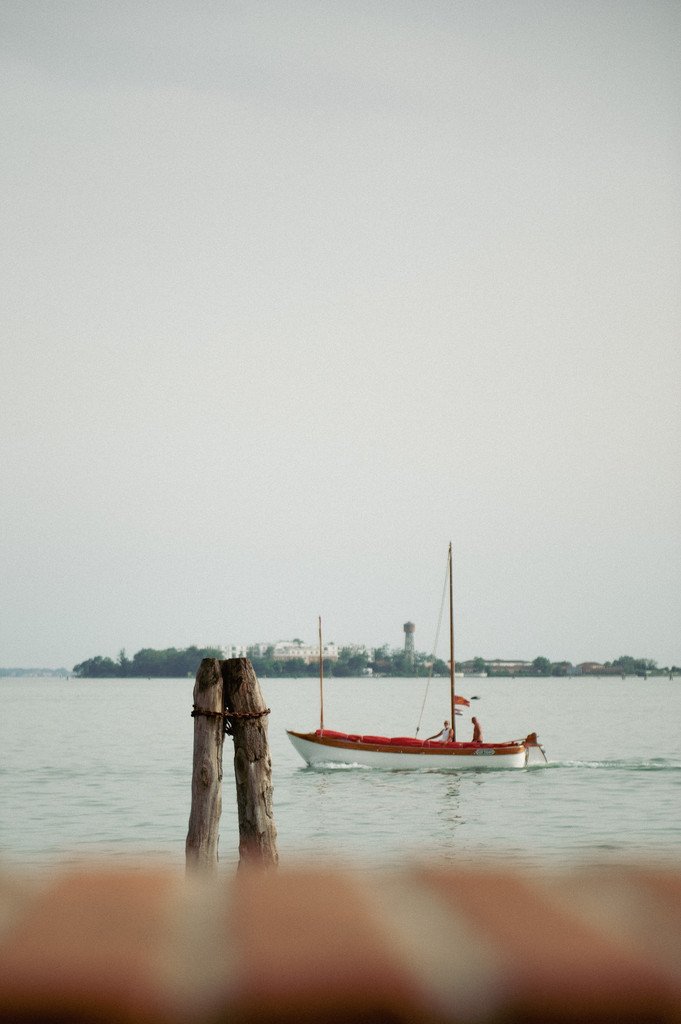
Venice is often defined as “the city of water” – of canals, lagoon and sea. On a second look, however, one might notice that it’s actually a city that learnt to understand the water. The Venetians of the past and, widely, of the present, owe their very existence to the ability to tame the sea water coming in and out of the lagoon, every six hours, from three narrow slits between barrier islands. They learnt to keep it at bay from their homes and crops and, simultaneously, to turn its unpredictable nature to their advantage. At the same time, they found a way to deviate the course of rivers and prevent silting, which was just as grim a scenario as flooding. They needed the water as much as they needed it to stay away. A fine line they walked masterfully.
If we take a hike in high boots down the path of history, we see a city that emerged, wood pole after wood pole, stone after stone, from a puddle of murky water. What vagaries! Who would have thought of that? And still, after the poles and the stones, or coincidentally with them, came the boats, and the subsequent mastery of navigation for trade as well as for defense and conquest.
In many ways, to talk about Venetian cuisine as it was is to talk about an animal that’s going extinct.
It’d be impossible to explain why Venice is the way it is, and therefore developed a certain way of eating – in other words, a certain “culinary tradition” – so unique, so different from the flavours and mores of the hinterland and the rest of the peninsula – without mentioning this handful of scattered facts. The culinary landscape of Venice is a place where trade and territoriality mingle and converse constantly. A dance of the here-and-now (the seasons, what the region offers at any given time) and the far-away (whatever arrived at port from exotic lands).
Spices, nuts and dried fruits came into the city, transported by mercantile boats alongside other precious materials that would make the fortune of the city for centuries. Malvasia wine arrived from the Greek and Dalmatian islands. Stockfish, baccalà, came in from Norway after a serendipitous discovery which made Venice the biggest consumer of Norwegian stockfish in the world thereafter. Locally, on “garden islands” like Sant’Erasmo, Vignole, Mazzorbo and Torcello, vegetables with a distinctive tastyness, thanks to the salt content in the soil, grew next to fish valleys. The fruits of the sea and the lagoon, the rice from the Po Valley, and the aquatic game hunted down the wetlands, the barene, completed the diet.
We can all be entranced by a game of archeology and culinary philology for so long. At some point, the digging has to stop. We ought to look at what we have in front of us.
All this preamble is, in many ways, an oversimplification. It is, on the other hand, also useful to understand what the city produces and consumes today, and why. It might certainly come as a surprise, upon landing in Venice after reading about such a glorious and diverse past, to see not a celebration of these ingredients but a succession of dubious restaurants dishing out what is evidently frozen and reheated food spruced up with parmesan and herbs. In the same nightmarish scene, water has been replaced with aperol spritz and plates with slices of stale white bread.
But then, crossing this string of eateries profiting from the hunger of unprepared visitors, the culture is largely still there – the memory of it; the intentions; the recipes. Better still, my impression is that part of it is evolving. It’s culinary culture in motion. Rather than simply preserving what once was, it’s adapting to new environmental conditions and a supply chain that no longer brings in certain “traditional” ingredients – despite the fact they were abundantly available only a couple of decades ago.
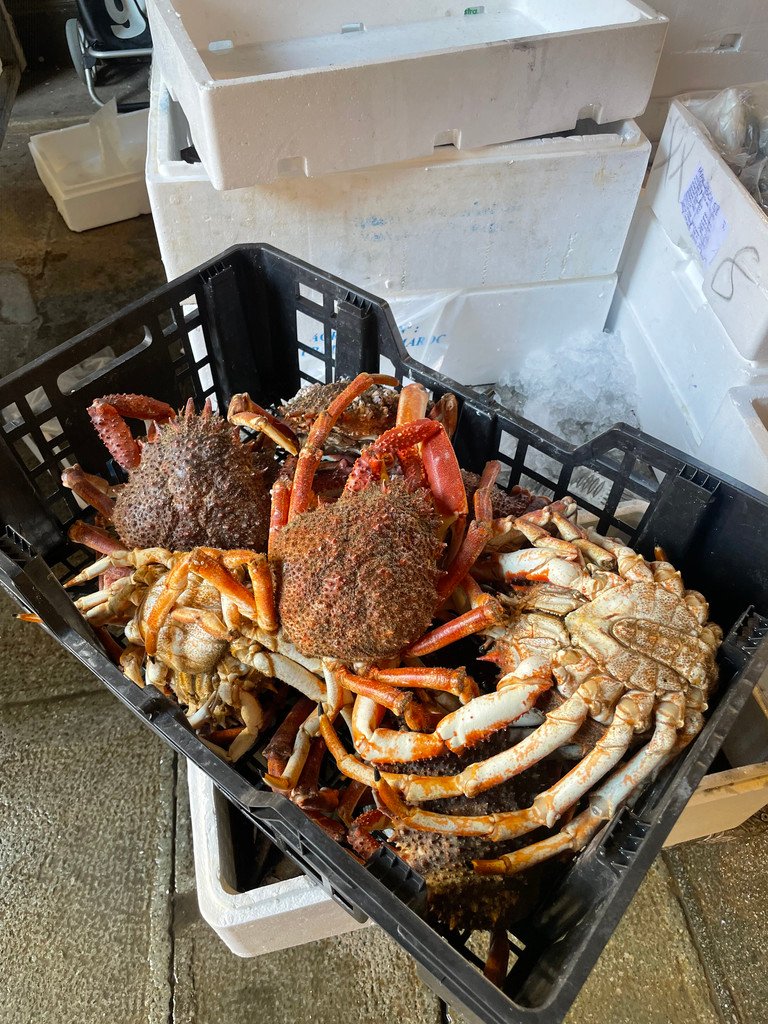
Take moeche, for example – the soft-shell green crab that created a livelihood for the local fishermen; a seasonal delight that graced the menus of the city in the Spring and Autumn: now decimated by the more voracious and easily adaptable blue crab. Take eel, which was known to travel a lifetime to land in the safe waters of the lagoon. The few remaining moved out, thus making what is known to be the oldest Venetian recipe to record, bisato sull’ara – a dish of braised eel cooked inside the cooling ovens of Murano glass factories – no energy was ever lost! – reduntant. In many ways, to talk about Venetian cuisine as it was is to talk about an animal that’s going extinct. The perpetration of a demand for it is, alongside climate change, the very cause for its imminent extinction.
I could go on, but the point has been made. We can all be entranced by a game of archeology and culinary philology for so long. At some point, the digging has to stop. We ought to look at what we have in front of us.
No two slices of white bread stuffed with tuna and olives will ever offer a poignant reflection on the environment or even on local food culture.
What do we have, then?
A lot, as it turns out. Contrary to popular belief, by which Venice appears to be a hostile and expensive city, there are, in fact, a number of food places where one can have a great time and eat astonishingly well. Osterie, trattorie, restaurants and bars worth our time and money, where the conversation is well and alive, and where the offering is, other than well-executed, also a clever meditation on ingredients, seasonality, and taste.
Let’s start strolling down a few calli and up and down a few bridges-sometimes, we might have to excuse ourselves or elbow our way through – and begin our exploration, for it’s getting late and we might start to feel peckish. Think of this as a day eating and drinking our way across the city. We only have so many meals, so we’ll try to make the most of them. Keep in mind, too, that Venice is the city I live in. So, rather than a journey of discovery, this shall rather be read as an ideal Saturday in the city, walking leisurely from favourite place to favourite place, from morning until late.
Most Venetians like to start their day in either of these two ways: with a brioche or with a sandwich. If you have a sweet tooth, we’ll head to Rizzardini for a buttery fagottino (turnover) with apples, or to Dal Mas for cornetti. For something traditional, zaleti, the polenta and raisin biscuits, and pan del doge, a biscuity globe dotted with almonds, are both delightful things to try. Those who picked the savoury option we’ll follow me for a couple of tramezzini, the divine sandwiches invented in Turin and perfected in Venice. We’ll go to Rosa Salva – my pick, here, is chicken salad – or Da Tiziano, who makes a mean piccantino. – a concertation of cured meats and peppers laced by spicy mayo. Options are close to endless. Still, an important disclaimer: none of the places mentioned so far are trying to innovate in any way. No two slices of white bread stuffed with tuna and olives will ever offer a poignant reflection on the environment or even on local food culture. They just do things properly, provide a great service, and we like them for that. Sometimes, one has to stop asking too many questions; sometimes we just need solutions.
Upon arriving, the realisation that it’s also other people’s favourite will become apparent in the long queue by the front door. I call it ‘the Stanley Tucci effect’.
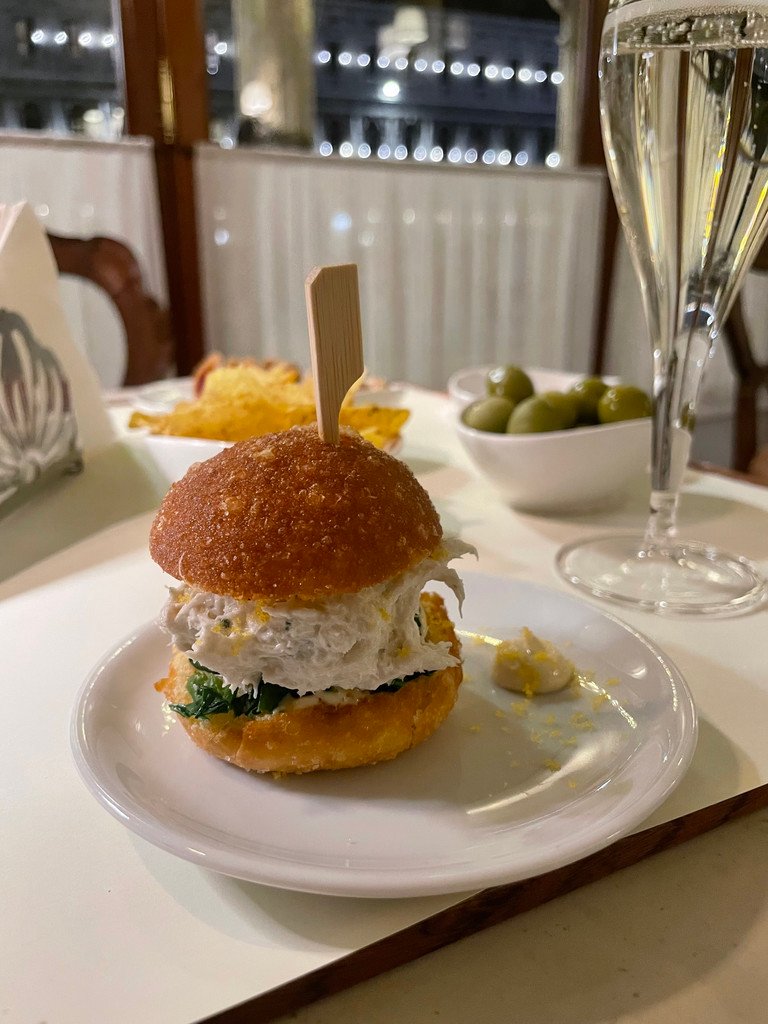
Now, we find ourselves at a fork. On one end, further down the road, we have a sit-down meal. On the other, closer by, we have a stand-up bàcaro where glasses of wine are complemented by an endless trail of snacks. The second route will offer more colour. It also happens to take us to a much-loved institution, which is, predictably, All’Arco.
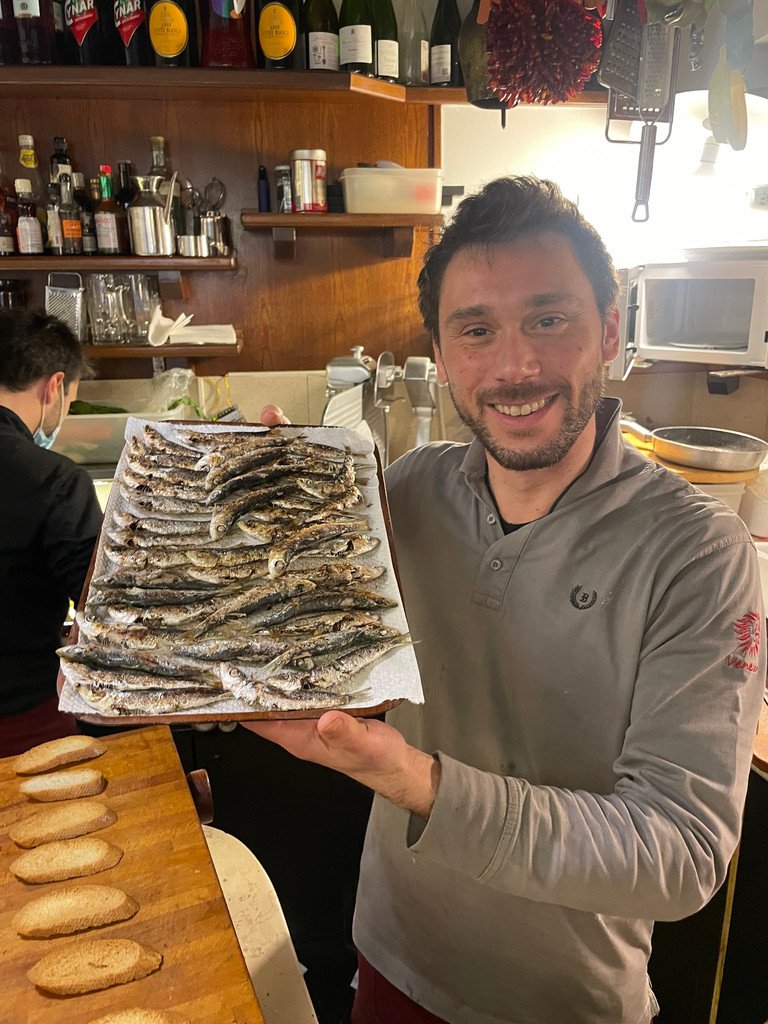
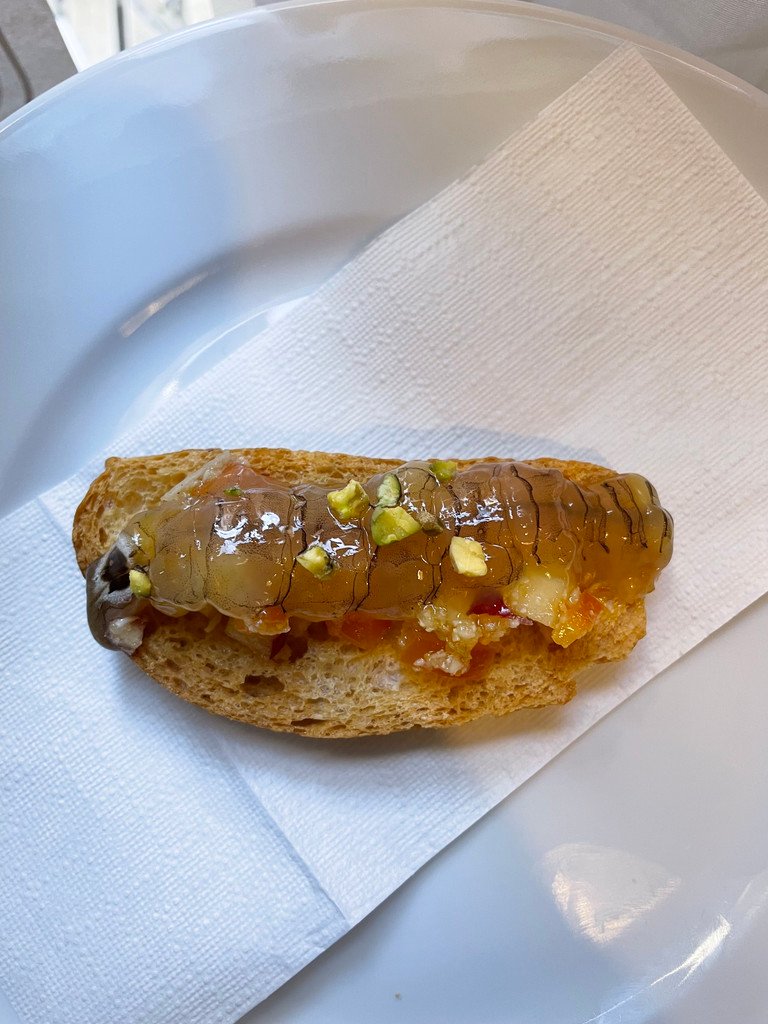
Upon arriving, the realisation that it’s also other people’s favourite will become apparent in the long queue by the front door. I call it “the Stanley Tucci effect”. Anyway, it moves fast. Soon, as we make our way to the counter, we’ll discover that Matteo Pinto, the owner, and his associates have concocted a selection of bites like no other place in town. And, clearly, they don’t quit. The slicing and toasting and topping never stops. Matteo, all the while, creates one original combination of toppings after another, simply following his whim, intuition and flavour memory. All’Arco is rightfully famous for its fish and seafood cicchetti, the daily run to the market engrained in the freshness and variety of the raw ingredients, with crudi as a focal point. In season, you can order a half-dozen fried moeche (soft shell crab; again, depending on whether the blue crabs now infesting the lagoon have left us any), or a small plate of castraure (the first bud of the artichoke plant) from the island of Sant’Erasmo.
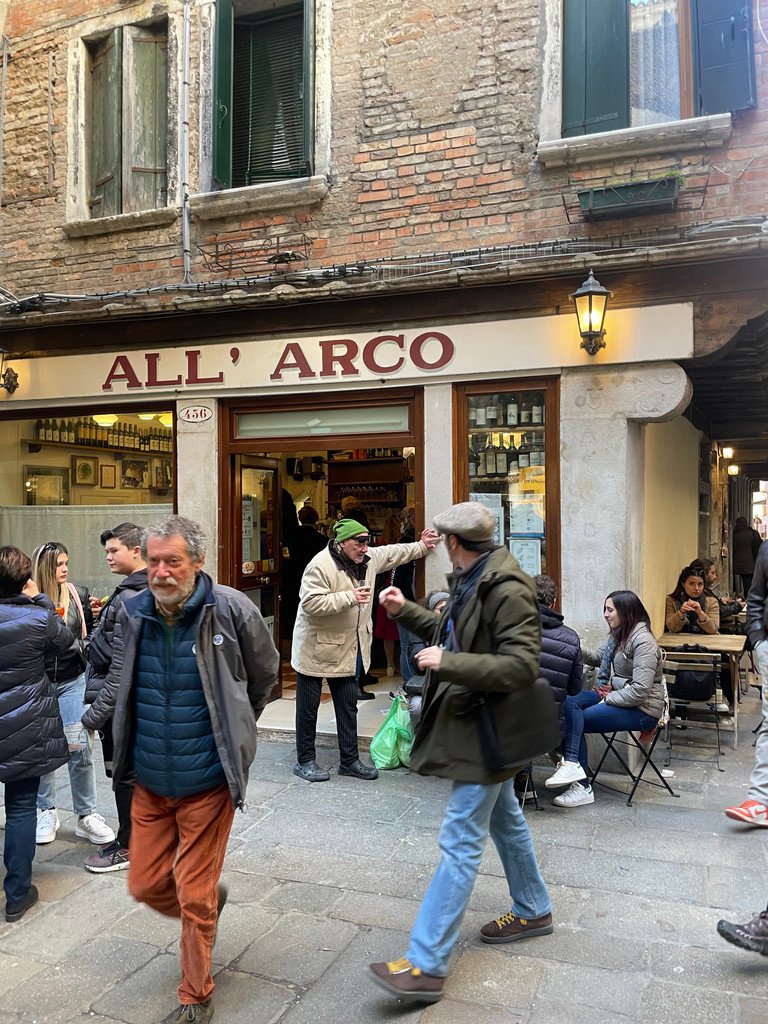
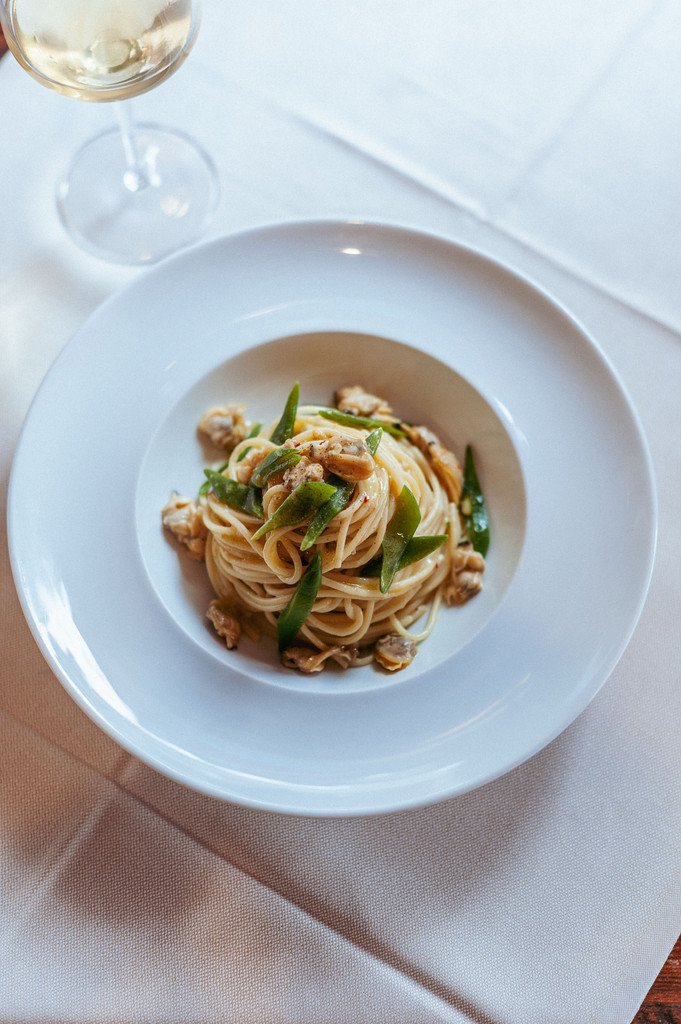
‘Ogni scelta comporta una rinuncia,’ some wise person once said to me, which, roughly, translates as ‘every choice comes with a trade off.’ The choice here rests on whether to keep ordering cicchetti from All’Arco and consider it lunch – the temptation of eating one of each is, indeed, hard to resist – or to apply some restraint in view of a “proper meal”. There is no wrong answer. But if the wish is to, at some point, sit down, then we’ll have to drain our glasses and get going. With some fuel in our bodies, we’ll make a call across the Rialto Bridge and head to Da Loris, or Bepi l’Antico -the name is a combination of these I can never quite grasp. Here, we’re in for more fish in the form of a triumph of antipasti, many of which are off-the-menu and will be recited to us in religious order by the owner, Loris, whose dry sense of humour is part of the experience. To follow, a bowl of pasta is what I’d order. Some highlights from recent memory: raw squid, with artichokes or mushrooms; razor clams, grilled; and, always, always, spaghetti alle vongole.
After lunch, possibly in need of a nap, and with a long afternoon in front of us, we can and perhaps should embrace the very Venetian sport of sitting at the bar until dinnertime. The alternative would be to go for a walk and see some art or some shops. Totally legitimate, but if it’s bars we’re interested in, we can head to any of the following, sit outsidelet’s imagine, for a moment, that it’s a warm day – and sip some good wine until dusk: Ozio, Vino Vero, La Sete, Caranto, Estro Pane e Vino, La Bottiglia, Vizietto. I’m sure I’m forgetting at least half a dozen, if not more. Which tells us something about the vastness of the offering in this realm. The choice, at this point, rests on location and convenience. It’s worth mentioning, before we go any further, that these all serve what one might call “low-intervention wines” (also known as artisan, small-scale, or, rather simplistically, natural wines). It’s a widespread trend in Venice I can’t personally complain about. Here, the art of opening bottle after bottle while chatting the day away has been perfected by locals since the beginning of time. Visitors to the city have been quick at catching up. No matter where we go, too, we’ll find at least a regional wine by the glass, and many others on the list. When in doubt, the local grape variety garganega is a good bet.
With dinnertime fast approaching, we can only hope we have a reservation, for it’s the weekend and the best places book up fast. If we’re lucky, Do Farai has a table with our name on it. It’s the most à-la-page place in Venice right now; a mix of people-watching and comfort dishes extracted from the family’s archive – from egg mayo to vitello tonnato – all infused with a splash of French flair. We’d be equally lucky to find a spot at Osteria Giorgione da Masa, where the tasting menu is an unexpected procession of enthralling Japanese-Venetian bites dished out in rapid and smooth sequence. Freshly opened, Chéno is yet another surprise in town, serving a contemporary, land-driven cuisine with plates meant to be shared, discussed, graded – whaterver you want. I, for one, have fond memories of their baccalà mantecato with mushrooms and their hunter-style chicken.
Now, if a classic restaurant is what we would rather go for, Rioba, Alle Testiere or Al Covo all fit the bill. Fresh seafood, great vegetables, and that sense of dining in a local institution. A special note on the vegetables, which have been so far neglected. Some of the tastiest in town can be enjoyed at any of the restaurants belonging to the Osti in Orto project, including the above mentioned. They grow their own produce on Sant’Erasmo and supply their kitchens with whatever they harvest, so one can be sure to find something fresh and local off their menu at any given time.
the divine sandwiches invented in Turin and perfected in Venice.
Nighttime has fallen. Before calling for bed, we could maybe use a nightcap at one of the few places that remain open until late. We could go to Al Mercante, wait to be seated in the intimate sitting room on the first floor and order from their excellent list of signature cocktails. Or, for diametrically opposite vibes, we could cross a stunningly empty St Mark’s Square and head to Ai Do Leoni, where a small crowd is likely hanging out right outside this precious hole-in-the-wall – an outpost of young local life in the centre of town – sipping gin and tonics, sours, or tumblers of Egiziano, a twist on the Americano.
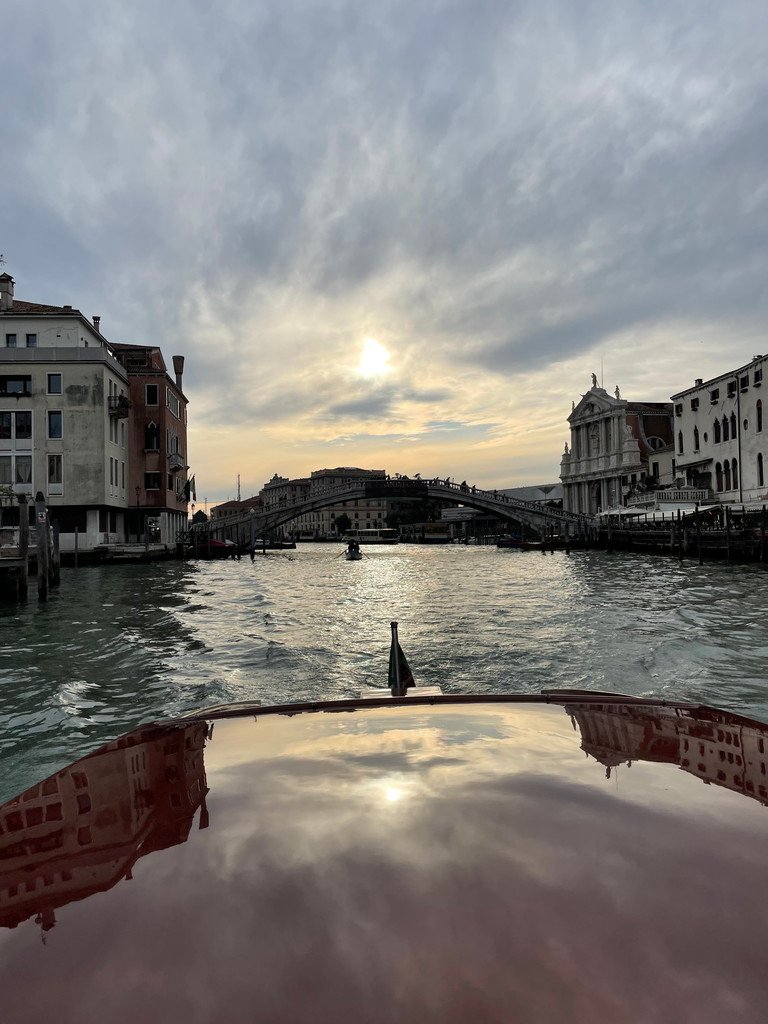
Possibly tipsy by now, we head back home wandering down an empty and silent Venice. This will give us a chance to appreciate its beauty, reflect on the actual number of people inhabiting the city (in all evidence, it’s not conspicuous), and, surely, also resonate on the rhythms of an urban centre largely devoted to sightseeing. As interesting as all the topics are, at some point we will have to conclude the conversation and go our separate ways. Keeping an eye on where we’re going – one wrong turn and a canal will meet us at the end of the calle – we will cross countless bridges, campi (squares), flank many waterways and, instantly, be reminded of the initial leitmotif as we find our way: land and water, water and land.