By Sophie Brissaud.
Everybody loves a bistrot, but what is it exactly, compared to a brasserie, a bouillon, a bouchon, or even a lesser-known troquet? There are simply too many French words depicting moderately-priced restaurants, and the fact that they are all have a lot in common makes the matter even trickier. While we’re at it, what is bistronomie? Here is an attempt at a quick description of the matter, with a few suggestions thrown in.
The elusive bistrot
What immediately comes to your mind when you think “bistrot”? Snails sizzling in their shells, nestled in the cavities of an escargot dish with a pair of snail tongs on the side — arguably the most awkward piece of cutlery ever invented? Bubbling onion soup topped with a layer of cheesy toast? A steaming bowl of lentils with a plump sausage in the middle? Or a sophisticated plating of various ingredients as you could also have in a modern gastronomic restaurant? Is the bistrot’s vocation to reflect French food traditions or to showcase the skills of young chefs in a simple setting? As it happens, a bistrot can be either, or both. It is not, at any rate, a simple affair — more like a riddle.
The French bistrot, old and new
First, let’s brush aside the unlikely etymology of Russian soldiers shouting Bystro, bystro! (Quick! Quick!) when ordering drinks at cafés after the battle or Paris (1814). The fact is that the word didn’t appear in historical sources until decades later. A bistrot, or bistroquet, in the French Poitevin dialect, is an inn-keeper, whose denomination has expanded to his surroundings. Initially (and still) a place where drinks are served, the bistrot (or bistro) soon became a place where hot food is also served. It found its classic form in the early 20th century with simple settings and a menu derived from French cuisine bourgeoise, humble family fare, and provincial cooking brought by the bistrotiers from their native regions (mainly Auvergne, Savoie, Rouergue, and the Southwest).
As a cheap neighborhood restaurant, the Parisian bistrot did not actually survive the 1980s, but in the mid-1970s, while the true bistrot was on its last legs, haute cuisine chefs like Guy Savoy or Michel Rostang had already begun to revive it as bistrot de chef, definitely not cheap, but relatively true to the original culinary style with the odd haute twist added by the chef. For instance, the famous moelleux au chocolat was born in one of Guy Savoy’s Paris bistrots. That is how the notion of creativity entered the bistrot, long before bistronomie was a thing.
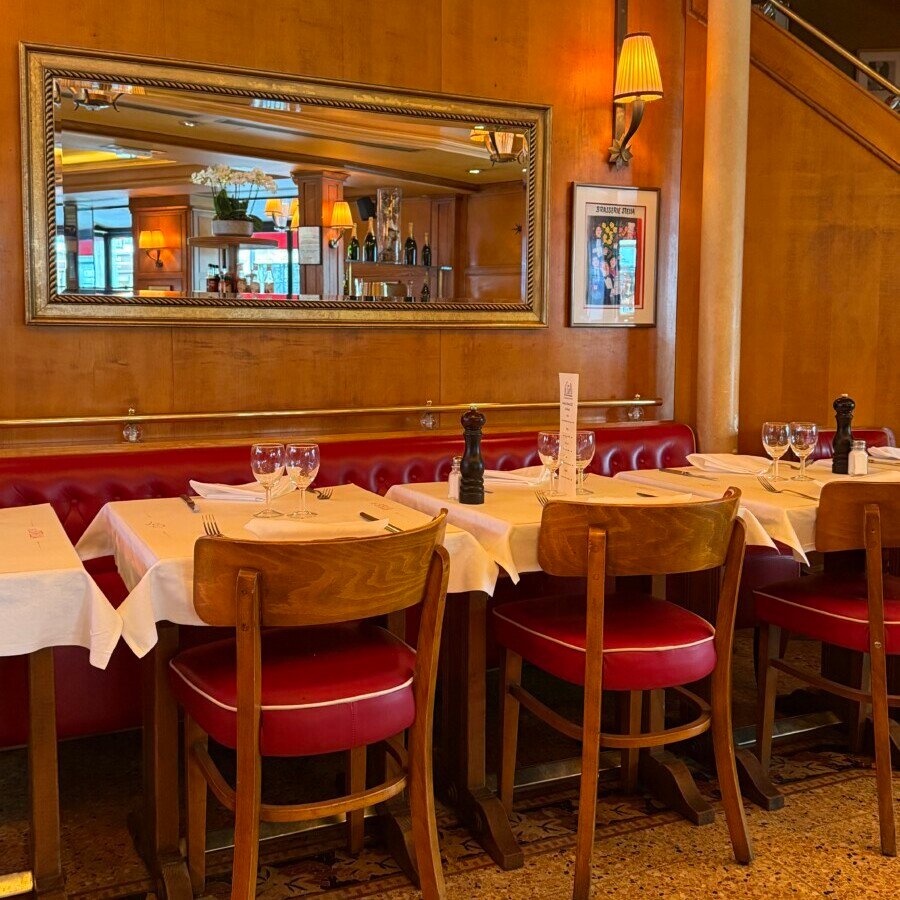
Nowadays, the concept of bistrot is a mixed bag: still urban or suburban, but sometimes found in small cities or even villages; never really cheap anymore and sometimes costly; in an vintage setting or a minimalist, modern decor with scraped walls (or even no decor at all); simmering the old classics like daube de bœuf or innovating until the chef is blue in the face, or a mix of all that. You can’t really figure out what a bistrot is anymore; to assume you are in one, stick to a few markers most of us agree upon: the place can’t be too vast (if it is, you are in a brasserie or a bouillon), too expensive (theoretically), too pretentious (also in theory); service should be friendly and casual, etc. A vintage decor — zinc counter, patterned tiled floors, bevelled mirrors, bentwood chairs and the like — does help, but is not exclusive to the bistrot.
A few Paris bistrots: Bacav’; Les Arlots; Le Bougainville; Le Quincy; Chez Georges; Le Petit Vendôme.
Bistronomie: a definition
Photo by Sophie Brissaud.
In 2004, French food journalist Sébastien Demorand was trying to define a new style of bistrot cooking that punched above its weight, using the same products and same skills as haute cuisine in a more modest surrounding for a relatively low price tag. Welding bistrot and gastronomie together, he came up with bistronomie. The concept soon found a living symbol in chef Yves Camdeborde and a few of his pals, who left Le Crillon’s gastro kitchens to apply the new standards of bistronomie — Camdeborde at his Paris bistrot La Régalade, Nicolas Magie in Bordeaux, Thierry Faucher (L’Os à Moelle in Paris), and others. In a country inn setting, Yves served heirloom tomatoes with Parmesan shortbread and a delicate Provence olive oil dressing; roasted woodcock with garlicky cèpe mushrooms; cold poached oysters in seawater jelly… Soon it became clear that a new era of fine eating had begun in France; and it spread mostly through a network of friends instead of competitors or star-chasers. The first era of bistronomie (2005-2020) was based on teamwork and friendship. Chefs were no longer competing or focusing on the Michelin Guide but complementing and helping each other — and that, more than the food itself, remains the very definition of bistronomie.
What about the second, post-2020 era? The meaning of bistronomie has become less precise. It is no longer an affair of exceptional products cooked with respectful simplicity and served in a modest setting. It is rather a new label pasted onto complex, sophisticated and by no means cheap cooking that isn’t substantially different from haute cuisine, but the service will be less pompous and the setting less posh. Or bistronomie can also be the self-definition of a restaurant that does not wish to be known as a gastro but refuses to stoop to the (still) plebeian level of the bistrot.
A few bistronomiques in Paris: Gare au Gorille; Amarante; Le Bon Saint-Pourçain; À l’Improviste; Vantre.
Avatars of the bistrot
Bistrot and bistronomie we have seen above; what follows is an attempt at a quick definition of other forms of moderately-priced restaurants in France.
Brasserie
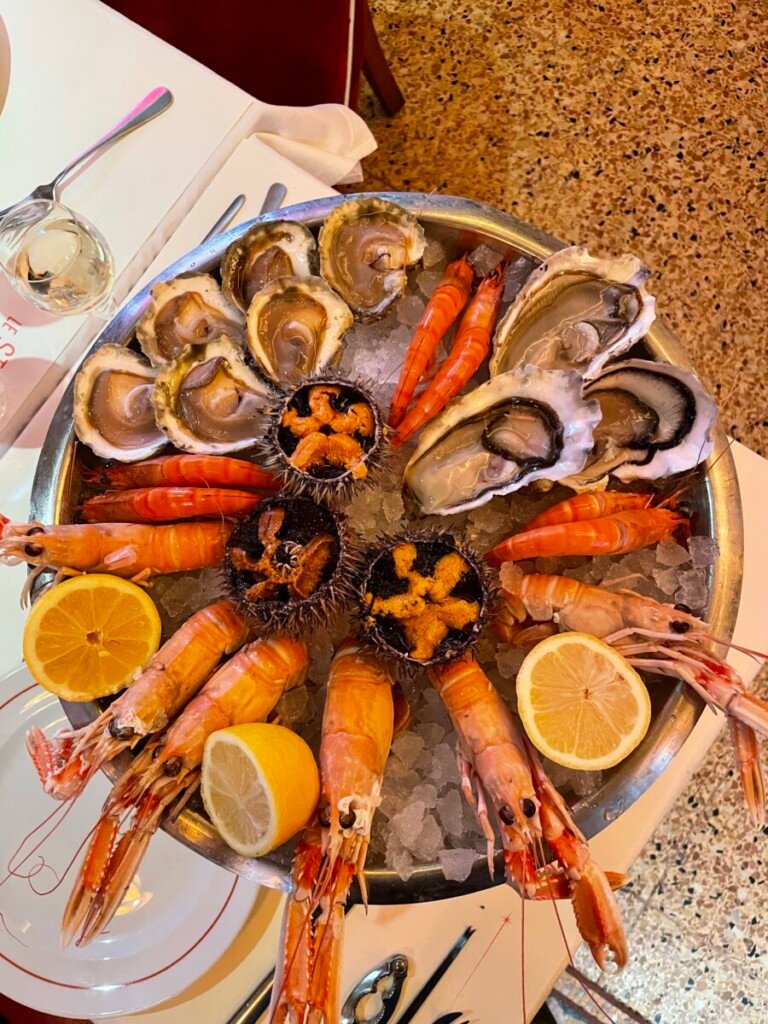
Literally means “brewery”. Think of a very large, posher bistrot serving choucroute. These vast restaurants were opened in big cities starting from the late 19th century by families of Alsatian or Lorraine origins; they developed independently from the bistrots, but roughly at the same period. They are often situated near train stations or on large squares. The decor includes plenty of brass, leather, mirrors, and bright lighting. Some have gorgeous, genuine Art Nouveau of Art Deco settings, like the magnificent Brasserie Georges in Lyon or Brasserie Le Français in Bourg-en-Bresse. Originally, beer was brewed on the premises; today, it is rarely the case, but beer is still served at all brasseries, and choucroute is a mandatory item on the menu. Other usual fixtures are fresh oysters and shellfish (“banc de fruits de mers”), and classic fish dishes.
A selection of brasseries: Le Terminus Nord, Paris; Le Vaudeville, Paris; Bofinger, Paris; Brasserie Georges, Lyon; Brasserie Le Français, Bourg-en-Bresse.
Bouchon
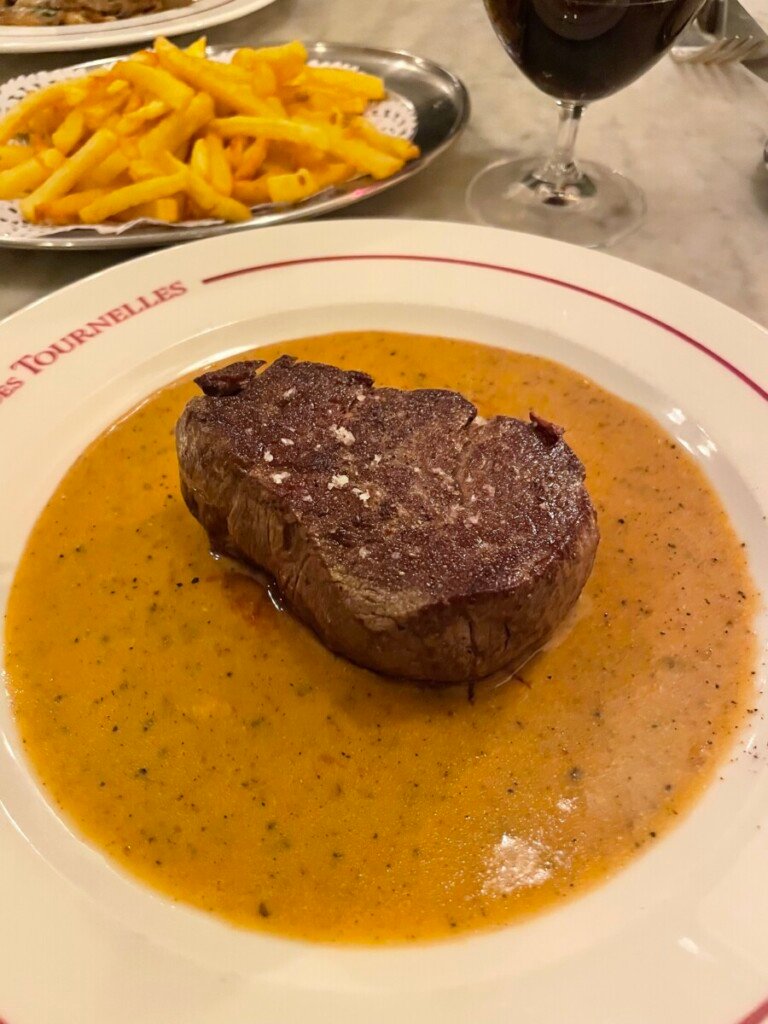
A bouchon is, to put it simply, a bistrot in Lyon. A little older than the Paris bistrot, it is based on the same working-class origins (the local textile workers, known as canuts, were their first customers) and similar looks. It offers a selection of local wines (mainly red Beaujolais or white Mâcon, often served by the pot, a heavy-bottomed 46-cl bottle), and typical Lyonnais cooking like quenelles, tête de veau (calf’s head), saladiers lyonnais (an assortment of various salads), poulet de Bresse. The menu is usually heavily offal-oriented, and the atmosphere is unique, cozy and rustic, hard to define. The check should not amount to more than €35 per person, but this has become very rare, so the selection below includes places which, although costlier, serve excellent bouchon food.
A selection of bouchons in Lyon: Daniel et Denise; Le Bouchon des Filles; Maison Abel et Le Bistrot d’Abel; Le Café du Peintre; Chez Hugon; Le Bouchon Sully; Chez les Garçons.
Bouillon
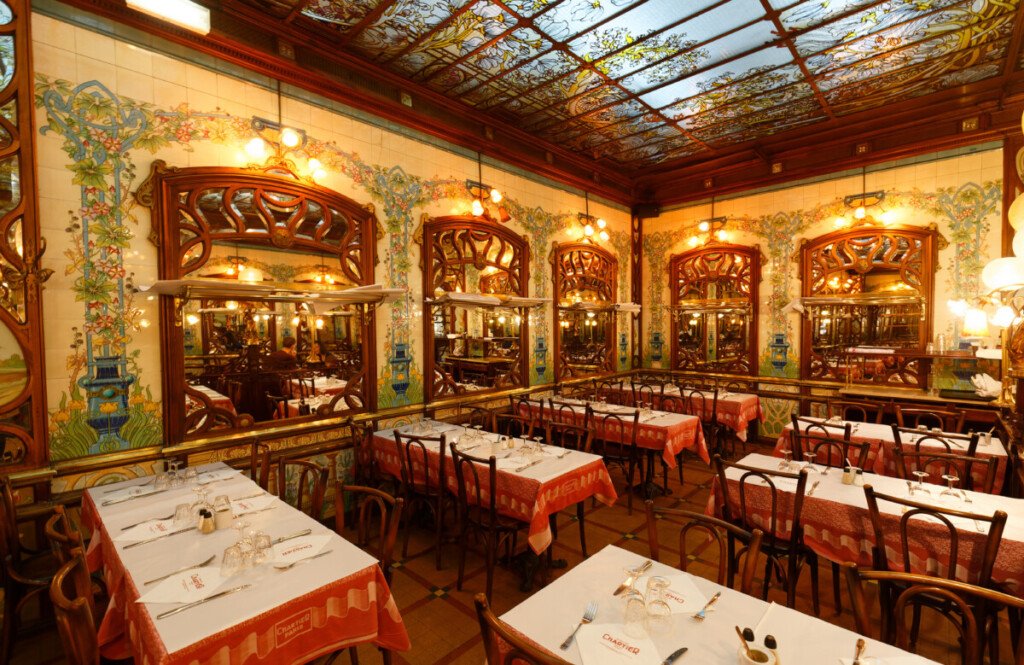
After the French Revolution, chefs who cooked for the aristocracy were suddenly out of a job and opened the first restaurants in Paris, under the generic name bouillons restaurants because they were specializing in restorative bouillons. Simple as that. A funny thing happened on the way to the 20th century: the denomination was split in two, a restaurant being, well, a restaurant, and a bouillon a cheap, popular type of brasserie catering to the working class, mainly at lunchtime. A bouillon would serve mostly the same stuff as a brasserie or a bistrot, but at lower prices. With the exception of Bouillon Chartier in Paris, these restaurants completely disappeared about fifty years ago. A recent attempt to revive them has caused an infestation of so-called “bouillons” all over Paris, but they are little more than a clever way to churn out cookie-cutter brasserie dishes out of cheap, subpar products.
A selection of bouillons: go to the historic Bouillon Chartier on rue du Faubourg-Montmartre if you wish, it is the only authentic one. You may also try the Bouillon Racine.
Bougnat
Bougnat, bougnate: a colloquial synonym of Auvergnat, Auvergnate, i.e. a son or daughter of the Auvergne. Just like the word bistrot meant first the landlord and then the place he owned, the bougnat was a neighborhood shop where Auvergnats sold firewood, coal, and wines. Since they were family-owned businesses, hot meals were also served (with quite a few dishes cooked in wine), and sometimes products from the family home garden in the suburbs. Thus, the author of this article, when in her teens, would regularly buy fresh chestnuts from her local bougnat’s wife, who claimed the chestnut tree was “as old as Henri IV” (early 17th century). They were delicious.
A selection of bougnats: they have all disappeared, but it can be said that the bougnat was the most significant ancestor of the bistrot.
Troquet
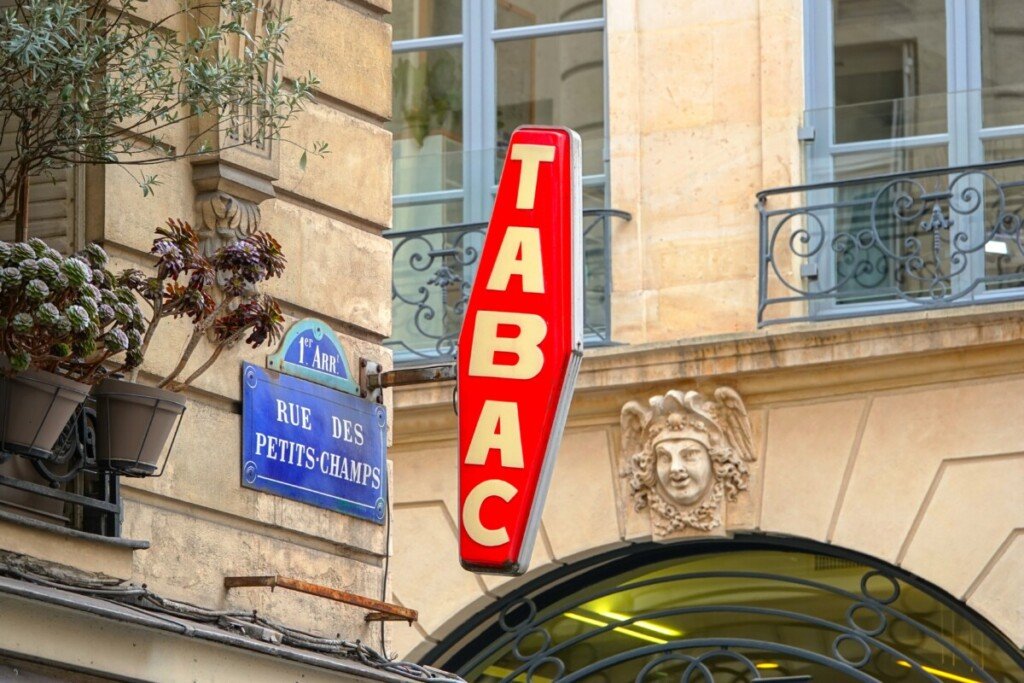
An alternate term for the early bistrot was bistroquet, whose two final syllables have long been used for the common French corner café with its zinc counter, tables and chairs inside, tables and chairs outside, and sometimes a tobacco counter (Café-Tabac-PMU), found in nearly every street, square, or corner of boulevards and avenues. They also serve food, generally an unsophisticated version of bistrot or brasserie fare, only at luhchtime, for local workers. Actually, they’re also called “bistrots” or “brasseries”, which is part of the charm and complexity of the whole subject matter. Now that the traditional bistrot is mostly a thing of the past, it can be said that the troquet is the true heir of the bistrots, bouillons and bougnats of the past. In the early 2000s, most Paris troquets were at the risk of being replaced by bank agencies, but fortunately they were taken over by Chinese families who currently do a great job of keeping them alive, allowing that substantial part of the Paris mythology not to disappear.
A selection of troquets: they’re everywhere.