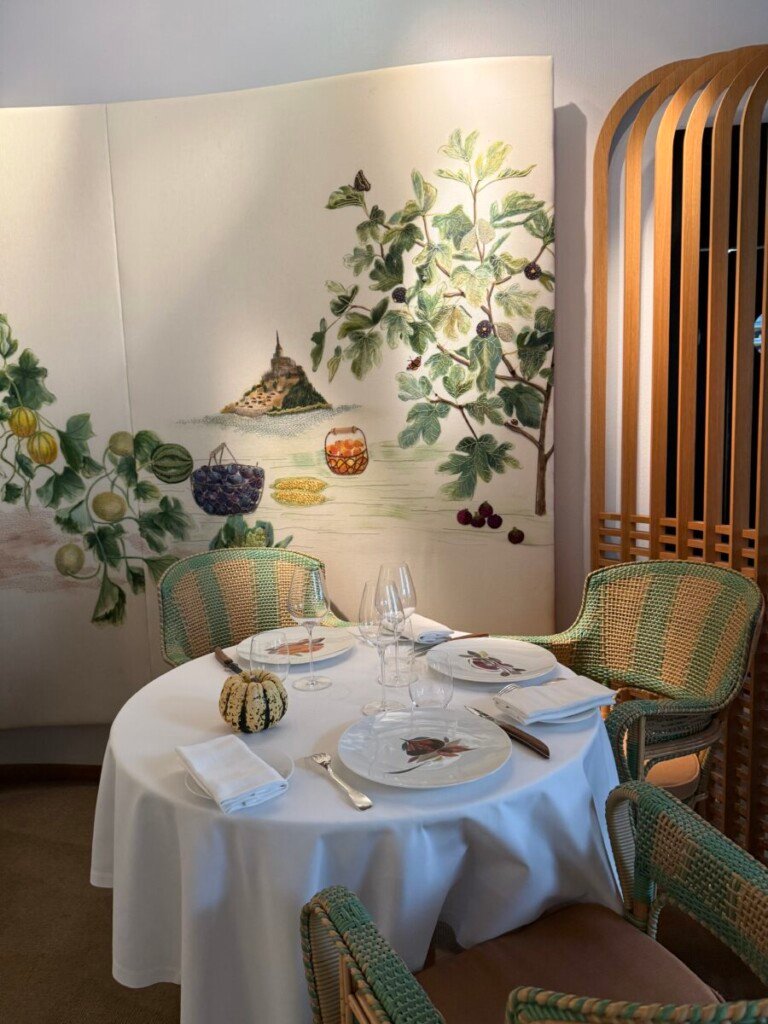
After more than 50 years in the kitchen, Alain Passard still likes to be a student. Having spent decades putting vegetables at the centre of the plate at Arpège, he went further in 2025, removing meat, fish, dairy and eggs from his kitchen. Even a summer courgette, he admits, has surprised him: “I thought I knew it well, but I did not.”
We spoke about what he is discovering, how his guests have responded to this new chapter, and why he feels no nostalgia for the cooking he has left behind.
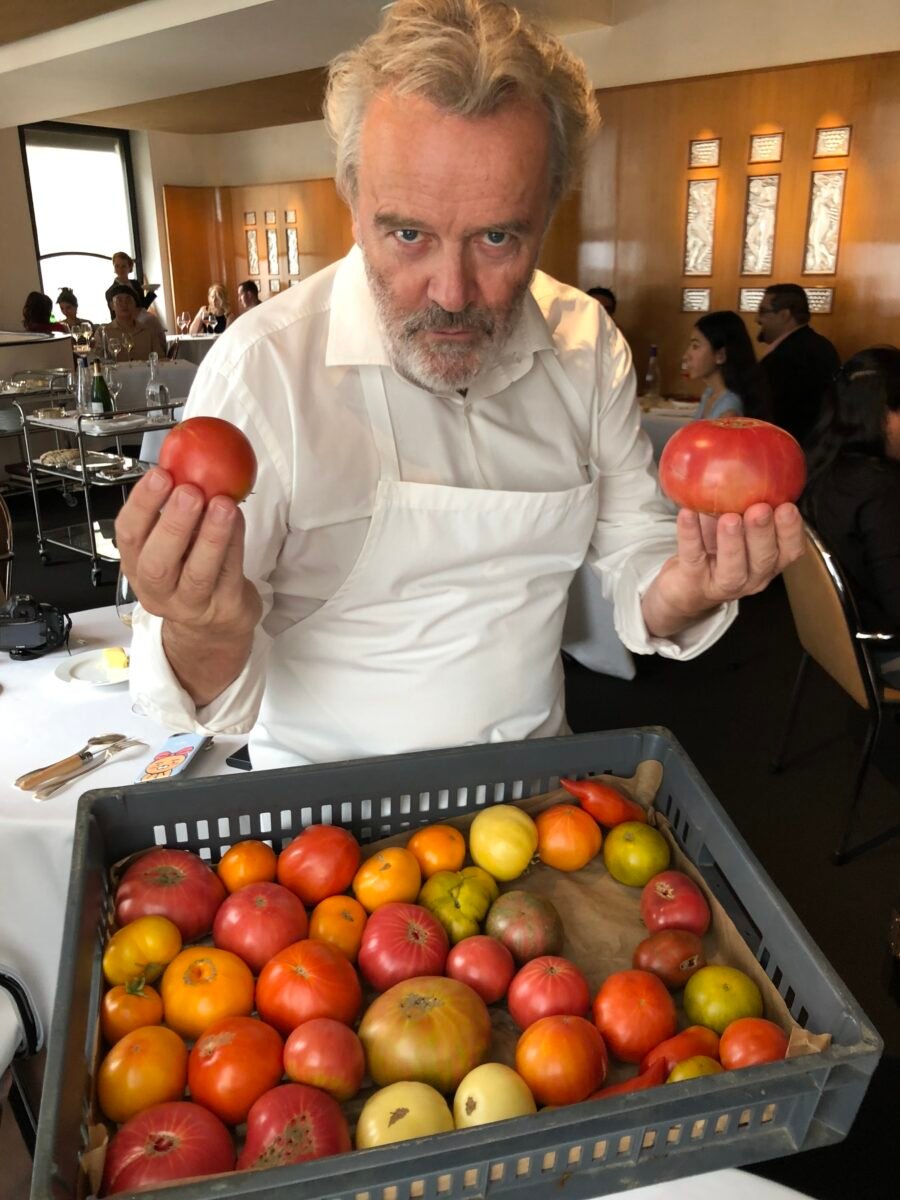
After more than 50 years of cooking, you have decided to stop using ingredients you had spent decades mastering. At this stage of your career, what does it feel like to become a student again?
I think it is the most beautiful thing. I have always loved challenges, discovering new things, pushing minimalist cooking further and, above all, learning. Working simply for the sake of working has little meaning. But working to learn…
This new beginning is full of flowers. It makes me shine. It brings so much to my everyday life because it is cooking full of light. We are creating a cuisine, bringing it out of the earth. It is a cuisine full of poetry and imagination, an artistic cuisine.And what could be more beautiful than creating something you can eventually teach? Because at the end of this adventure, there will be a notebook of recipes. That is also part of the idea. One day, you should be able to recreate at home some of what we do at Arpège. Of course, we cannot share everything, but there will be recipes that people can discover, imagine and make for themselves.
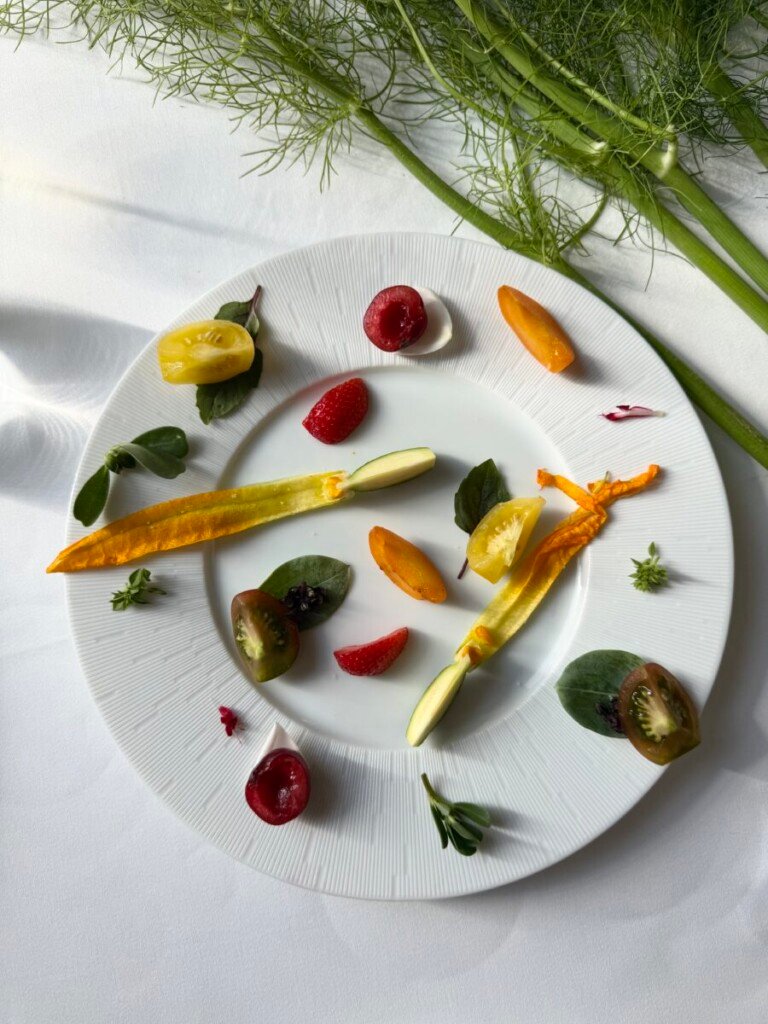
You first became known as a specialist in roasting, before placing vegetables at the heart of Arpège and then going even further last year. Do you see these changes as successive reinventions, or as a continuation of the same journey?
What interested me was changing everything while changing nothing. Because there was something I absolutely wanted to preserve: my identity as a roasting specialist and as a sauce chef. What we call the school of fire, the flame. Today, I put all of that knowledge at the service of leaves and garden vegetables. And suddenly, we are offering our five senses new experiences: new flavours, new aromas, new visual expressions and a new relationship with fire.
There are tables that miss the point. But I do not want to create cooking that pleases everyone.
By giving up butter, cream, eggs, cheese, meat and fish, you have also left behind much of the traditional vocabulary of French haute cuisine. What has been the hardest thing to reinvent, and what has it taught you?
First of all, there is no difficulty in pleasure. There is no difficulty, only exploration. At no point did we want to create imitations. Butter is a work of art. Cream is a masterpiece. We have placed all these ingredients in what we call, in French, the trophy cabinet. Today, we can look at them, but we no longer touch them.
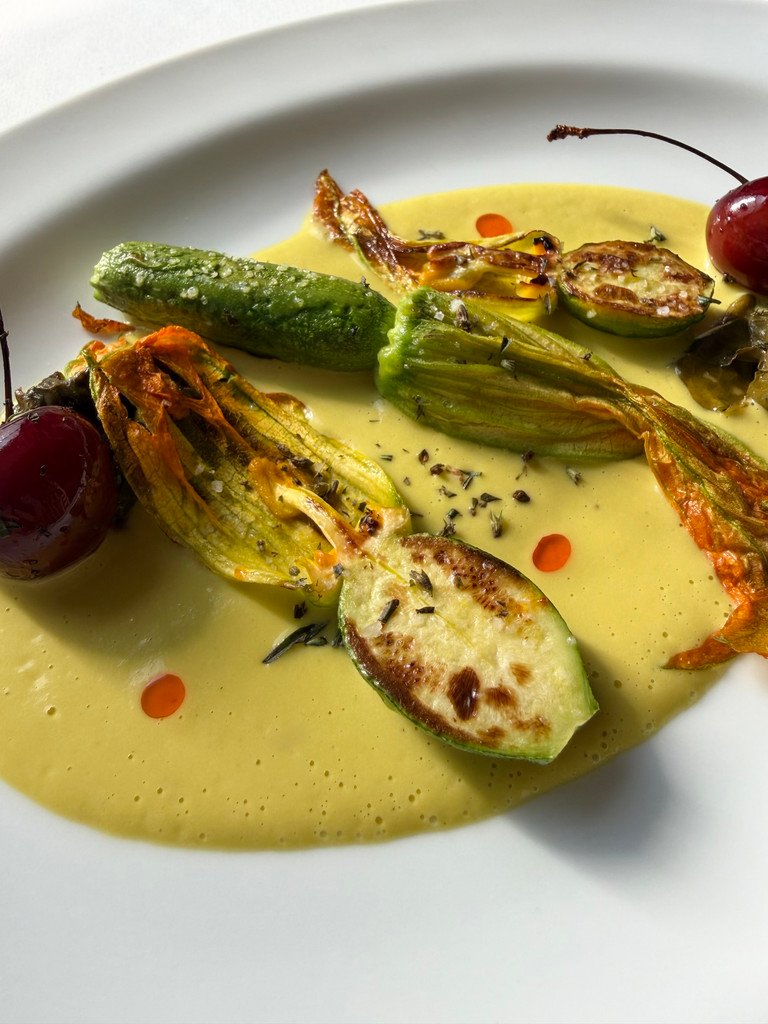
What interested me was discovering what a vegetable, a fruit or a leaf could express without any animal influence. I thought I knew a summer courgette well, but I did not. I discovered how far we could go with its creative potential. Think of courgettes, tomatoes and aubergines in summer; young leeks and asparagus in spring; celeriac and leeks in winter. There is creative potential in all these products that we have not explored. And that is what we are discovering at Arpège today. We are defining a cuisine that did not exist before. Little by little, it is finding its place.
The response from our guests encourages us to go further. To create cooking that is beautiful, that is good for our health, and above all, that evolves and renews itself with the seasons. In France, we are fortunate to have four distinct seasons. That means four different notebooks of recipes every year.
For a long time, you have spoken about vegetables as grands crus. After 25 years of placing them at the centre of the plate, do you feel that guests today can appreciate a beautiful carrot or beetroot as much as caviar, lobster or truffles?
First of all, I do not make comparisons. But yes, I really feel that people look at vegetables differently today. A beetroot, asparagus in spring, a tomato in summer, an endive in autumn: these ingredients are no longer seen in the same way. And why? Because chefs like myself, and many others, have worked to give them a different place on the plate. In the past, vegetables were the poor relation of a dish. They were simply a garnish, something considered to have little flavour or nutritional value. Today, the vegetable has become something in its own right. It is no longer the accompaniment. It is the dish.
When you begin a love story, there is no nostalgia for the previous one.
But there is something that concerns me enormously: the confusion surrounding seasonality. As chefs, we celebrate the seasons according to a proper calendar. Yet when you go to a market today, you find tomatoes from 1 January to 31 December. Cucumbers and courgettes all year round. And then there are strawberries, cherries and other fruits appearing outside their natural seasons. It is very concerning. We are trying to elevate vegetables to the status of grands crus, to make them the centre of a dish. But people also need to understand that every season has its own flavours and colours. That is something we need to restore, because good cooking is, above all, seasonal cooking.
You have now experienced all four seasons with this new cuisine. What has winter taught you that summer could not? And to what extent does the garden force you to rethink a dish, or even an entire menu?
We are still at the beginning of the adventure. This will be only our second winter. It has been about 15 months since we began this new chapter. I think we have made good progress. Together with the team, we have already travelled a wonderful stretch of the journey, but there is still so much to see, to learn and to discover. Technically, we are beginning to really get things right, particularly with the quality of our sauces. Every season teaches us something different. I am not the same chef in winter, working with radishes, as I am in spring with broad beans or in summer with peppers. Each season has, I would say, an intelligence of flavours. It is up to us to respect that intelligence and bring it to life.
Has this new direction also changed Arpège’s clientele? Have the reactions of your most loyal guests surprised you?
Of course, our clientele has changed. We have new guests, but our true supporters are still here. This is a cuisine that invites curiosity. Naturally, we welcome vegetarian and vegan guests, but we also have many people who enjoy meat, fish and other animal products, and who are simply intrigued by what we are doing. They want to discover what happens when you give three stars to the seasons and to the gardens. What can a three-Michelin-starred chef create without butter, cream, cheese, eggs or milk? That question interests them. And these are often people with a great artistic sensitivity, people who love art.
The reactions we receive today are different from those we received before. I was very happy with our guests’ feedback at Arpège in the past, but now I hear different words, different expressions. Of course, we do not make everyone happy. There are tables that miss the point. But I do not want to create cooking that pleases everyone. I want a cuisine with its own personality, one that reflects the personality of the chef. Perhaps there is something unconventional about it, but it exists, and above all, it has an enormous amount of light.
In a way, I have changed nothing. I have simply changed the ingredients I work with. That is all.
Is there a dish, a gesture or a technique from the old Arpège that you sometimes miss? Even if you know you will never bring it back to the menu, do you ever feel nostalgic for that cooking?
Of course, there are gestures I used to make with poultry or shellfish. But I still find those gestures in my cooking today. That is what I was explaining earlier. I am still a roasting specialist. At Arpège, we still make sauces. We still smoke, flambé, roast, braise, grill and sear. All those techniques are still there. In a way, I have changed nothing. I have simply changed the ingredients I work with. That is all.
So nostalgia is not part of your vocabulary?
No. There is no nostalgia. None at all. It is a love story. It is like being in love. When you begin a love story, there is no nostalgia for the previous one.