When a fellow food enthusiast told me he had a spare seat at Tempura Naruse for lunch the following day, I didn’t think twice. I was in Kyoto and due to travel to Tokyo that day, but instead bought a Shinkansen ticket to Shizuoka and made the detour with all my luggage, just for lunch.
Tempura Naruse (成生) is one of the most difficult restaurant reservations in Japan. With only eight seats at the counter, demand far exceeds availability. Reservations through the OMAKASE platform are released at 11 am on the first day of each month for dates two months ahead, and customers are limited to one booking per quarter through the platform. Getting a seat at such short notice was an opportunity I couldn’t miss.

The restaurant is run by chef Takeo Shimura, whose path to becoming one of Japan’s most respected tempura chefs is quite unconventional.
Born in Kanagawa Prefecture in 1975, Shimura studied animal science at Tokyo University of Agriculture before moving to Australia, where he spent much of his time surfing. While living in Sydney, he began working at a Japanese restaurant, an experience that eventually led him towards cooking. He returned to Japan to obtain his culinary qualifications, initially intending to go back to Australia.
A keen surfer, he wanted to remain close to the sea and found work at a traditional Japanese restaurant in Yaizu, a fishing port in Shizuoka Prefecture. There, he trained in different sections of the kitchen before being assigned to tempura. What began as another stage of his apprenticeship became his principal interest. He was fascinated by the possibilities of frying, particularly how different temperatures and techniques could transform an ingredient. Much of his approach was subsequently developed through his own experimentation.
In 2007, Shimura opened his first restaurant near Shizuoka Station, in a modest space of approximately 43 square metres, serving a tempura course priced at ¥3,800. The beginning was far from easy. He has spoken openly about the difficulties of attracting customers during his first three years. Gradually, word spread, and diners began travelling from other parts of Japan specifically to eat his tempura.
In March 2021, Naruse moved to its present location, near Shizuoka Sengen Shrine, in a building designed by Kyoto based architect Toru Kijima. The property was previously home to a temple residence, later the residence of Shizuoka Prefecture’s first governor and subsequently a traditional inn. Its Japanese garden, attributed to the 15th-century military commander Ōta Dōkan, has been preserved for more than 500 years.
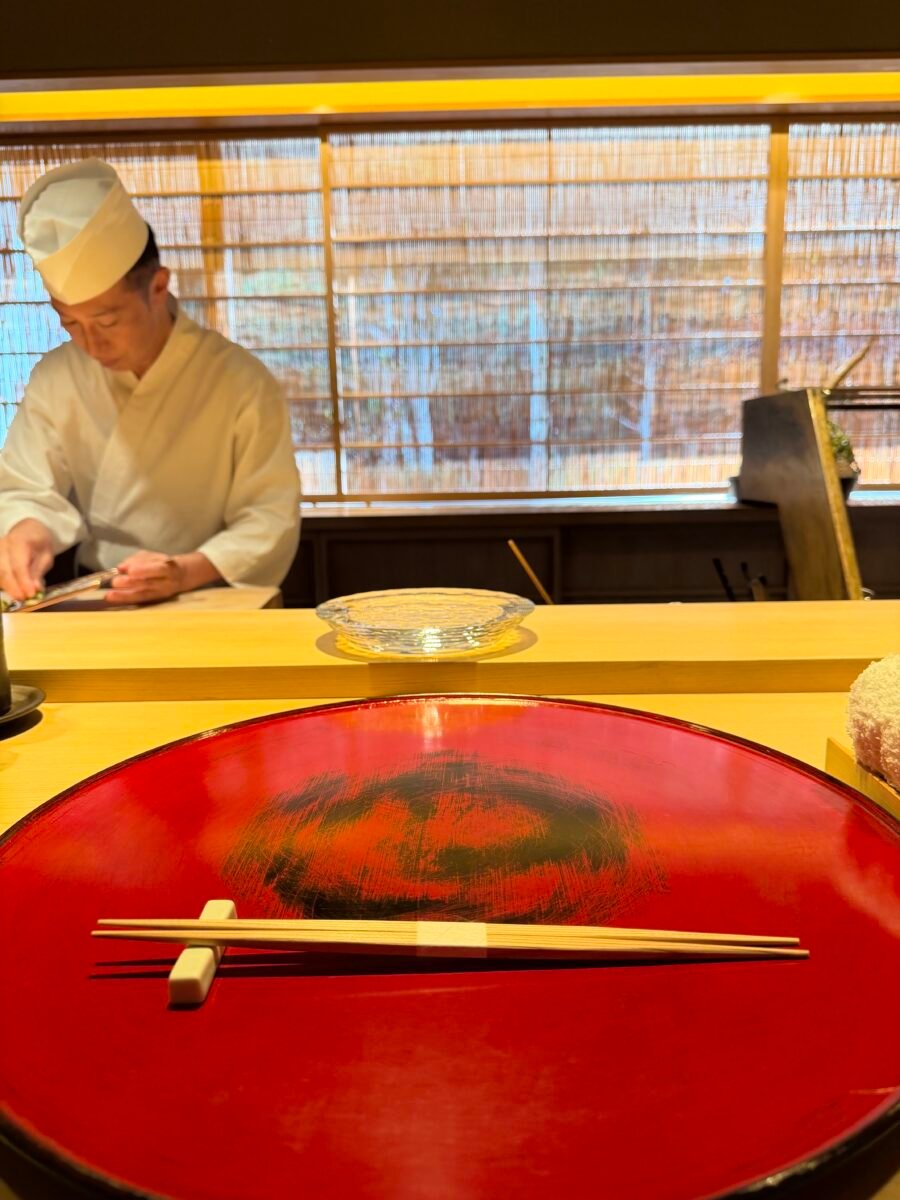
The architecture combines local Shizuoka cedar with a counter made from Kyoto Kitayama hinoki, and the eight seats face a large window overlooking the historic garden.
I arrived by taxi after a short drive from Shizuoka Station. Although Naruse stands beside a fairly busy road, I was struck by how peaceful the place felt. The timber building, with its wooden lattice exterior, seemed completely removed from the traffic outside. After the hurried journey from Kyoto, arriving here felt like entering a different world.
I was welcomed into the waiting room, where a few other guests had already arrived. Among them was a gentleman from the Basque Country who had been living in Japan for more than twenty years. He told me that it was also his first visit to Naruse and that he had been invited to join a Japanese friend’s reservation. We had both been fortunate enough to find ourselves here through someone else’s booking ,and it seems that, this is one of the few realistic ways to get into Naruse if you are not a regular.
Tea was served in a minimalist waiting room with a tea counter and an enormous natural stone occupying the centre of the space. The stone, reportedly a three-tonne Fuji stone, was an unexpected feature, almost sculptural against the simple timber interior. The proportions, materials and natural light made the room particularly beautiful.
When it was time for lunch, we were shown into the dining room. Behind the eight-seat counter, a large window extended almost the entire length of the wall, framing the garden and its mature trees. The late October sunlight filtered through the foliage, creating changing patterns of light and shadow. It was one of the most beautiful settings I have encountered in a Japanese restaurant.
Chef Shimura was already at his counter, preparing the ingredients and chatting with guests who appeared to be regulars. He was remarkably warm and approachable, clearly enjoying the interaction with everyone around him. This is not always something one can take for granted at Japan’s small, highly sought after restaurants, where some chefs can be considerably more reserved.
One of the most interesting aspects of Naruse is Shimura’s longstanding relationship with Naoki Maeda, the fifth generation owner of Sasue Maeda Fish Shop in nearby Yaizu. The two have worked together since Shimura’s apprenticeship, developing an unusually close collaboration between fish supplier and chef.

Maeda is known throughout Japan for his understanding of fish handling, from how fish are caught and dispatched to the way they are chilled, stored and transported. Shimura visits his shop to select the seafood for the day’s service, and the two have spent years experimenting with how different methods of handling fish influence the result once it is cooked.
Their collaboration has been fundamental to Naruse’s cuisine. Fish such as white tilefish, horse mackerel, hairtail and Japanese whiting arrive in carefully controlled condition, and Shimura adjusts his preparation according to each ingredient.
Vegetables are given equal importance. Shimura and his team work directly with growers in Shizuoka, sourcing seasonal produce such as local lotus root, burdock, asparagus, okra and kabocha squash. The selection and preparation change according to what is available that day.

His approach to tempura goes beyond conventional deep frying. Depending on the ingredient, the oil can be used to steam, gently cook or quickly sear. In interviews, Shimura has explained how he sometimes switches off the heat shortly after placing fish in the oil, allowing it to cook without losing too much of its natural moisture.
Even the batter is carefully considered. He has described storing flour at temperatures as low as −50°C before mixing it with chilled water. When the cold batter meets the hot oil, its moisture evaporates rapidly, creating the texture he wants while protecting the ingredient inside. The result depends on a precise understanding of how heat, moisture and oil interact.

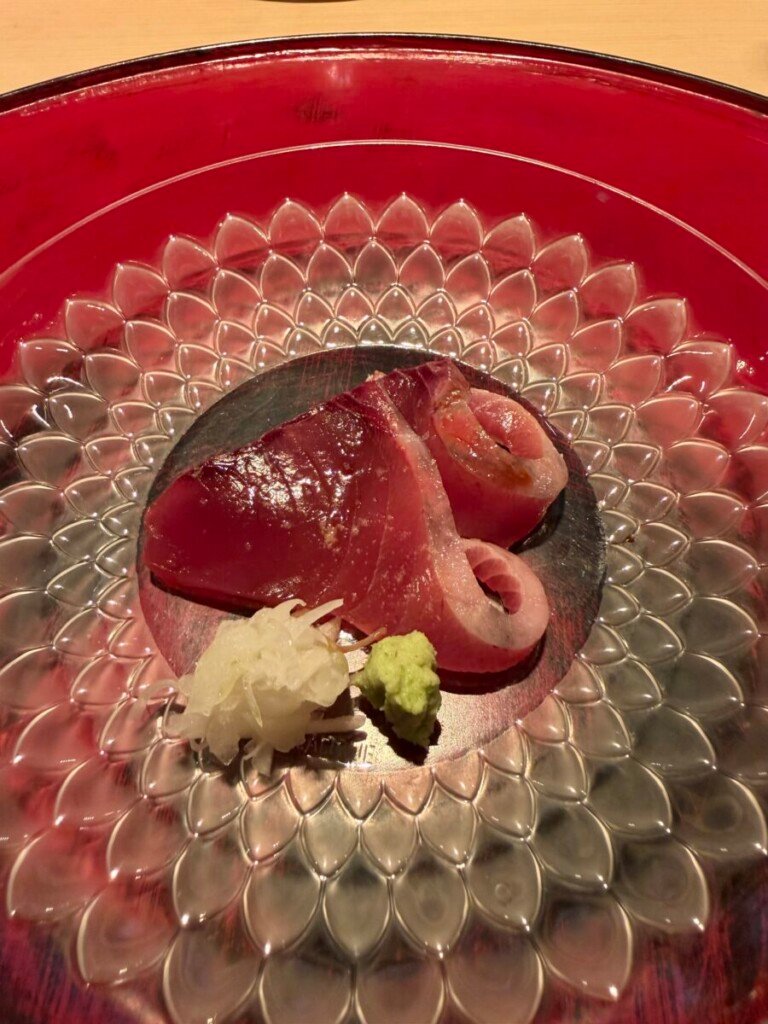
The omakase began with slices of bonito (katsuo), which Shimura carefully cut and placed on each plate. The quality of the fish was extraordinary, easily rivalling the sashimi I’ve eaten at some of Japan’s finest sushi restaurants.
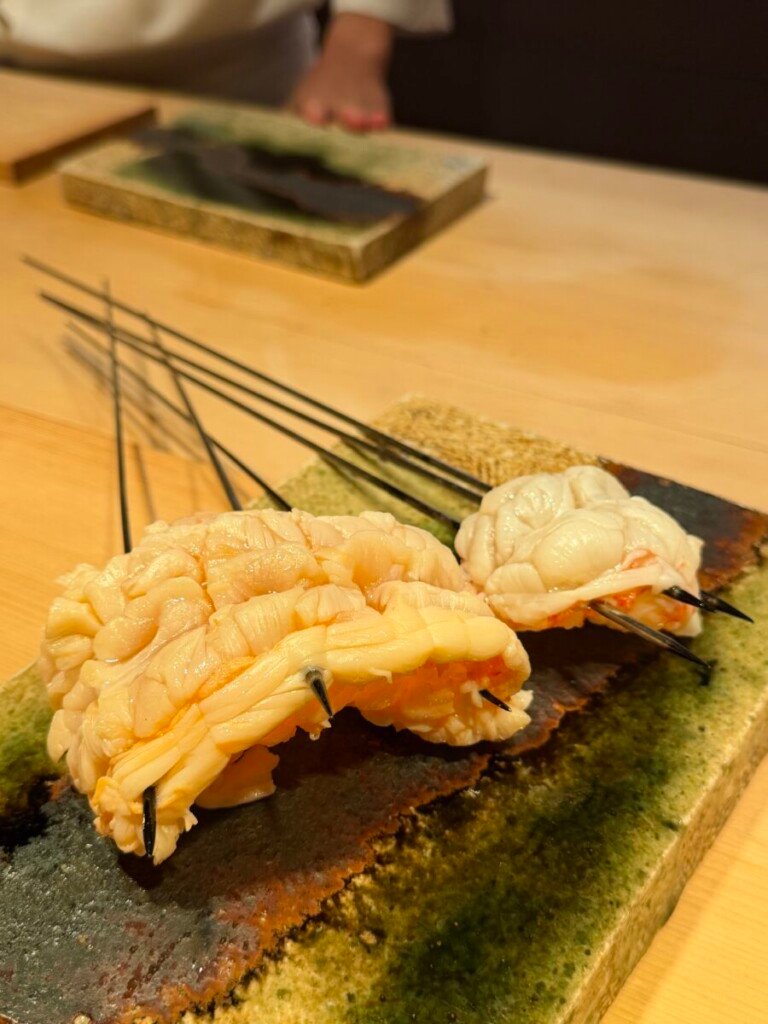
Soon afterwards came lobster, which Shimura cooked gently in oil, almost poaching it rather than frying it in the conventional sense. Watching the preparation, I was struck by how little resemblance it had to what most people associate with tempura. When the lobster was served, I can say without hesitation that it was one of the best I have ever eaten. It reminded me Bruno Verjus’ “raw- cooked” lobster.
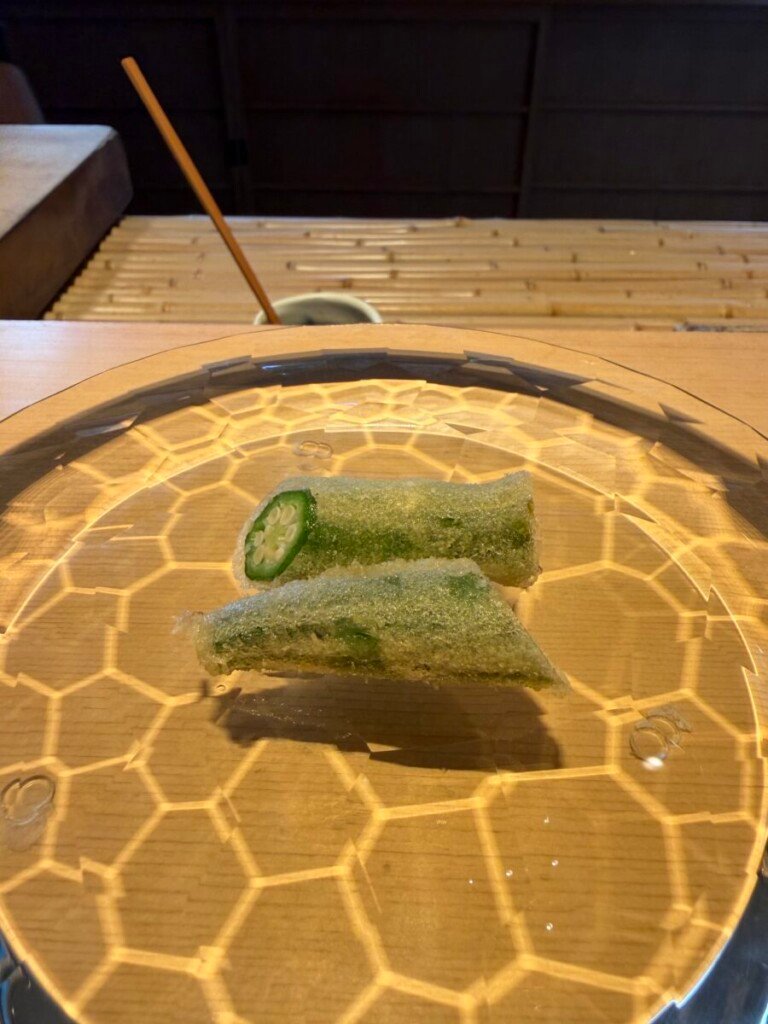
The meal continued with a succession of seasonal ingredients. There was okra and tiny squid that had been alive only moments before cooking. What interested me most was how Shimura adapted his technique to each one, sometimes using only a thin coating of batter, at other times allowing the oil to cook it very gently.
Another memorable dish was kabocha, the Japanese pumpkin. It was an incredible bite, its natural sweetness brought out through the cooking. Naruse is known for using aged kabocha, allowing the squash to develop a more concentrated flavour before it is cooked. Even such a familiar vegetable became one of the highlights of lunch.
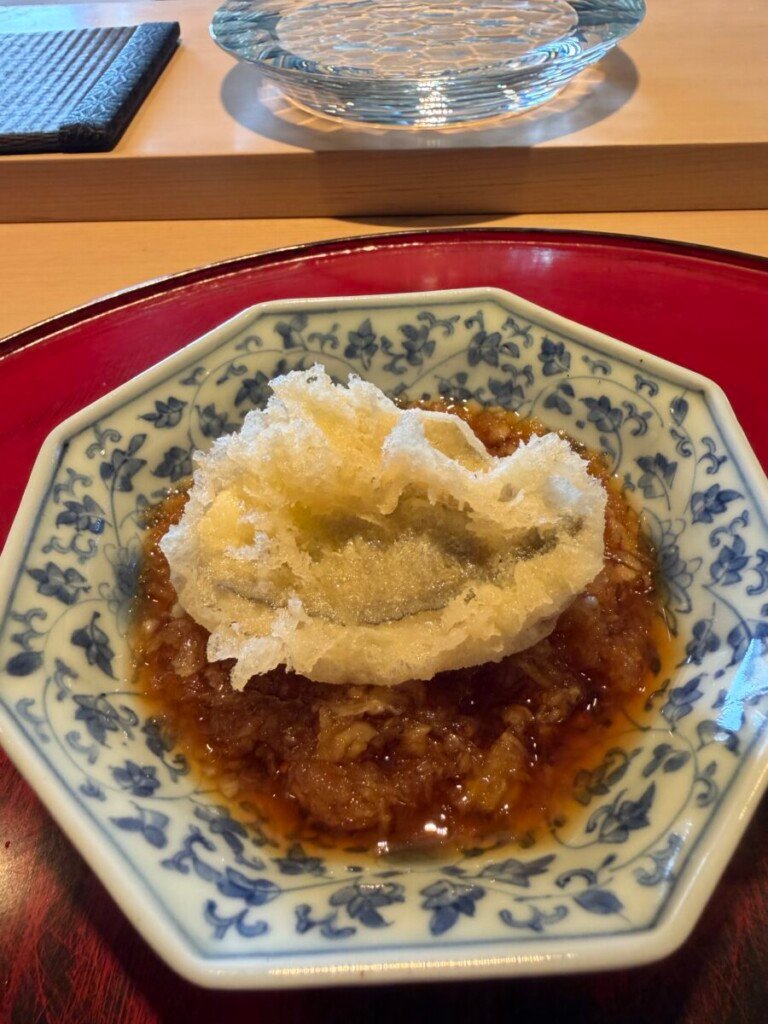
Throughout the meal, Shimura moved between his ingredients and the frying pot with an ease that came from years of experience. Each piece received individual attention, and watching him work was as interesting as eating the food itself.
The final savoury course was ten-don, a bowl of rice topped with freshly fried tempura. Afterwards, we left the counter and moved to another room, where Shimura joined us to prepare and serve Japanese tea, followed by dessert. It was a lovely way to finish the meal, with the chef taking on the role of host after spending the previous hours cooking for us.
After two weeks spent mostly in Tokyo and Kyoto, those two hours in Shizuoka felt like a complete change of scene. I particularly remember the October sunlight falling across the garden, the extraordinary lobster and Shimura’s warmth throughout the meal.
By the time I collected my luggage and continued towards Tokyo, I was already thinking how fortunate I had been to get that last minute invitation. Some of the best experiences in Japan are the ones you don’t plan. This was certainly one of them.


