By Sophie Brissaud for Luxeat Guide.
The name sounds light and crystalline, like two chopsticks gently hitting the edge of a wine glass. In Cantonese, dim sum means “Touch the heart”, alluding to the sheer enjoyment brought by a seemingly endless repertoire of small, tasty dishes. Of course, not only in China, an array of little things to eat sometimes holds more seduction than large platefuls – it all depends on the time, place, and circumstance. You may want that while having wine or pre-dinner drinks – Spanish tapas, Basque pintxos, West Mediterranean mezze or mezedhes, Russian zakuski-, or just start your meal with a fragrant, colourful Tunisian kemia, the trick being not getting too satiated before the big hearty couscous arrives.
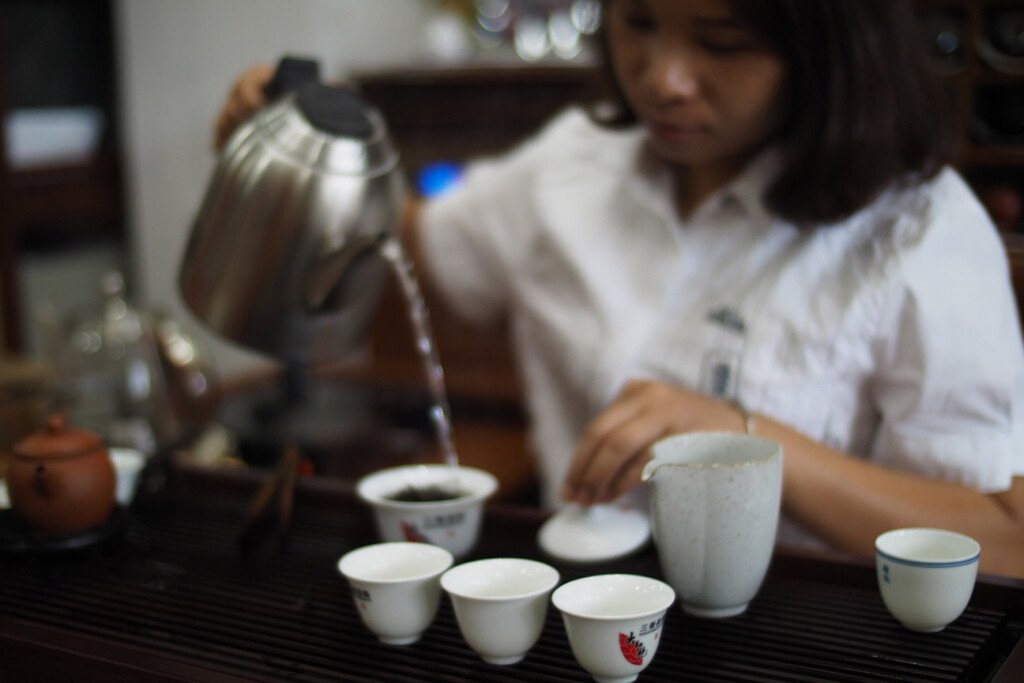
However, dim sum is not a set of appetisers or first courses: from the beginning to the end of the meal, it’s all dim sum. And the first important thing to know is that tea is at the core of dim sum. Chinese tea is dim sum’s raison d’être, its root, the force that moves it. Yam cha, “drink tea”, is indeed the more usual name of dim sum in the Cantonese region. Simply put, it is what you eat while drinking tea.
Your first dim sum experience in Guangzhou
While small bites and snacks are ubiquitous in China, especially when tea is involved, dim sum/yam cha is essentially Cantonese. The Pearl River Delta invented it and still makes the best versions of it; and Canton, Guangzhou, is its birthplace. It is, by nature, morning food, but is it breakfast? It’s too large and ramified to be defined as such.
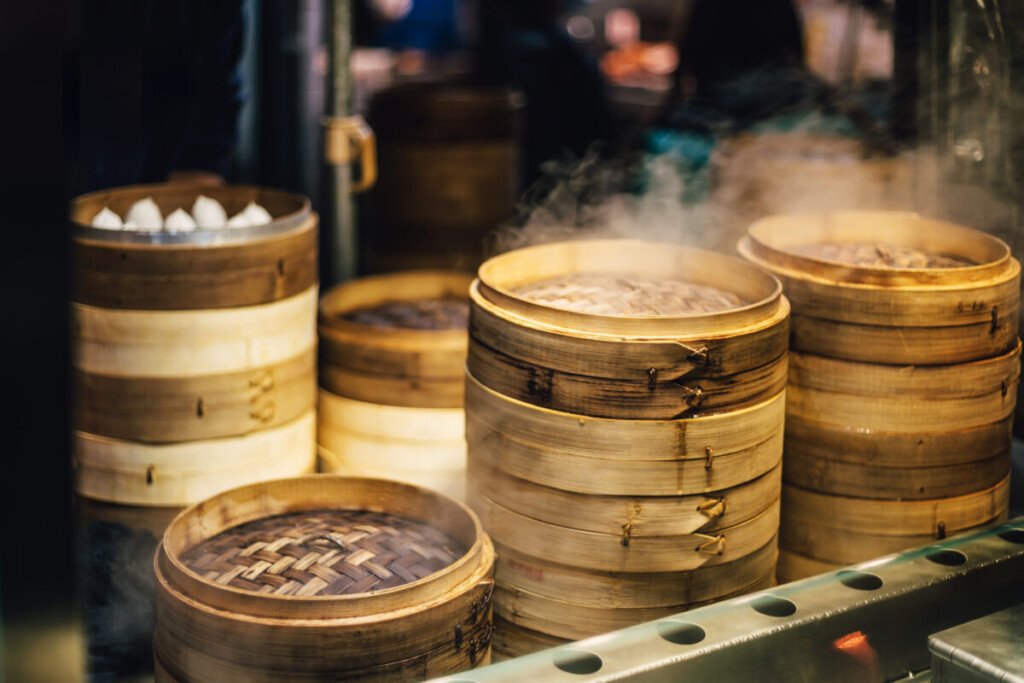
If you want to experience that, try to land at Guangzhou Baiyun airport in the small hours of the morning, as international flights often do. You have already notified your local friends, who meet you at the arrivals gate, that you want dim sum, rain or shine, so they sensibly decided that now, the early morning, was the perfect moment for your initiation. As you get out, the sky is still dark. Your friends grab a taxi and you’re all headed for the old district of Liwan. You may choose the charming Panxi restaurant, with several dining rooms arranged in perfect Cantonese style around a curvaceous lake. Or the venerable old Taotaoju, a few streets away. Still a bit dizzy from twelve hours of long-distance flight, you sit in a very large room at a round table with a lazy Susan ready to spin. The place is packed and smells of garlic, seafood, and warm bamboo baskets. A tea table with an electric kettle, a teapot and cups stands at your tableside. You’d never have thought that so many families would gather so early in the morning to eat out, elbow-to-elbow with shopkeepers, bike delivery men, street sweepers having their first meal break of the day. The menu is an encyclopedia and every dish is numbered, so that you may check the boxes on the ordering form. Very quickly, the bamboo baskets start piling up on your table, but also large bowls of congee, fried dumplings, egg tarts, char siu buns – baked or steamed -, airy sponge cakes, chewy beef tripe, tender chicken feet, taro fritters, sweet tofu… Only a few among hundreds of small edibles. Sweet and savoury dishes follow each other without any apparent logic, and the party is over when you can’t eat anymore.
Dim sum service rarely extends past noon. Frequently, it stops when there’s nothing left to eat, or the restaurant switches to a different mode and serves other types of food until evening closure. If you crave dim sum and rise a bit too late in the morning, you may find your restaurant empty when you arrive, even at 10 AM. No dim sum left till the next sunrise, this is the harsh Cantonese rule. However, you’re in Guangzhou and you won’t starve. Recently, some places in West Guangdong and Hong Kong have been known to serve dim sum also at dinnertime – a break from tradition that won’t bring tears to anyone’s eyes.
The four pillars of dim sum
It’s all about tea. The first pillar, or first rule, of dim sum is that it’s tea food. Tea is the soul of dim sum, and although Chinese cuisine doesn’t cultivate food and drink pairings as the West does, the whole concept of dim sum was built around tea, in the teahouses of the Song dynasty (960-1279). Tea stirs your energy, but it also lowers your blood sugar, boosts your metabolism, and makes you hungry. Drunk on its own, tea ends up producing a drunkenness that can be stopped by ingesting food. And because tea helps digestion, hunger comes back very quickly and you have to eat again, preferably with a few cups of tea. It has been said that in this virtuous circle lies the secret of Cantonese slim figures, but at least it does help to understand why dim sum exists.
Thus, dim sum is fatty, and that’s the second pillar: fat is one of its secrets, pork fat especially. Not all dim sum are fatty, but as a rule many of them should be glistening to some extent, without being greasy. You may be told by some that tea is drunk with dim sum to cut down the fat, but actually it is the other way around: dim sum is fatty because tea cuts down the fat. Also, the third pillar of a dim sum meal is that it should offer all possible textures —tenderness, moistness, softness, gooeyness, flakiness, and crispiness—, and only fat and collagen can provide that. This is why many fashion-conscious attempts to recreate dim sum in the West, in Paris for instance, have been failures, for these restaurants were built around a modernised, lightened, politically correct version of dim sum (aside from the fact that they equated dim sum with dumplings, a common error). Papery dumpling skins, dry fillings, no trace of collagen, and a general absence of flavour aptly describe the Yuppie-compatible dim sum places that opened in Paris in the 2010s, just because their creators thought their customers expected fewer calories. Form over substance: not even the Mao-era propaganda posters on the walls could help anything. In order to make dim sum diet-friendly, lard was kicked out —the magic ingredient that makes steamed eggs tasty, egg tarts incredibly flaky, dumplings soft and crunchy. De-fattened, de-larded, the neo-dim sum was only a shadow of its former self. Besides, it was also a symptom of a total obliviousness of tea, since dim sum is largely about fat and tea going hand in hand. Indeed, there is no cultural appropriation without the dispossession of the original culture.
And which tea should help your fatty dim sum go down? Traditionally, pu-er (postfermented black tea) is the favourite. It will be shu pu-er, the quickly fermented type, as opposed to sheng pu-er, the “raw” form of pu-er tea, which is actually a green tea and takes years to ferment. The woodsy, earthy, humus notes of this dark tea are a wonderful match with fatty foods, particularly with seafood and fermented condiments like black bean sauce. However, dim sum restaurants serve many other types of Chinese teas, like Yingde red tea, Anxi tieguanyin oolong, Wuyishan yan cha, or chrysanthemum tea. Since you have a tea table at arm’s length, just pick your tea. It will come in a small sachet of 7 or 8 grams, enough to replenish your teapot again and again throughout the feast.
Finally, the fourth pillar, the honest definition: what is dim sum? The correct answer is: anything served in small amounts in a dim sum restaurant at the right hours. Henceforth, and contrary to general belief, it is not just steamed dumplings and bamboo baskets. These are an important part of dim sum cooking, but by no means all of it, and not all steamed dumplings are dim sum. Dim sum can also be boiled, simmered, deep-fried, pan-fried, baked, or even undergo three different cooking methods in succession, like the infamous chicken feet which are deep-fried, then simmered, and then seasoned and steamed. Though quickly eaten, dim sum is never easy to prepare. It requires infinite precautions. Like good sushi, it is the beauty of the ephemeral in a hungry, hurried world.
A few classics
Among the myriad of available dim sum, which could not possibly be mentioned here, this is a short list of the most common specimens you can order.
Steamed dim sum
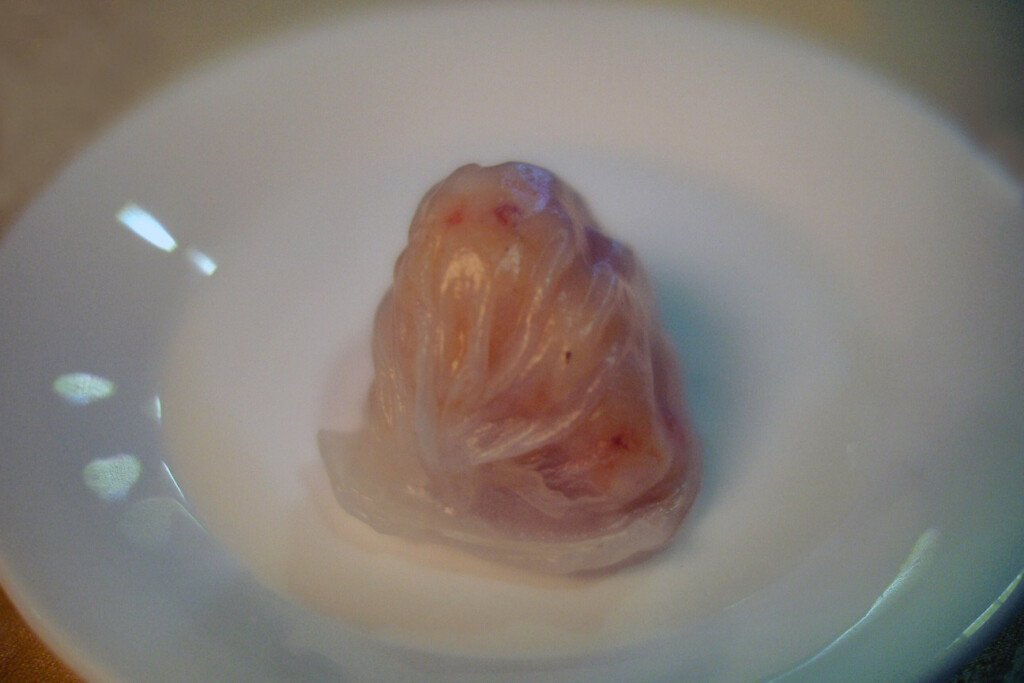
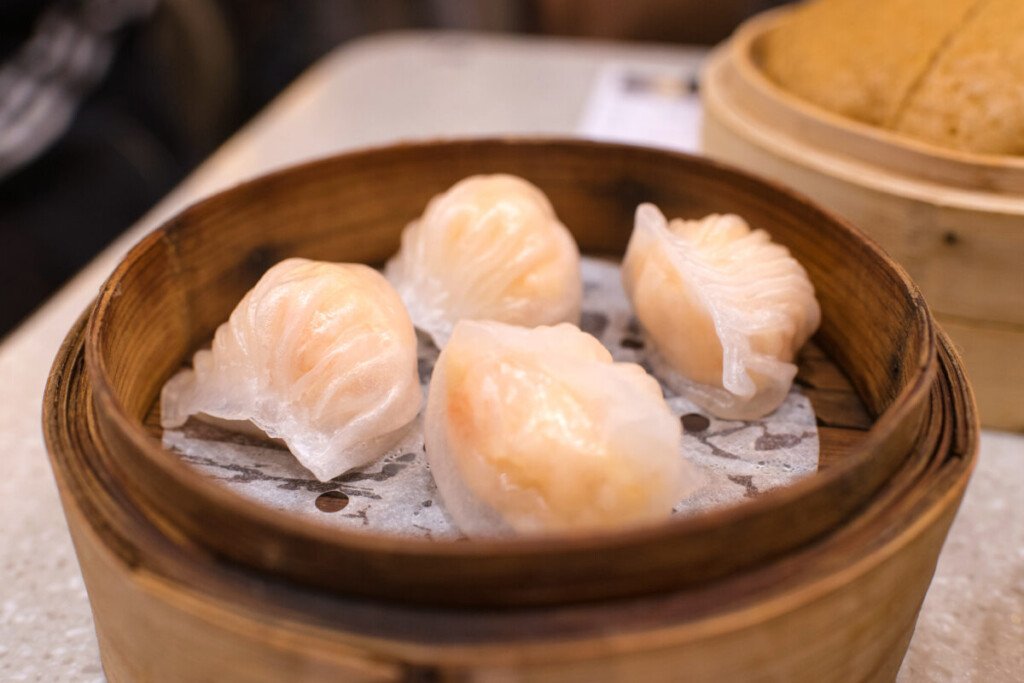
Har gau. A round, pleated dumpling with a translucent skin. The filling is mostly chopped shrimp with a little pork fat, and it is believed that you know the skill of a dim sum chef by their har gau.
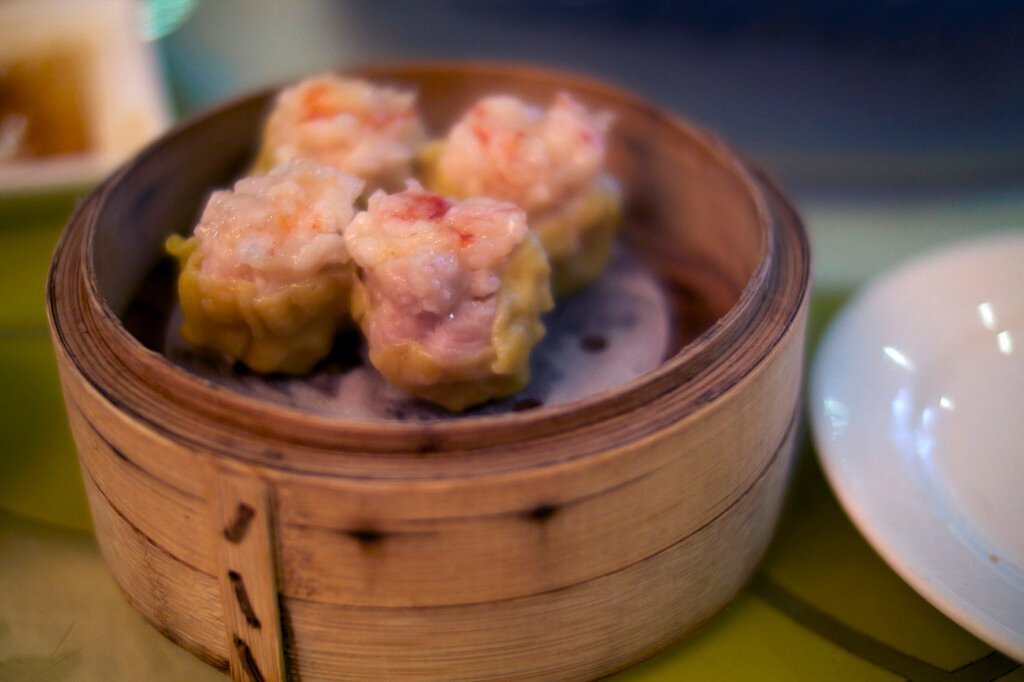
Siu mai. Har gau’s inseparable brother, a cylindrical, open-faced dumpling filled with ground pork, shrimp and mushrooms, and topped with fish roe (some fancy chefs, naturally, replace that with caviar).
Fan guo. This plump, elegant dumpling from Chaozhou barely conceals a filling of ground pork, dried shrimp, chives and roasted peanuts in a translucent skin.
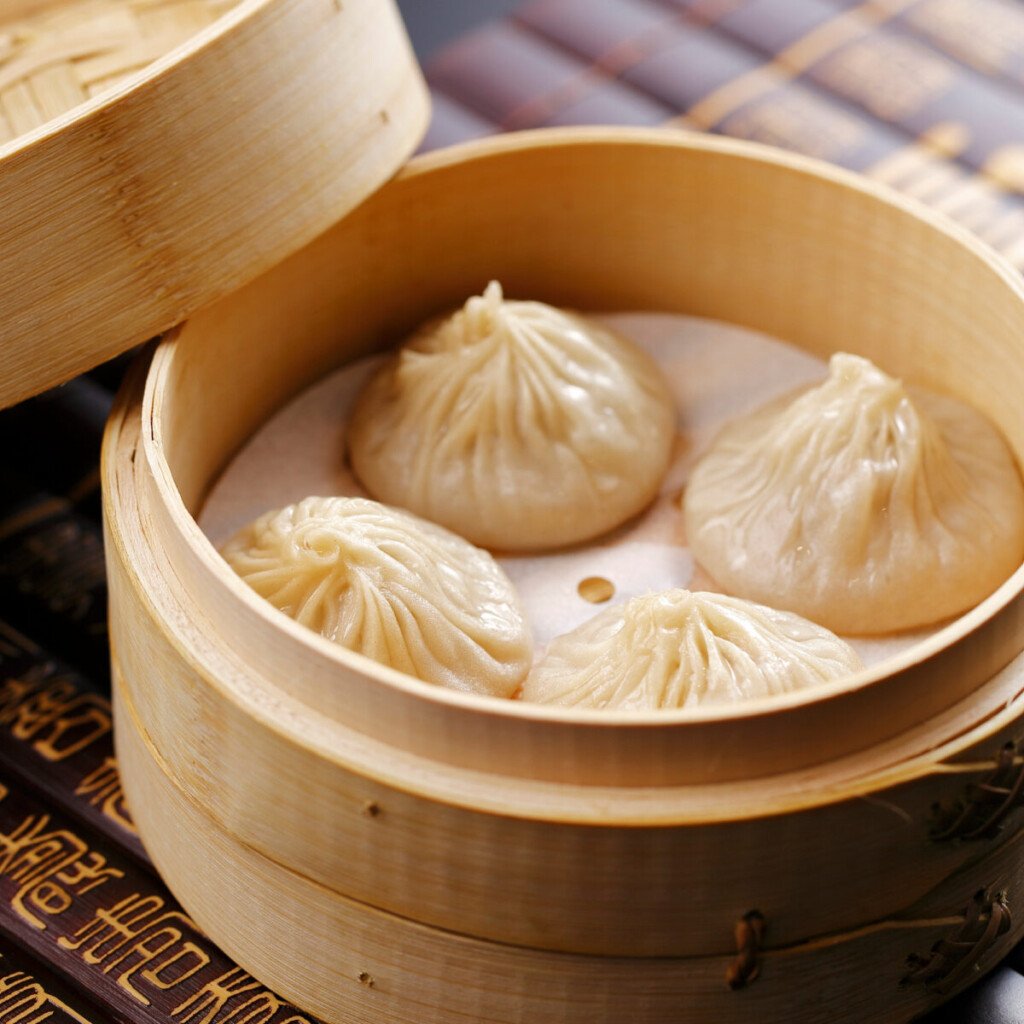
Xiaolongbao. Not Cantonese but Shanghainese, this soup dumpling has become very popular in recent years and a common find on most dim sum menus.
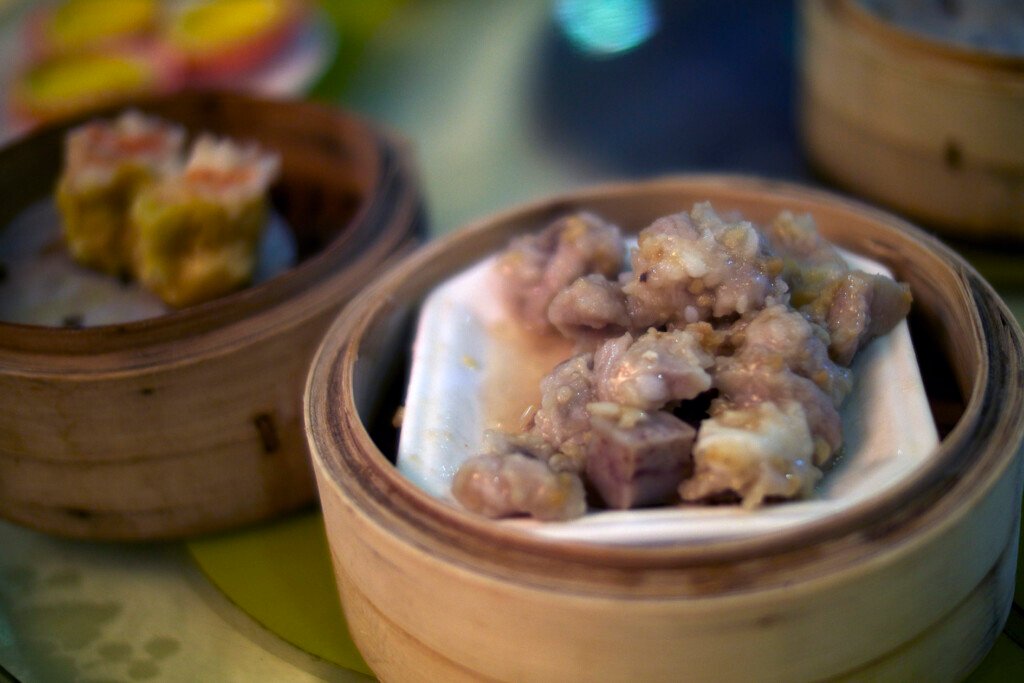
Paai gwat (steamed spareribs). Get some ribs of a young pig, chop them into short lengths, marinate them in garlic, ginger, Shaoxing wine, and cornstarch. Steam them with fermented black beans and sliced red chillies until tender and luscious. One of the best examples of “fattier is better” in dim sum cookery.
Phoenix claws (chicken feet). Steamed in a black bean sauce, or just plain, these “phœnix feet” have been deep-fried and then slowly boiled before they met the steamer. A very messy finger food packed with collagen and utterly delicious.
Ngau yuk. Round, bouncy beef meatballs flavoured with chen pi (dried tangerine peel) and steamed over tofu skin. Not many dim sum houses get them right, for their preparation is tricky, but when properly made, they’re delicious.
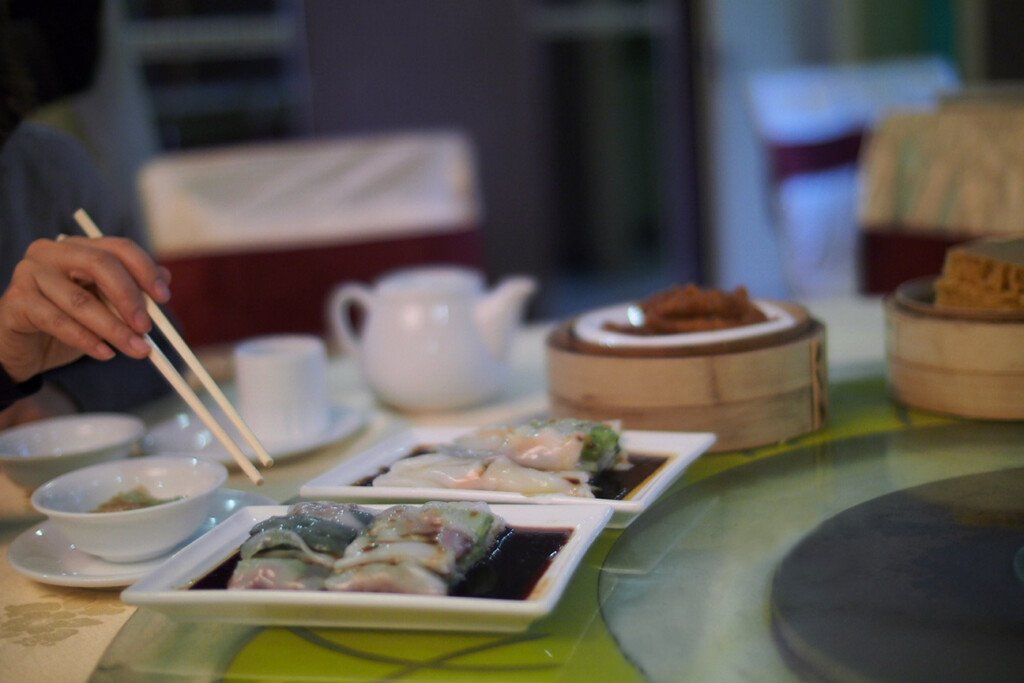
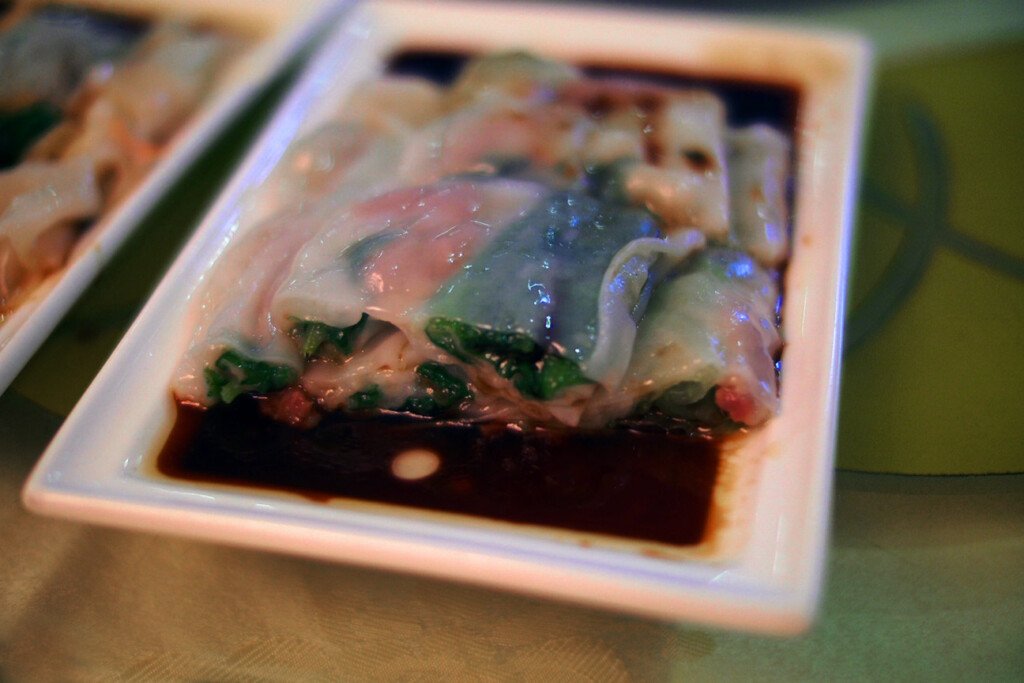
Cheung fan. Is it really a dumpling? What matters is that these steamed, thin rice rolls filled with various ingredients and served with a little soy sauce are perfect comfort food. Also enjoyed in Chaoshan, where they can be even more delicate than in Guangzhou, they are common to the Lin (Cantonese) and Min (East Guangdong-Fujian) cultures.
Lo bak guo, a great favourite of dim sum menus, is double-cooked —a steamed cake made of rice flour, grated turnip, and tasty chopped things like dried shrimp and Chinese sausage. Left to cool until solid, the cake is then sliced and pan-fried until golden and fragrant.
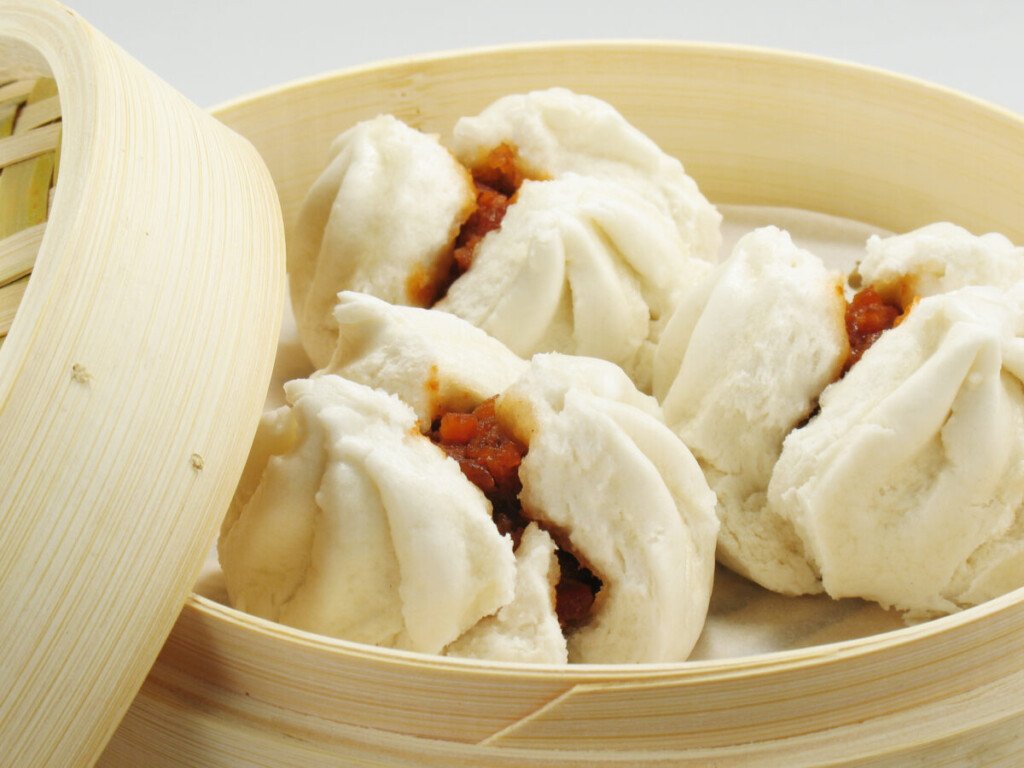
Char siu bao. A fluffy white steamed bun filled with chopped char siu roast pork. Quite filling, so it is wise to order them last, to ensure you’re not hungry at the end of your meal. They somewhat taste like dessert, anyway.
Ma lai gao. Or “Malay cake”, another steamed thing that is not a dumpling. A wonderful, airy sponge cake flavoured with brown cane sugar and a drop of soy sauce. Stellar when properly made.
Zhuang pi nai (double-skin milk). A much-beloved sweet dish that originated in Foshan, where water-buffaloes are many. A bowlful of creamy buffalo milk is steamed until a skin forms at the top, then the milk is poured out whlle the skin is carefully left in the bowl. Egg white and sugar are whisked into the milk, which is poured back into the bowl and steamed again, resulting in a thicker skin. This delicacy is eaten chilled, sometimes topped with diced fruit like mango.
Deep-fried dim sum
Fried wonton. When it is not boiled in a soup, this light, large-winged shrimp dumpling can go into the deep-fryer and be, quite decadently, served with mayo.
Wu gok. When the mashed taro dough, filled with ground pork, shrimp, and mushrooms, hits the hot oil, it instantly blossoms into a fantastic lacy structure. One of the crispiest and most delicious dim sum and, for the chef, one of the most difficult to get right.
Spring rolls. More Chaozhou than Cantonese, these fried wheat crêpe cigars are filled with shredded vegetables, sometimes with a little meat added.
Sesame balls. These addictive round balls of chewy dough are filled with bean paste, coated in sesame seeds, and deep-fried.
Baked dim sum
Char siu so. The baked version of the char siu bao (see above) may be even better than the steamed version.
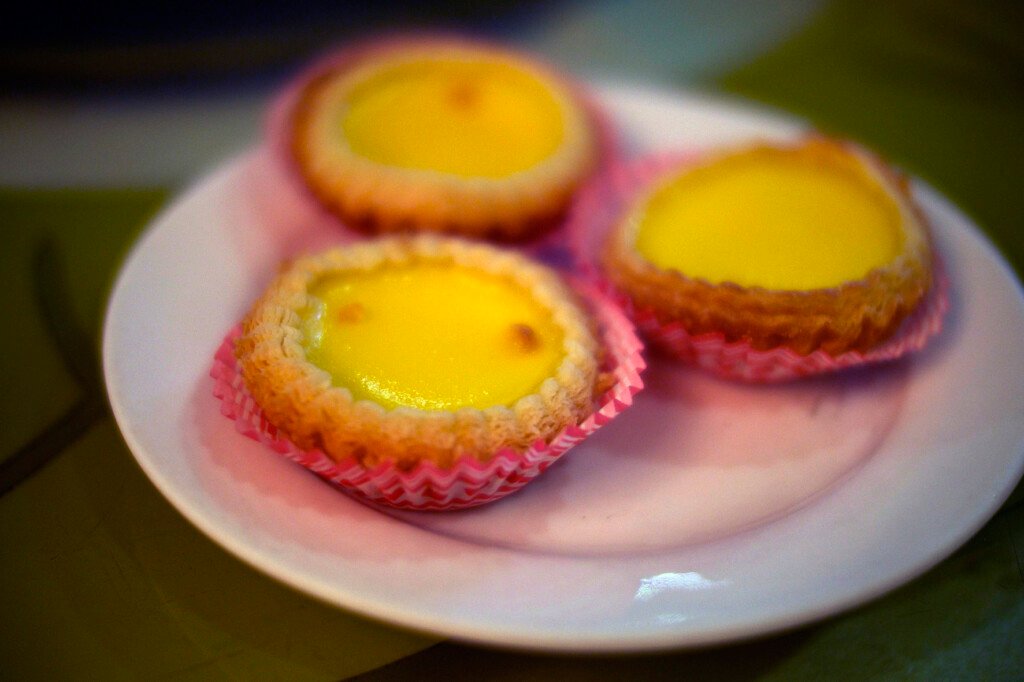
Dan ta. While one third of the world claims that Cantonese egg tarts were inspired by English custard tarts and another third insists that they are of Portuguese origin, the remaining third just eats them. What complicates the controversy is that, while the Guangzhou/Hong Kong version of egg tarts is most likely of British origin, the Macao version is clearly derived from Portuguese pasteis de nata and lies halfway between these and the Pearl River version. Nevermind – just eat them.
Boiled dim sum
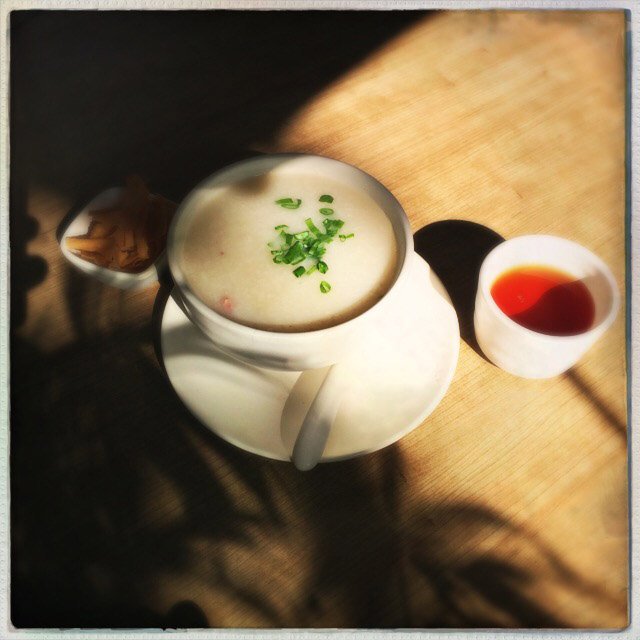
Congee (juk) is eaten at any hour, all year round and in all circumstances, but it is also an important feature of dim sum meals. When more than two or three people sit at a dim sum table, they will usually order a large tureen of steaming congee. Seafood congee is a favorite —with crab, fish, cuttlefish, shrimp, oysters and lobster—, but preserved egg and pork or pork offal congee are also popular. Congee is often served with deep-fried wonton skins for the crunch.
Warm, sweet soups. Black sesame soup (good for the hair), red bean soup, walnut soup, coconut milk sago soup with mango, and many more. But the pure white sweet almond soup of Shantou city is the one people travel across the province for.
Where to find your dim sum
As a rule, any large Chinese city can offer good dim sum restaurants as long as the team is Cantonese. East Guangdong —the food-crazy Chaoshan region— is a tricky subject, for while its food is supposedly “Cantonese”, it actually is very different. While it does not do dim sum strictly speaking, it provides some pretty fantastic early-day dishes that have a lot in common with their West Guangdong cousins. Just an early-morning stroll in the beautiful, run-down, old city of Shantou or in the tea-producing village of Feng Huang will have you licking your chops over some unforgettable cheung fan (steamed rice rolls), duckling dumplings (so called because they develop a pointed end like a duckling’s tail when they’re dropped in boiling syrup), or sweet almond soup. Elsewhere, yam cha/dim sum has travelled around the world in the baggage of Cantonese immigrants. Wherever there is Cantonese diaspora —in the United States, Australia, England, France, and of course Southeat Asia—, you’ll find dim sum. London, with its large Cantonese community, never went the way Paris did in recent years, and serves beautiful, glistening dim sum in many places. In Paris, traditional Chinese restaurants, from the Belleville or 13e Arrondissement canteens to family-owned neighborhood family joints, are where you should go, unless you prefer to splurge on one of the delicate, highly priced offerings of Asian-owned palace hotels like the Peninsula or the Shangri-la.
There are many dim sum restaurants the world over, so do not expect a fair coverage. But in the main dim sum cities, these are good addresses.
In Guangzhou
Most of the old traditional dim sum restaurants are located in the historic neighbourhood of Liwan. In recent years, they have opened branches in other parts of the city like Tianhe. The quality will be similar in the newer places, but for the love of old Liwan architecture and atmosphere, stick to Liwan.
Panxi Restaurant, 151 Longjin Xi Lu, Liwan. +86 20 81721328. A beautiful old restaurant, recently refurbished, with several dining rooms set in a garden around a lake. From early morning to 10 PM.
Taotaoju, 20 Di Shi Fu Lu, Liwan. Tél. +86 20 8138 9632. An old institution where perfect dim sum has been served since 1880. From 8:30 AM to 10:30 PM. Several newer locations in the city.
Liangxianglou, Pantang Road, Liwan. A few steps from Panxi and just as popular. From 7 AM to 9 PM with a 1-hour interruption at 4 PM.
Guangzhou Restaurant, 2 Wenchang S. Rd, Liwan. +862081380388. From 8 AM to 11 PM. An old institution with a gorgeous interior. One other location in the city.
Yutang Chunnuan (Jade River), at the White Swan Hotel, on Shamian Island, 1, Shamian S. St., Liwan. The best dim sum in Canton, say some. Exquisite, rather expensive dim sum have won this place a Michelin star. From 8 AM to 3 PM and from 5:30 PM to 10 PM. You may reserve only if you’re staying at the hotel; if you’re not, join the line.
In Hong Kong
The dim sum will be just as good as Guangzhou’s, but definitely pricier.
Luk Yu Tea House, 24 Stanley Street. Tel. 2523-5464. A historical monument, intact from the 1930s. From 7 AM to 10 PM.
Island Tang, Shop 222, The Galleria, 9 Queen’s Road Central. +852 2526 8798. Fancy dim sum served all day, even in the evening.
House of Orient, Central Entertainment Building, in the shopping arcade. +852 2123 9263. From 9 Am to 8 PM.
Forum Restaurant, 255-257 Gloucester Rd, Causeway Bay. +85228698282. From 11:30 AM to 2:30 PM and from 6 PM to 11 PM. 3 Michelin stars; rather upscale.
Seventh Son, 57-73 Lockhart Rd, Wan Chai. +85228922888. Also upscale, and famous for roast suckling pig, abalone, conpoy (dried scallop) dishes.
Dim Sum Here. A small chain with three locations in Hong Kong. Popular with tourists, but good dim su and fair prices.
In London
Yauatcha Soho, 15-17 Broadwick St. +442074948888. Upscale, contemporary dim sum that come at a price. From 11 AM to around 10 PM.
Dim Sum Duck, 124 King’s Cross Rd. +442072788878.
Golden Phoenix, 37-38 Gerrard St, Chinatown. +442074399123. A classic. From 12 noon to 10:45 PM.
Dim Sum Library, 136 Long Acre, Covent Garden. +442039536820.
Saikei Chinese Restaurant, 85 Bugsby’s Wy. +442088582028. One or two curves of the Thames away from Canary Wharf, some of the best dim sum in London. From 12 AM to 10:30 PM.
In Paris
For dim sum in Paris, old-fashioned is the best. Do trust us and avoid the trendy places. If you see a Mao poster and neo-Chinese designer furniture inside, run away. Stick to the generations-old institutions owned by families of the Southeast Asian Cantonese diaspora, or to the big palace restaurants if fancy is your thing.
Tricotin, 15, avenue de Choisy, Paris XIII. +33 145847444. This large glass box of a canteen run by a Cambodian-Cantonese family does dim sum to perfection at very reasonable prices. Open every day from 9 AM to 11=30 PM.
New Hoa Khoan. 15 Av. de Choisy, Paris XIII. +33 145858131 Hidden away behind its larger cousin Tricotin, this other family-owned restaurant serves a large array of well-made dim sum, including ma lai gao, which is becoming increasingly rare. The opening hours —10 AM to 11 PM— are definitely Cantonese.
Lili at theHôtel Peninsula, 19 Av. Kléber, Paris XVI. +33 158126750. If you’re going to break the piggy bank on dim sum in Paris, take your pick: do you prefer the décor to be magnificent, exuberant, Chinese-opera-inspired, or calm, classic, bourgeois-Chinese with dark carved wood and ink paintings? In the latter case, head to Shang Palace below, and in the former case, go to jaw-dropping Lili on the ground floor of the Peninsula. Both places have limited, but nicely crafted, dim sum menus, and perfectly Parisian opening hours. From 12 noon to 2:30 PM and from 7 PM to 11 PM.
Shang Palace at the Shangri-la, 10 Av. d’Iéna, Paris XVI. +33 661865686. 12 noon to 2 PM and 6:30 PM to 10 PM.
Opéra Mandarin. 23 Bd des Capucines, Paris II. +33 147424956. ,We’ve kept this délit d’initié for the end. Tucked away at the end of a corridor, this gem – which recently underwent a huge transformation by changing its name from Mandarin Opéra to Opéra Mandarin – has been facing the Opéra Garnier for aeons, hidden in plain sight, delivering textbook dim sum (shiny, soft and on the fatty side) at bargain prices to those in the know, from seasoned Parisians to visiting Chinese. From 12 noon to 11 PM.