By Sophie Brissaud.
Through the books of food writers like Elizabeth David, Richard Olney or Patricia Wells, everybody has heard about Provençal cooking. Unfortunately, it has become so famous that it poses as the only cuisine of Southern France. It actually shares the space with two other regions: Languedoc to the West and Comté de Nice to the East – a small, triangular, mountainous piece of land wedged between Provence and the Italian border. And the cuisine of the Comté de Nice – locally known as cuisine nissarde, while it shares some common features with Provençal cuisine, is definitely different.
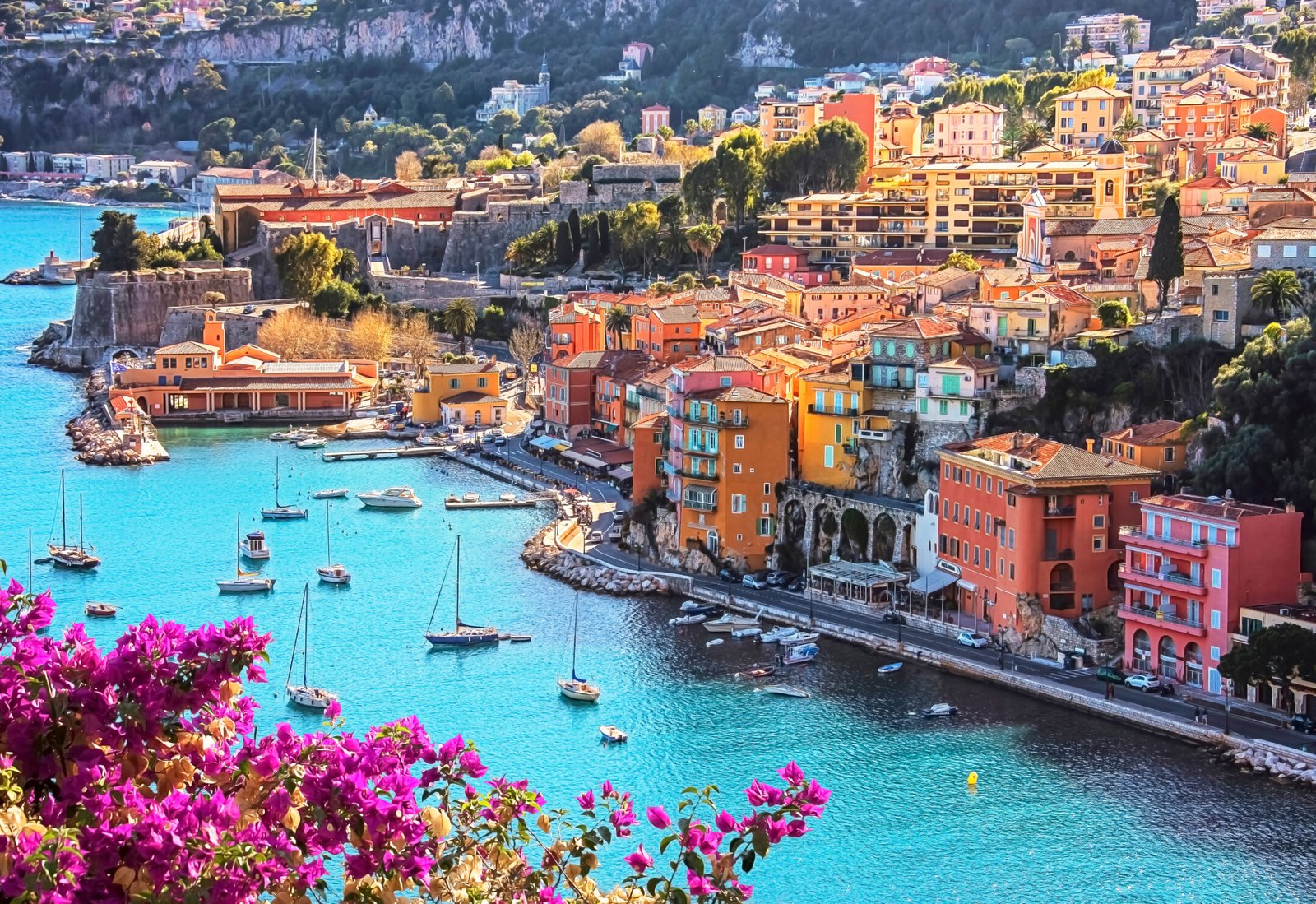
A much-coveted city
Since its foundation in the 2nd century BC by Greek colons from Marseille, Nice has relentlessly been conquered, lost, grabbed, passed on, bought, sold, invaded, destroyed, rebuilt, and thrown like a ball between Greeks, Romans, Ostrogoths, Wisigoths, French, Provençals, Mediterranean pirates, Turks, Lombardians, Ligurians, Pisans, Provençals again (we may inadvertently have left some out). But none of these people stayed long enough to influence eating habits substantially, except for the Greeks because they were the founders, and the Ligurians because, technically, Nice is a Ligurian city. Until today, Niçoise cooking has relied on the same local production of fruits, vegetables, olives, chestnuts, wines, wild herbs and mushrooms, fish and seafood from the sea. Citrus fruits from Asia, tomatoes and chilli peppers from the New World, and dried cod from Scandinavia put aside, it didn’t start absorbing foods from other countries until recently. There probably lies the magic of Niçoise cooking: it hasn’t changed a lot since the Renaissance. Centuries of wars, raids and looting never stopped the campa (a family-owned piece of land distant from the house) from being the main source of daily food for the locals. Even a few decades ago, Barba (“Uncle”) was the nickname of any old fisherman, as it still is today in Greece.
In 1388, when the Counts of Savoy took hold of Nice, the Comté enjoyed relative peace and prosperity for a few centuries. By the 1780s, it was still part of the Kingdom of Piémont-Sardaigne – actually the former duchy of Savoy, renamed after absorbing Piedmont and trading Sicily for Sardinia, and international tourism – which was bound to reshape Niçoise cooking somehow – was already rearing its avid little head above the Baie des Anges.
After centuries of Piémont-Sardaigne, France takes over
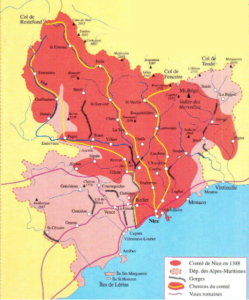
Following a short Gallic interlude during the French Revolution, Nice was soon returned to Piedmont-and-Sardinia. In 1860, when emperor Napoleon III negotiated its annexation with Cavour (the artisan of Italian unity), it definitely became French. A new département français, les Alpes-Maritimes, appeared on the map, with the non-Niçois districts of Grasse, Tende, and Menton thrown in. Thus, Provence lies immediately West of Nice, past the Var river. Every local will tell you that once you cross that river, you’re no longer in the Comté, let alone in Nice, and there’s no way you can speak of cuisine nissarde beyond that limit. A view at this map makes it clearer: in red, the historical Comté de Nice. In pink, the pieces of Provence and Liguria that were patched to it in 1860.
Throughout the ups and downs of its hectic history, Nice always made a point of being true to its strong, at times fierce identity. When peace finally came to the county, in the late 18th century, British tourists discovered what a wonder it was. Nearly permanent sunshine (even though rains can be severe and snowstorms are not unknown), blooming mimosa trees, one of the most beautiful bays in the world (la baie des Anges), a sea of an intense ultramarine blue taking on petroleum or mother-of-pearl hues depending on the weather – and, of course, exceptional food: Nice became the favorite vacation, retirement, and recovery place on the French Riviera. The British brought Christmas pudding, soon adopted by the locals as a festive dessert; Americans brought pumpkin pie, still a feature of Niçoise cooking with none of the sweet spices missing; and Russians, who flocked to Nice as early as the 19th century and still do today, brought the vatrushka cheesecake.
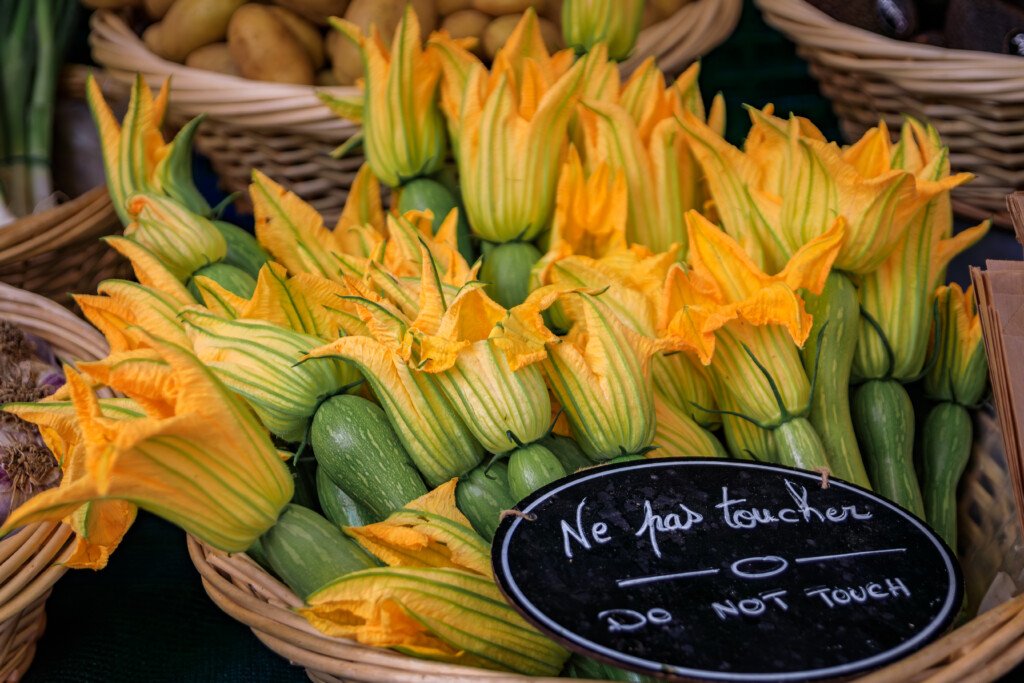
Now for the merenda – the main features of Niçois cooking
A complete list of Niçois ingredients and dishes would be an impossible task – but here’s an idea. La Merenda is the name of a mid-morning snack in Nice; it’s also the name of one of the few restaurants that still serve genuine Niçoise cooking in the city.
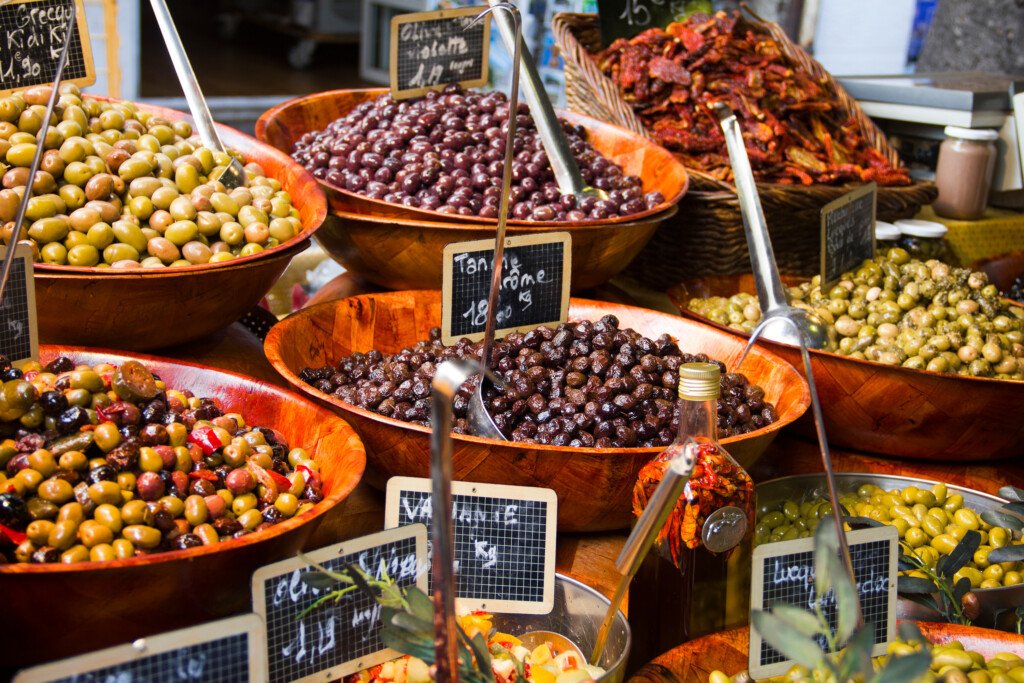
Olives, olive oil, and pissaladière
The celebrated small niçoise olive, called caillette or cailletier, has no equivalent in Provence or Languedoc, but it is the same variety as the taggiasca olive of the Ligurian coast. Like the latter, it is harvested when fully mature, be it for oil or pickling, and when pickled it takes on various shades of brown. The oil has a deep, sweet, buttery taste, and the pickled olives have a very intense umami flavour without ever being harsh or pungent. They are the ultimate olive for cooking: no pissaladière, pan bagnat, or salade niçoise could exist without them.
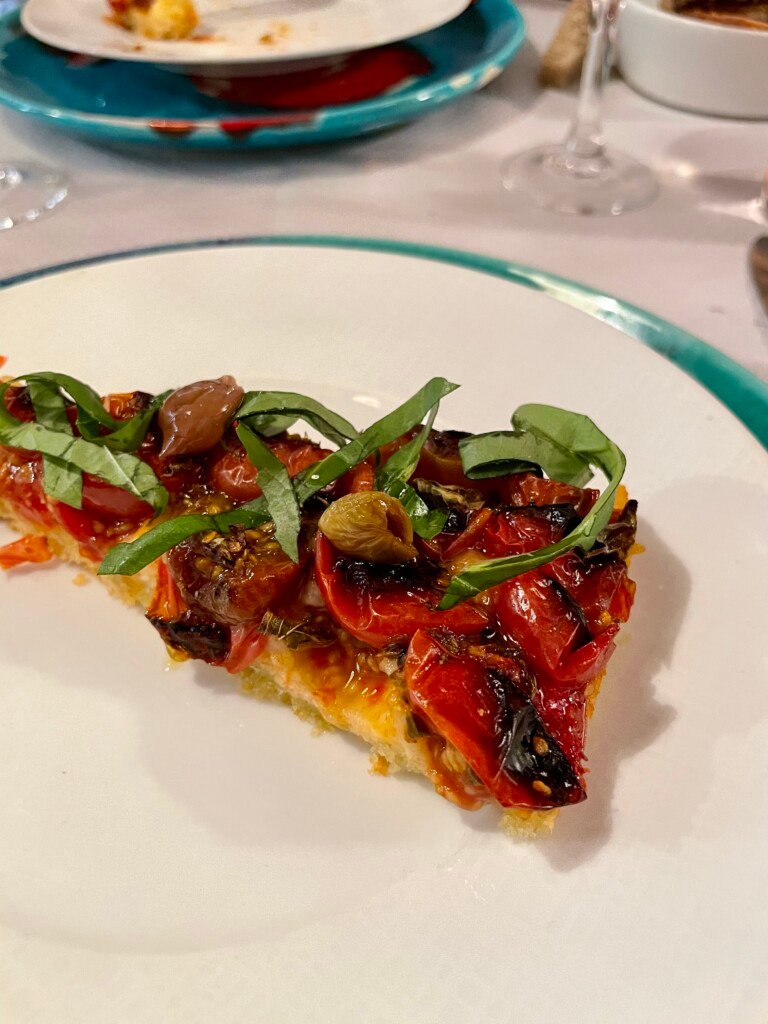
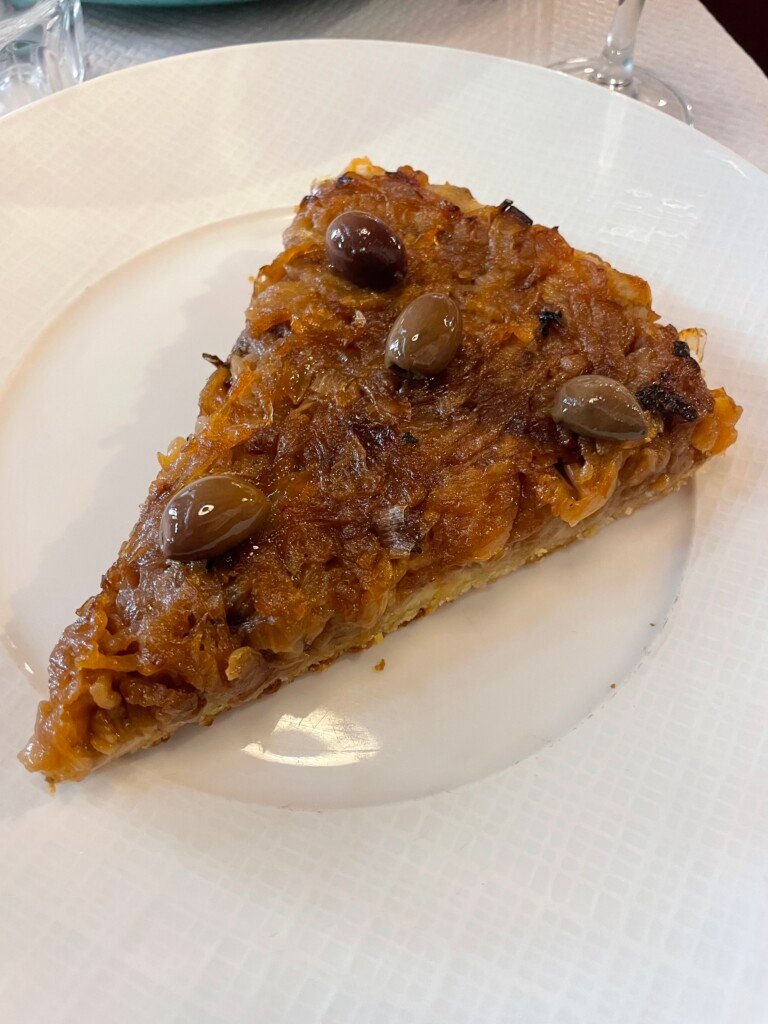
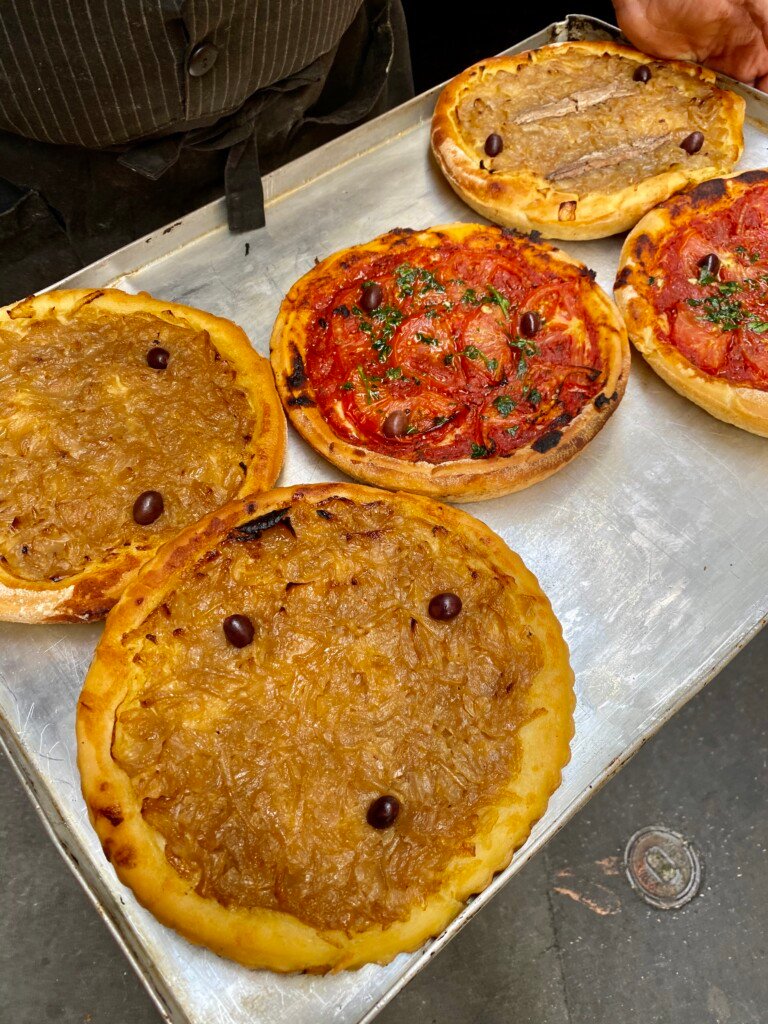
Pissaladière is a sheet of bread dough (sometimes folded over with olive oil, which gives it an extra crispy texture) covered with a thick layer of stewed onions and seasoned with anchovies, cailletier olives, thyme, and a few bay leaves. It is spread over large, rectangular baking sheets and baked until golden-brown. It used to be sold almost exclusively at boulangeries; now it’s everywhere. Its name comes from pissalat, a pungent paste of fermented salted anchovies that was inherited from the ancient Greeks and has now become rather difficult to find. Pissalat was brushed over the onions before baking. Now, anchovies are used.
Stockfish and estocaficada
The word stockfish means both a whole dried unsalted codfish and the dish that is made from it in Nice, although the dish is also called estocaficada. The sun-and-freeze-dried fish was imported from Norway and traded in Nice for olive oil or wine. Although the fish needs to be soaked for at least a week, estocaficada has always been a favorite dish in Nice, served mostly on Fridays. The shredded rehydrated fish stews for hours with olive oil, onions, garlic, bell peppers, tomatoes, potatoes, and black olives added during the last stage of cooking. It stinks a little and is incredibly delicious. To discover more about stockfish, you may read my article here.
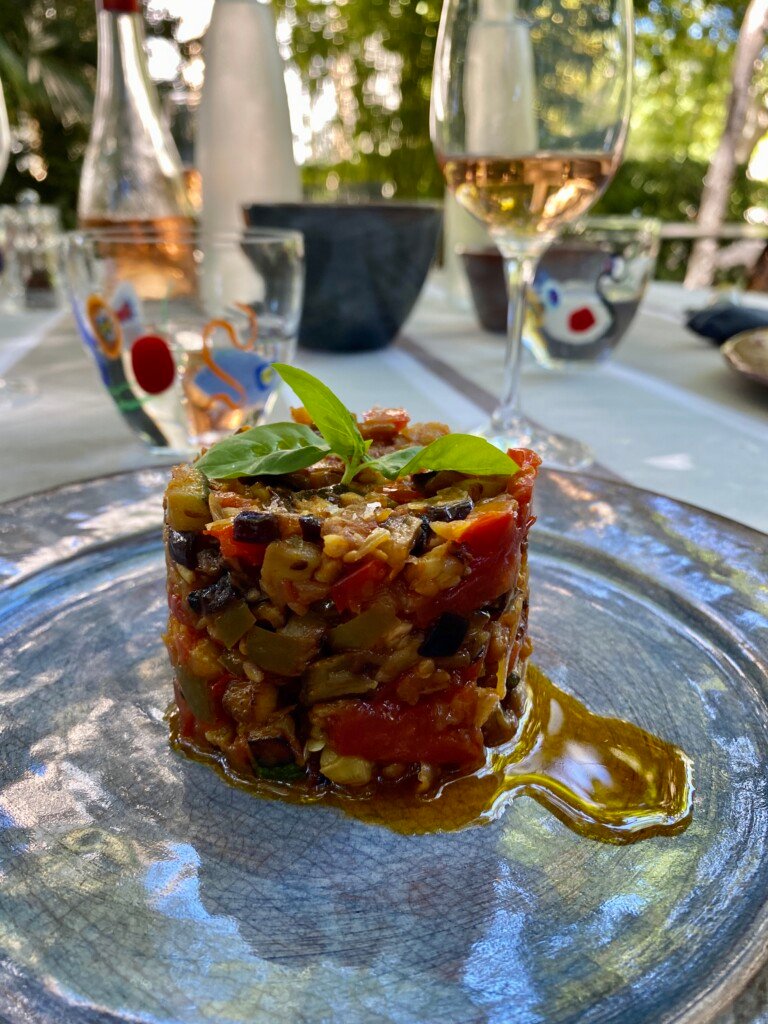
Ratatouille
A well-known cartoon movie has led the general public to identify ratatouille as a casserole of layered Mediterranean vegetables. One couldn’t be further from the truth: the dish in question is a tian de légumes, a Provençal dish also known as a bohémienne de légumes in the Southwest. True ratatouille is a vegetable stew, and Nice is its birthplace. Whereas in Provence ratatouille consists in finely cubed vegetables simmered with tomatoes, the Niçoise ratatouille is a distinct and rather complicated preparation.
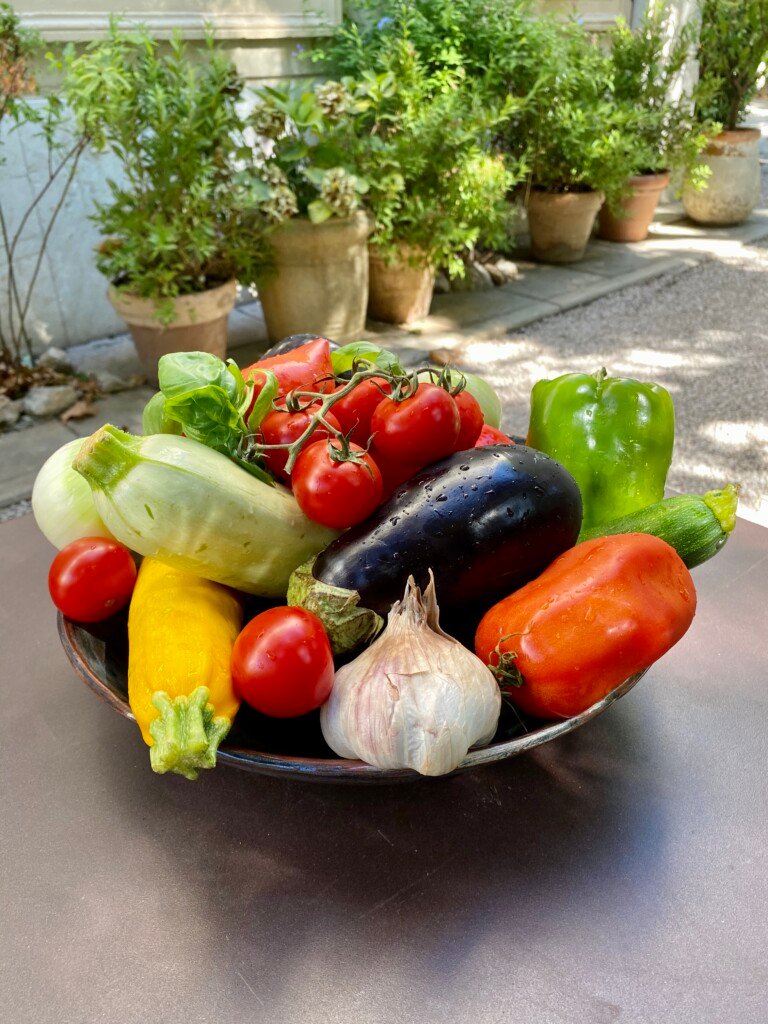
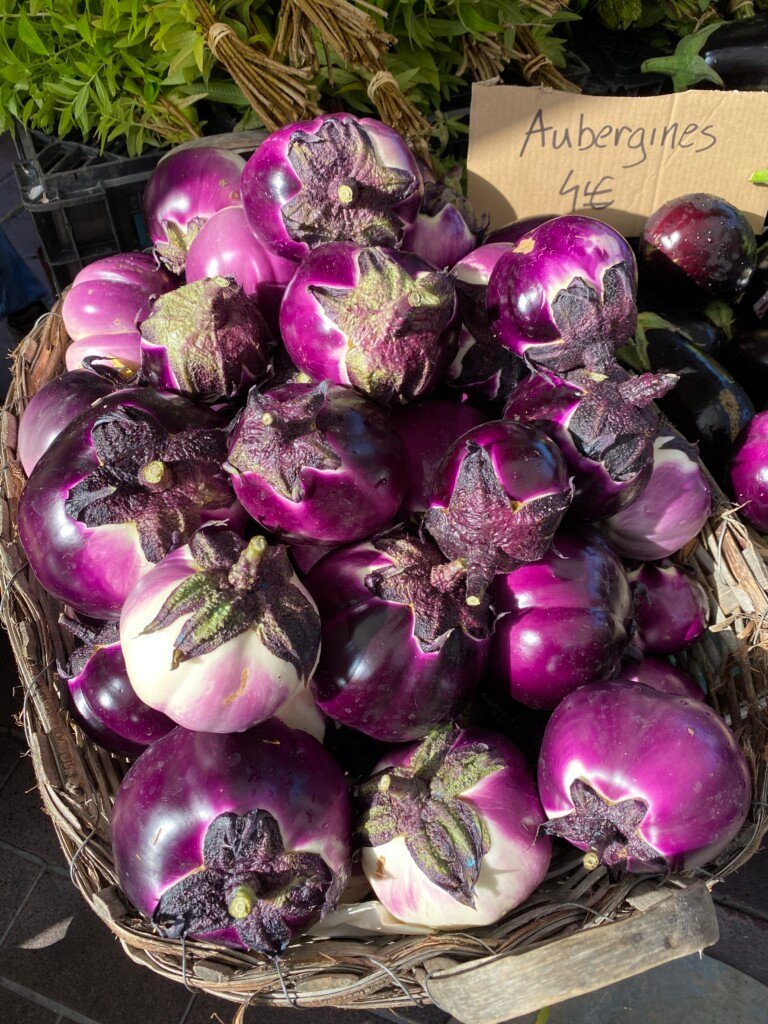
First, your vegetables – onions, garlic, tomatoes, zucchini/courgettes, eggplants/aubergines, bell peppers – have to be the freshest, the firmest possible. Zucchini should be of the trompette variety (in Genoa: tromboncino), i.e. an immature version of the famous elongated, curvaceous Niçoise squash, which has very firm flesh. The tomatoes should be peeled and reduced into a thick sauce with salt, pepper, garlic, and a few sprigs of basil. All the other vegetables should be sautéed separately (one in each pan) in olive oil until slightly browned and cooked through, then added to the tomato sauce in a large pan. After another hour of slow simmering, the ratatouille is ready. It should by no means be soupy, but each piece of vegetable should be confited and coated with tomato sauce. Ratatouille niçoise can be served warm or cold, with a pinch of saffron or curry powder in the latter case.
Swiss chard (blea) and tourta de blea
The strong-tempered people of Nice got various nicknames from their neighbours, the most offensive being caga blea, which basically means that they live mostly on Swiss chard. Not untrue: Swiss chard – la blette – is Nice’s sacred green and you can see it in every vegetable garden. You may find it in pasta stuffings, pasta doughs (the famous merda de can green gnocchi that are so typical of Nice), trouchia (a Swiss chard omelet), and not even the dessert course is immune from Swiss chard. Tourta de blea – Swiss chard pie – is probably the only French pastry that exists both in sweet and savoury versions. Very thick and full of layers, it includes blanched and chopped chard leaves, eggs, country ham, apples, brousse (a type of ricotta), Parmesan cheese, raisins, pine nuts for the savoury version, while the sweet version leaves out some of the savoury ingredients, adding apples and a dusting of icing sugar. A very, very old recipe.
Ravioli (raiolà) and daube
Raiolà is not only the culinary symbol of Nice; it was also born in Nice. If cannelloni, agnolotti, tortellini, cappelletti, etc., are truly of Italian origin, ravioli is a Niçoise invention. It is also fantastically good when made properly, but its preparation is time-consuming. To be precise, it takes at least two days. First, you have to make the daube – a beef stew with cèpes (porcini mushrooms) and a red wine-tomato sauce. After simmering for many hours, the daube has to rest overnight so that the layer of fat on the top may be removed. Then you have to pick the Swiss chard leaves - them again, remove the white parts, parboil the green parts, squeeze out the moisture and chop them finely. Then you make the dough: two eggs, flour, a bit of olive oil, no water. Let it rest, then laminate it as finely as you can. Remove the meat from the daube and chop it very finely. Mix it with the chard. At this point, you may add some brousse (sheep’s milk ricotta), or use only the brousse instead of the daube on fasting days. Lay out the dough as finely as possible, lay teaspoonfuls of stuffing at regular intervals, adjust a second layer of very fine dough on top and carefully shape the ravioli by pressing the dough around the stuffing. Cut the ravioli using a rolling cutter. Boil them briefly and carefully, drain, and serve with the jus of the daube, sprinkled with freshly grated Parmesan, Pecorino, or – as Niçois housewives would prefer – Swiss Sbrinz cheese. That is raiolà, and tears come to the eyes of any Niçois who remembers it.
Basil and pistou (and soupe au pistou)
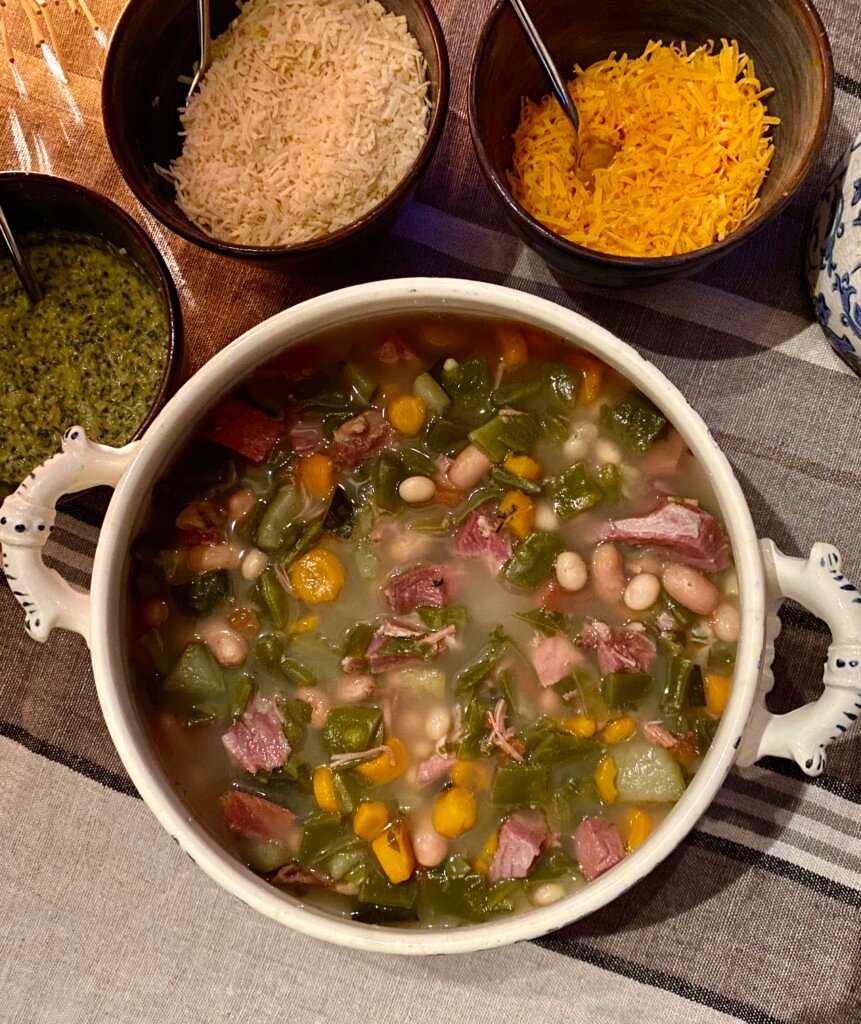
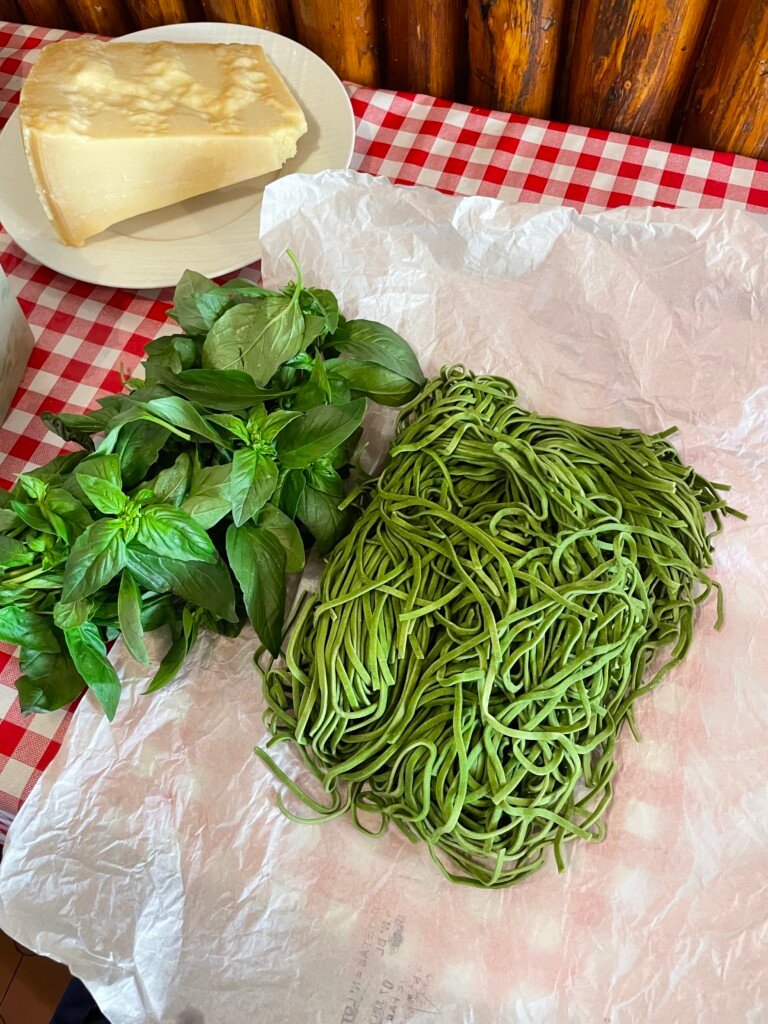
Pesto is originally Genoese and pistou is Niçois. They are basically the same thing: fresh basil leaves, pine nuts, grated Parmesan or Pecorino Romano cheese, salt, pepper, all pounded together and emulsified with olive oil in a mortar. While Genoese cooks insist on using small-leaf basil, which is the only one properly known as basilic pistou in France and has a clove-like aroma, I have seen all sorts of basils used in Nice for pistou, from large-leaf basil to very-large-leaf basil, also known as lettuce basil. Soupe au pistou may be the most noble use of this noble sauce. It is a simple soup of water (no stock), haricot beans, onions, green beans, zucchini or pumpkin, carrots, a bit of turnip, leeks, and tomatoes. A handful of soup pasta is thrown in ten minutes before serving and a big dollop of pistou is mixed in just before enjoying that heavenly soup.
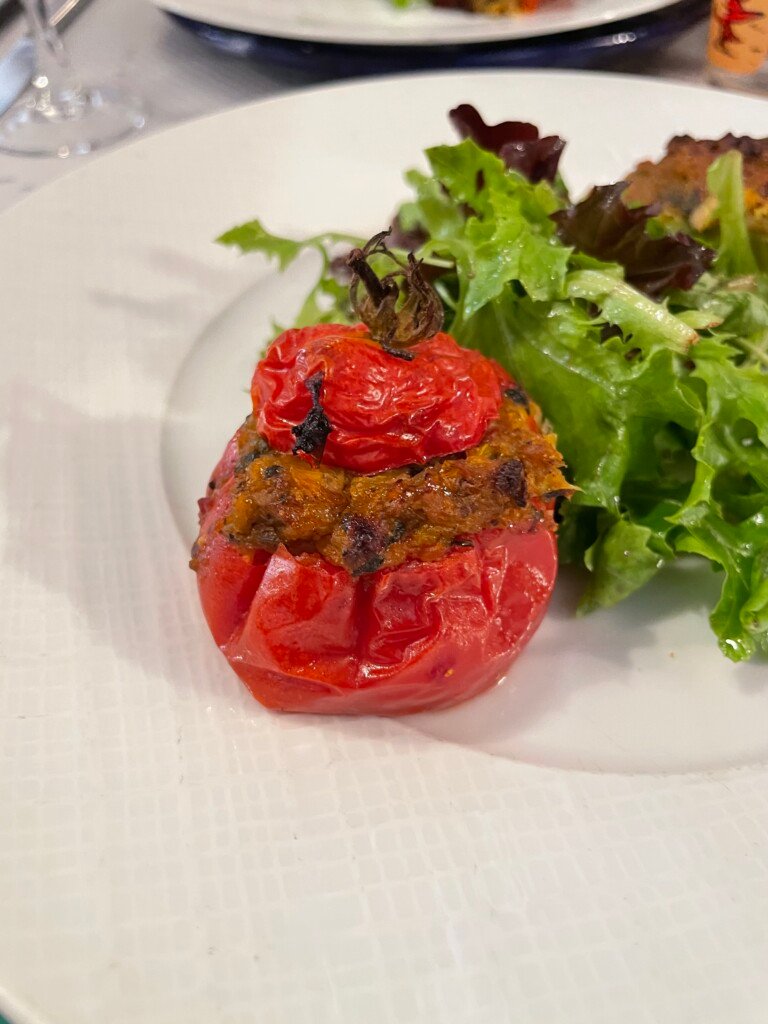
Farcis niçois
Stuffed vegetables à la niçoise are a beloved family dish, frequently found in local restaurants. One stuffing to stuff them all, it is comprised of chopped petit salé (cooked salt pork), onions, garlic, herbs (see “Swiss chard”), and sometimes cooked rice. Anything that can be hollowed can be stuffed: eggplants, zucchini, halved onions, tomatoes, peppers, and potatoes. The stuffing is coated with breadcrumbs, some olive oil is drizzled and the farcis are baked for one hour in a slow oven. They can be served hot or just warm.
Salade niçoise and pan bagnat
These two are brothers in misfortune, for Niçois folks can get extremely touchy, to the point of hostility, when it comes to naming their ingredients. The fact that pan bagnat is simply a salade niçoise in a michette (a small round loaf of bread) explains the brotherly ties. Officially authorized ingredients in a salade niçoise are tomatoes, onions, cucumbers, green bell peppers, scallions, hard-boiled eggs, black olives, olive oil, vinegar, and canned tuna OR salted anchovies (I like to add both). Acceptable additions are raw artichokes, raw shelled broad beans, or radish, but trouble lies ahead if you insist on adding boiled potatoes, green beans, or worse (like raw tuna, as some won’t hesitate to do).
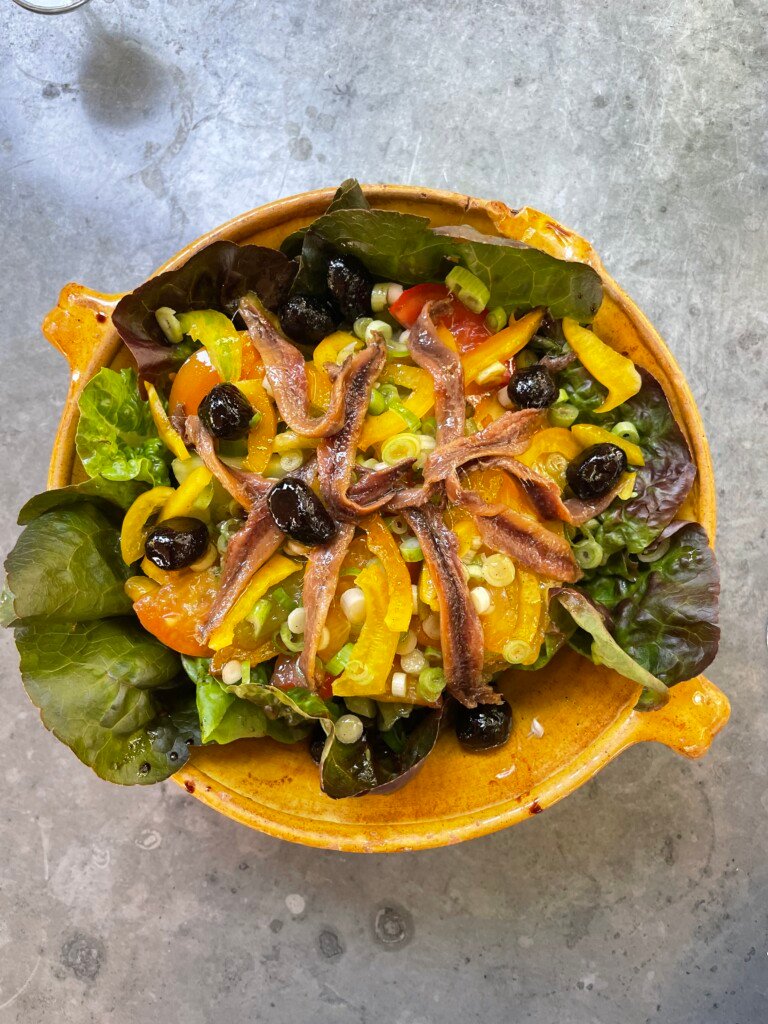
However, I was brought up a few miles North of Nice, in the village of Berre-les-Alpes, in the 1960s, and I remember how Emma, the chef at the Beauséjour restaurant, made her salade niçoise. She would never prepare it in a salad bowl but laid the ingredients in rows across a large, oval, flat stainless steel dish. What she put on that dish depended strictly on the season. In Winter, obviously, she was out of tomatoes and cucumbers. So there weren’t any tomatoes or cucumbers until the early Summer, simple as that. In the Spring, she would add raw artichokes and shelled broad beans, as well as chunks of fennel bulbs and young white onions. All around the year, she could rely on preserved foods, so there always was preserved tuna, anchovies, black olives, hard-boiled eggs, and boiled beetroot in her salade niçoise. Whatever the season was, she would finish the dish with a sprinkling of salt, pepper, a few drops of red wine vinegar, and a thin stream of dark green olive oil poured directly from the bottle with her thumb on the neck. So much for orthodoxy.
Socca
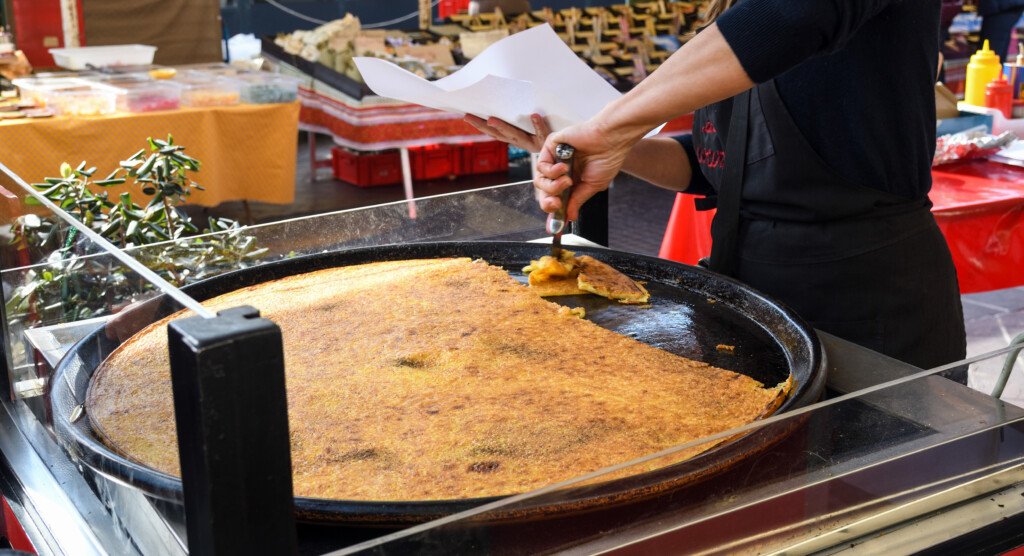
Should we have started with socca or is it all right to end this article with it? It really doesn’t matter as long as you get to eat socca someday. A large, thin chickpea pancake, socca is another iconic dish of Nice, all the more famous and popular because it is eaten outdoors, never indoors. Cooking on a direct flame on a wide, flat copper pan brushed with olive oil makes the socca crispy, savoury and delicious. You will find it on markets – the one at Cours Saleya is famous – or at socca bars like Bar René Socca, Chez Pipo, or Socca d’Or. Please bear in mind that the only drink to have with socca is a white Bellet wine (see below).
Bellet, the vineyard of Nice
Nice is the only city in France that has a vineyard with a denominated protection of origin – AOC – within its limits. The hills of Bellet, Northwest of Nice, produce red wines (60%) mainly from fuella and braquet (a grape variety that is unique to Bellet), and to a lesser extent from cinsault, grenache, blanqueron, and bourboulenc, clairette and rolle (vermentino) for the rosés. Whites are produced mostly from rolle (60%), with touches of mayorquin, muscat à petits grains, ugni blanc, clairette, and chardonnay. These wines are rare and the production is small, available mostly in the Comté. The rosés are the stars, followed by some pretty delicious whites. Please note that rosé and white Bellet wines go with anything. Especially with anything eaten in Nice.