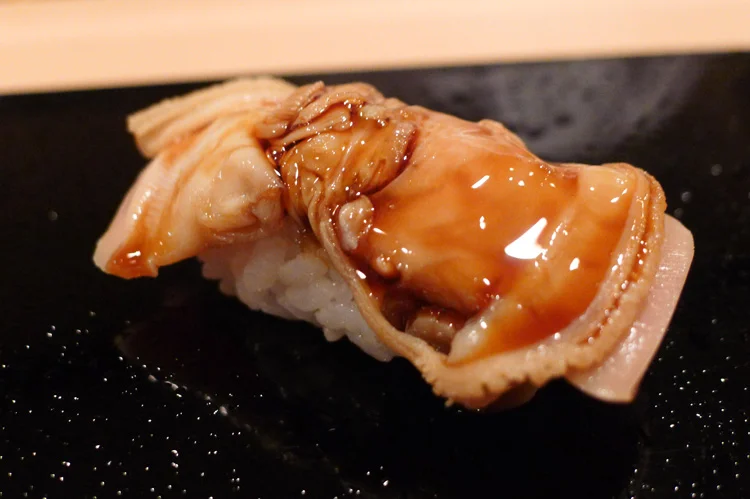
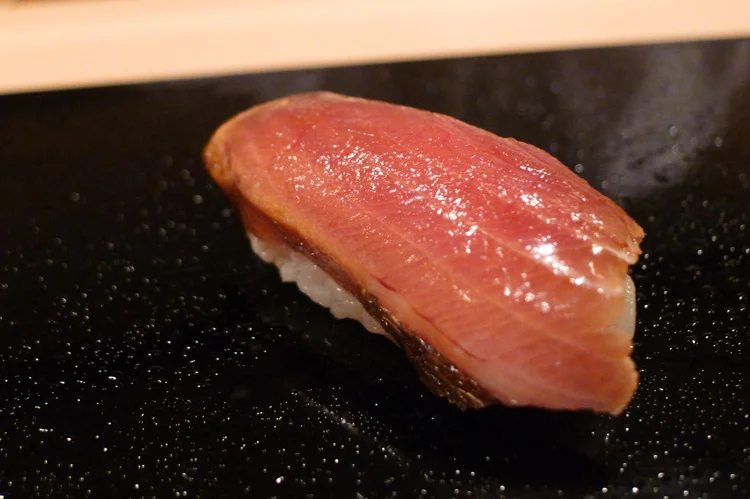
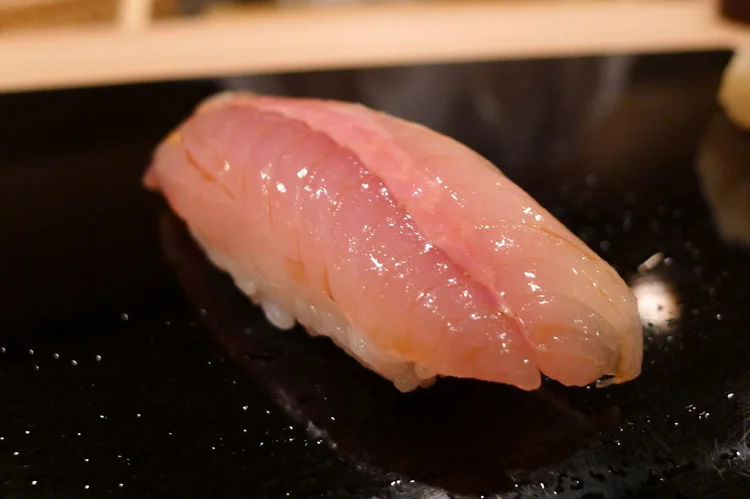
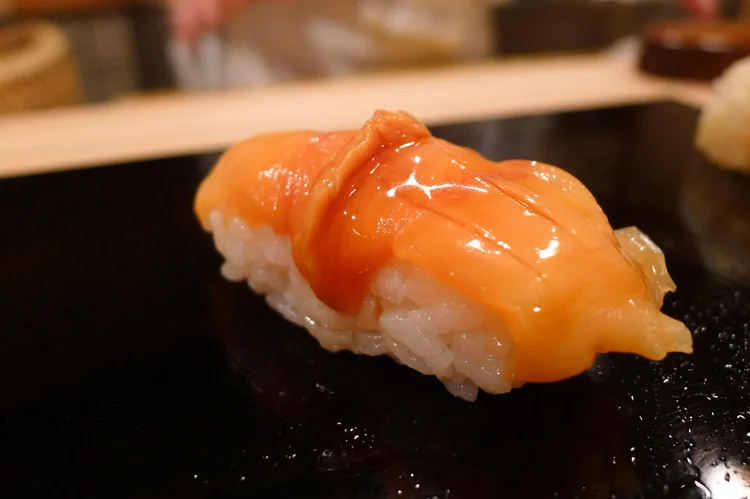
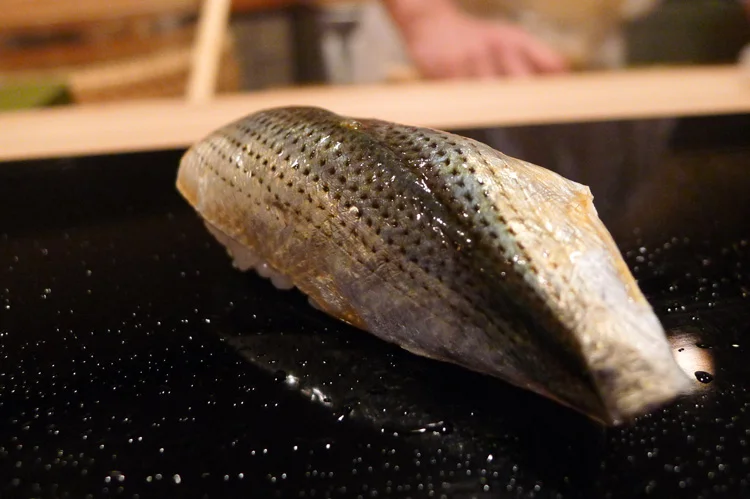
Sukiyabashi Jiro is a ten-seat sushi counter in Ginza, opened in 1965 by Jiro Ono. Long before it became known outside Japan, it was already regarded domestically as a point of reference and its reputation was based on focus and consistency. Its global fame, however, is largely tied to David Gelb’s 2011 documentary Jiro Dreams of Sushi, which turned a small, austere counter into one of the most talked about dining experiences in the world.
As soon as Michelin came to Japan, the restaurant was awarded three Michelin stars before later being removed from Le Guide Rouge, likely due to the difficulty of reservations for the general public and non-regulars. Despite this, it remains one of Japan’s most symbolic dining rooms. It was here that former Prime Minister Shinzo Abe brought Barack Obama during his official visit to Tokyo.
I had wanted to go to Sukiyabashi Jiro for a long time, but over the years I had repeatedly heard that the experience could feel intimidating. There were persistent online claims of unfriendly service and unease around foreign guests. Despite difficulty of securing my reservation, when I sat down, I realised I was alone at the counter. I remember feeling slightly nervous at first, aware that this was not a place where you impose your own rhythm or linger beyond what is intended.
The pace of the meal confirms that immediately. The entire experience lasts around twenty minutes- once a piece of nigiri is placed in front of you, you are expected to eat it at once. Temperature, texture, and balance are calibrated for that exact moment, and delay would only compromise the intention. The sequence unfolds without pause, usually around twenty pieces in total.
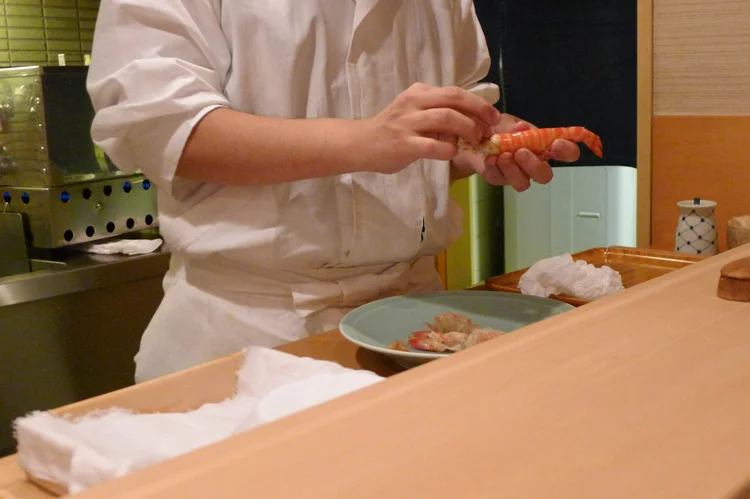
Jiro Ono, whose father was an alcoholic, began working in restaurants at a tender age of 9 and has never formally retired, often saying that continuing to work is what has kept him going. At 100 years old, he no longer works regularly at the counter, but his influence remains evident in every detail. The Ginza restaurant continues under the direction of his eldest son Yoshikazu, while his younger son Takashi runs a separate Jiro restaurant in Roppongi, both following the same principles of making and serving sushi.
This is not a meal conceived as a leisure experience for diners, and its structure has remained largely unchanged since the restaurant opened. Sukiyabashi Jiro has always served nigiri omakase only, with no otsumami, following a philosophy rooted in repetition rather than variation and creativity. Japanese writing from the 1990s already described Jiro’s approach as one of refinement through constancy, where improvement comes not from invention but from doing the same thing again and again until it no longer requires conscious thought.
Rice sits at the centre of this thinking and Jiro has stated clearly that fish does not lead the sushi, rice does. At Sukiyabashi Jiro it is noticeably more vinegared than at many other Tokyo counters, and treated as the axis of each piece rather than a neutral base. Fish is chosen strictly according to season and condition, not prestige, and seasoned with precision. There is no decoration, no excess, and no attempt to charm.
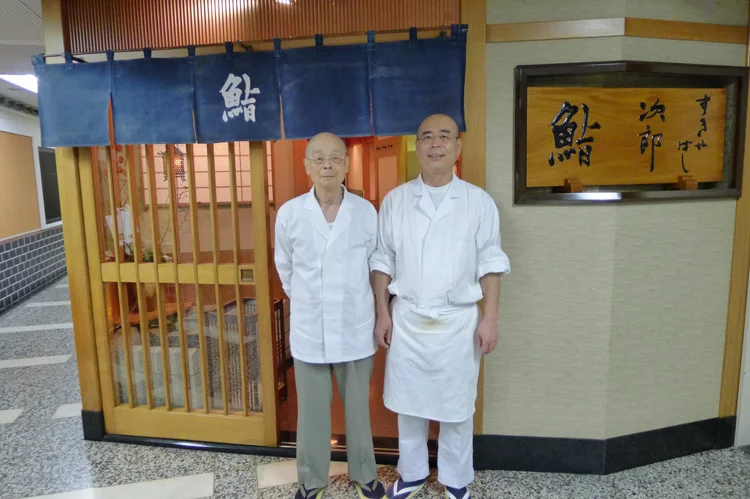
At the end of my lunch, the father and the son agreed to take a photograph together outside the restaurant. It was a small, human moment, briefly softening the severity often associated with this place. My lunch at Sukiyabashi Jiro made me imagine what sushi might have been like in Edo times, when it was served at street stalls as fast, functional food meant to help busy Edoites get through the day. It certainly belongs to a different era of dining, where focus, timing, and discipline matter more than comfort.