by Roni Xu Mori.
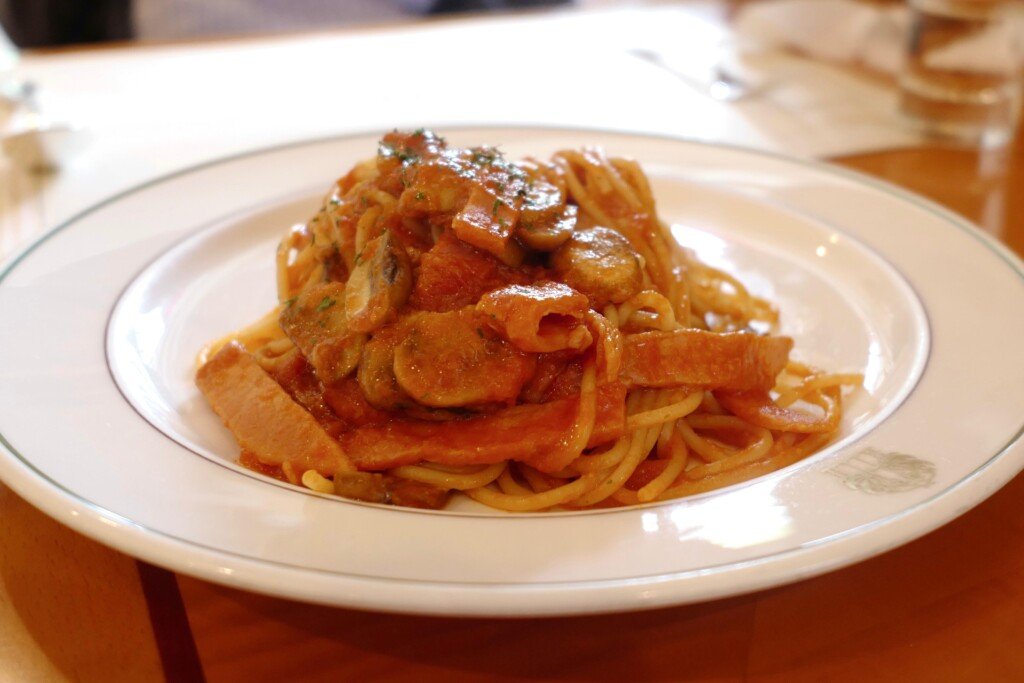
Soft spaghetti, sausage, green pepper, and ketchup.
Naporitan is everything a pasta purist is trained to dislike. Yet in Japan, one of the world’s greatest food destinations, it remains a beloved café classic.
Over the years I’ve developed a fascination with dishes like Naporitan – foods with foreign origins that eventually settle into local cooking. This may have something to do with my own background: Chinese and Japanese, largely raised in Canada and the UK. These third-culture dishes tend to resonate with me.
In Asia, many of these hybrid foods emerged from long histories of colonial contact. Hong Kong’s cha chaan teng cafés serve macaroni soup and baked pork chop rice, while in Vietnam the French baguette becomes bánh mì, filled with pâté, herbs, and pickled vegetables. In Malaysia and Singapore, kopitiam breakfasts centre on kaya toast, soft-boiled eggs, and strong coffee sweetened with condensed milk.
Japan has its own version of this story. What makes it unusual is that it happened not under colonial rule, but through a very much self-directed process of modernization as the country opened itself to Western ideas and technologies. It’s tempting to dismiss dishes like Naporitan as naive misreadings of European cuisine, but that judgement only holds if you confuse yōshoku with foreign food eaten locally. Tokyo today is full of French bistros, serious trattorie, and wood-fired pizzerias that would not feel out of place in Paris or Naples, but that’s simply French and Italian cooking done in Japan, not yōshoku.
So where did yōshoku come from? To answer that, we have to go back much further.
1,200 years Without Meat
To understand how yōshoku came to exist at all, it helps to start much earlier — well before Western food, and even before meat, entered the Japanese table.
For roughly twelve hundred years, Japan lived without meat in any meaningful everyday sense. This was not a matter of scarcity, but a sustained cultural position shaped by Buddhist ideas, reinforced through imperial edicts in the seventh century that discouraged the killing and consumption of four-legged animals.Ironically, these ideas arrived from China, where Buddhism had long coexisted quite comfortably with pork, duck, and lamb (cows and horses were too valuable for consumption). Chinese folklore takes a notably permissive line: if anything has its back to the sky, it can probably be eaten. In Japan, however, where rules tend to be taken more literally, Buddhist non-violence (ahimsa) calcified into something more rigid. While meat did not disappear completely, it was eaten discreetly, prescribed as medicine, or disguised through euphemisms that softened the taboo, kind of like calling someone a “night butterfly” instead of a prostitute. Wild boar became yamakujira (“mountain whale”), horse sakura, and venison momiji (“maple leaves”).
So for a full dozen centuries, fish, rice, and vegetables formed the staples of Japanese cuisine. In towns there were soba stalls and tempura vendors, while temple kitchens developed elaborate vegetarian meals from seasonal produce. From within that world, nothing seemed to be missing — no one was craving steak, no one felt dissatisfied with the vast range of dishes already available.
At least not until Commodore Perry’s black ships rocked up in Edo Bay in 1853, carrying steam engines, cannons, and a crew of broad-shouldered Americans who looked alarmingly well-fed.
Uh oh. Why are they so big?
Japanese reformers began to wonder whether the answer might have been embarrassingly simple:
What if it was because they ate meat?
Soon the idea took hold that the white men’s tall frames, thick necks and sturdy builds came from Western diets. If Japan wanted soldiers and workers built like the ones stepping off Perry’s ships, it might have to start eating like them. In the decades that followed, meat came to represent strength, progress, and national survival. Traditional cuisine was suddenly described as “too light.”The symbolic rupture came in 1872, when Emperor Meiji consumed beef for the first time and did so in public. The act was carefully staged and widely circulated–if the emperor could eat meat, perhaps the rest of the country could too!
Why Japan Couldn’t Just Eat Like the West
But changing policy was, as one might expect, easier than changing habits. Even after the ban on meat was lifted, the Japanese did not suddenly start eating meat. There were several reasons for this.
First, there were practical reasons. In the early Meiji period (1870s), Japan had little experience with large-scale livestock farming. Meat was expensive, unfamiliar, and difficult to handle. Western ovens, dairy processing, and bread baking were not yet part of everyday domestic life.
Second, there were sensory reasons. Rich dairy, heavy fats, and assertively seasoned meat dishes clashed with tastes shaped by rice, fish, and umami-forward seasoning. When eaten “authentically,” Western meals often felt excessive or simply too heavy.
Finally, there were psychological reasons. Western food entered Japan not as culture, but as status. It belonged to embassies, hotels, military academies, and elite dining rooms, aspirational but distant from everyday life. For meat to move from diplomatic tables into ordinary kitchens, it had to be adapted.
Yōshoku as a Solution
That is where yōshoku begins. Although it was American ships that forced Japan open, the culinary models Japan looked to were largely European, since French cuisine in particular was widely regarded as the pinnacle of refinement at the time. But yōshoku was never an attempt to reproduce European cooking faithfully. Instead, Western techniques were adapted to suit Japanese tastes, ingredients, and eating habits.
Rice remained the centre of the meal, with meat served alongside or laid over the top rather than giving way to bread. Sauces were thickened or slightly sweetened, and dishes were adjusted for Japanese tableware: tonkatsu, for instance, is sliced into strips before serving, so it can be picked up with chopsticks, while hambāgu is soft enough to break apart without a knife. Over time, these solutions repeated themselves across restaurants, cafés, and home kitchens until they solidified into a repertoire — what we now think of as the canon of yōshoku.
The Yōshoku Canon
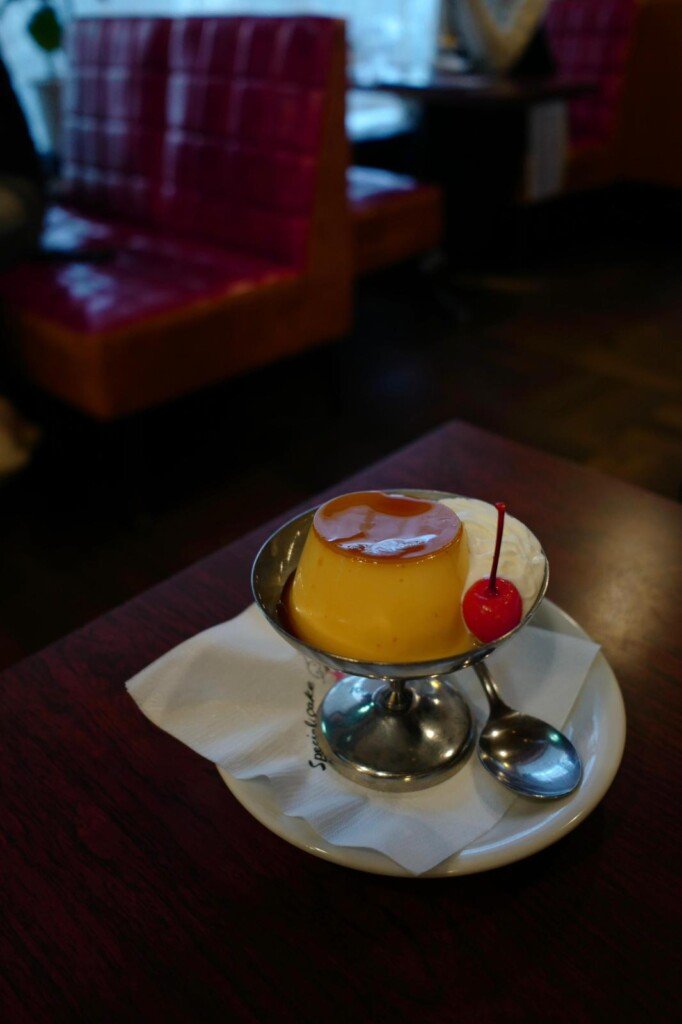
Here is a list of some dishes that came to define yōshoku.
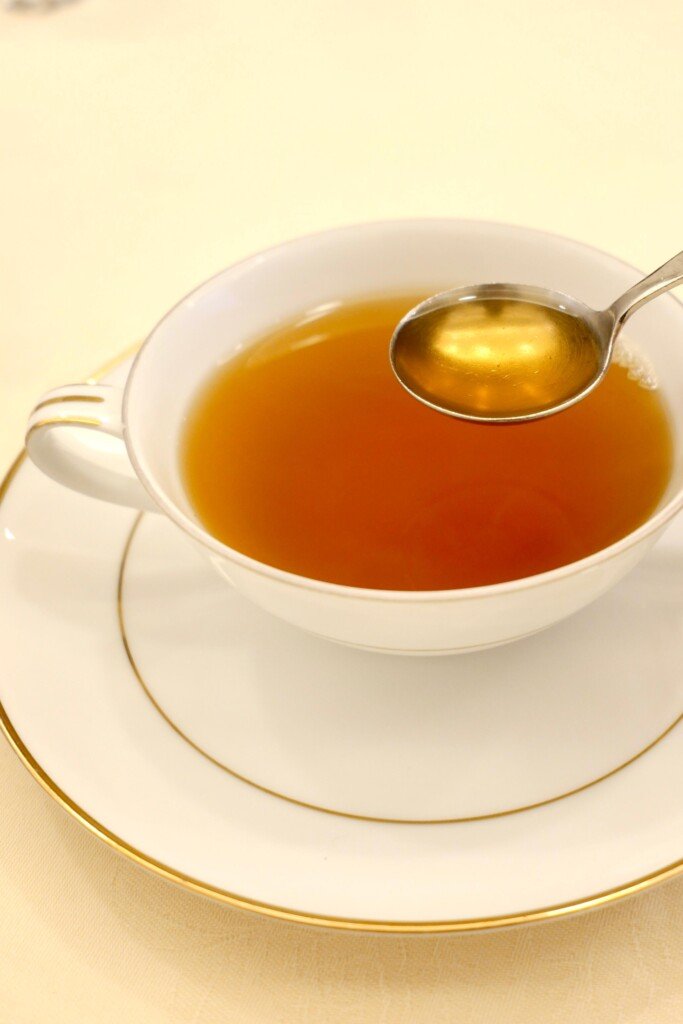
Consommé: A clear meat broth, adapted from French cuisine, served as a light, refined soup.
Korokke: Croquettes made from mashed potato or béchamel mixed with minced meat or seafood, breaded and deep-fried.
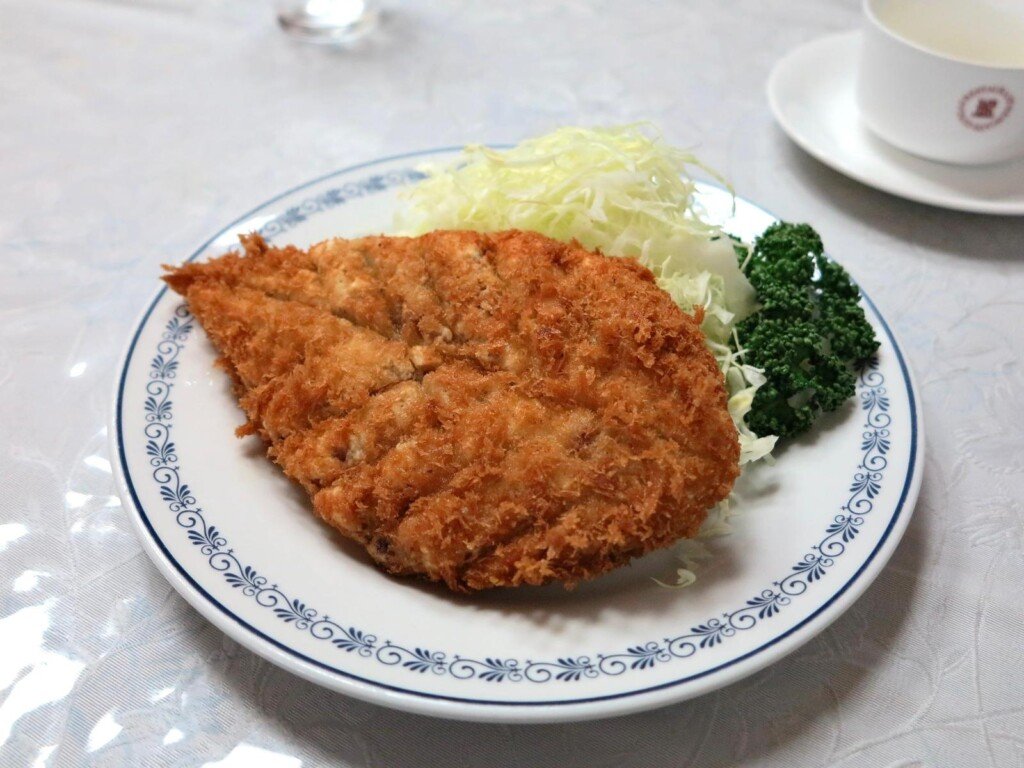
Menchi-katsu: Breaded and deep-fried minced meat cutlet, typically served with shredded cabbage and sauce.
Katsuretsu/Tonkatsu: A pork cutlet coated in panko breadcrumbs, deep-fried, sliced for chopsticks, and served with shredded cabbage and a sweet-savory sauce.
Ebi Fry / Kaki Fry: Prawns/oysters coated in breadcrumbs and deep-fried, then served with shredded cabbage and tartar sauce.
Hayashi rice: Thinly sliced beef and onions simmered in a brown, roux-based sauce with wine and tomato, served over rice.
Curry rice: A flour-thickened curry sauce adapted from British naval recipes, typically containing beef or pork, served directly over short-grain rice.
Omurice: Ketchup-seasoned fried rice containing small pieces of chicken or pork, wrapped in a thin omelette and often topped with additional ketchup or sauce.
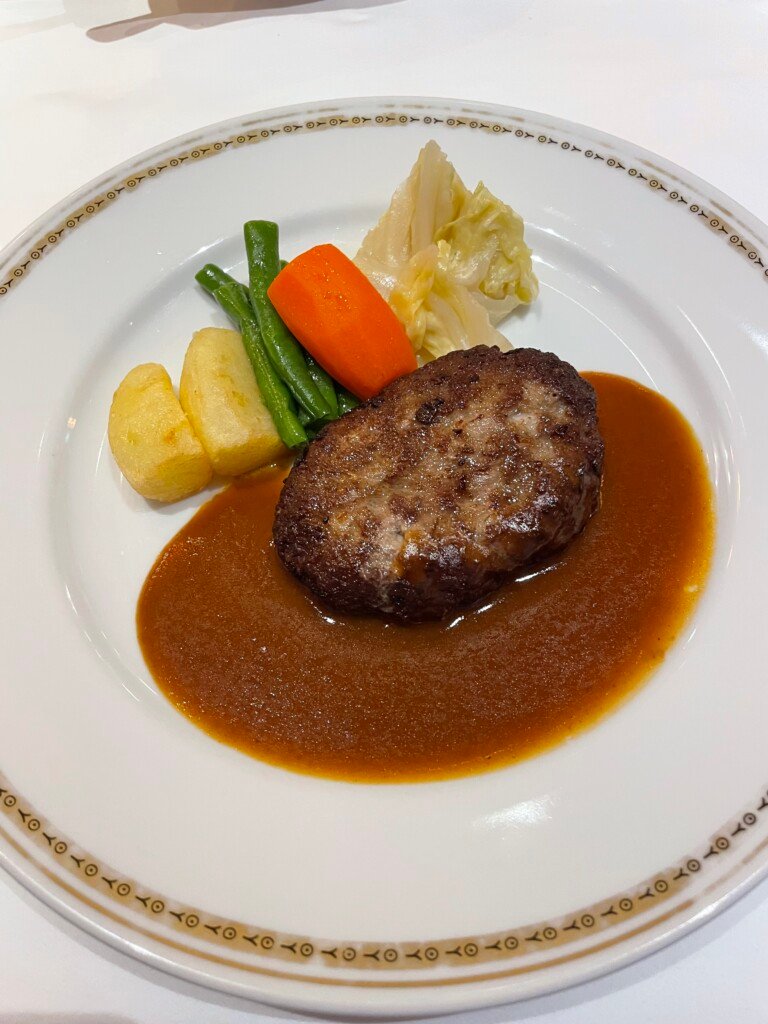
Hambāgu: Ground meat patty (usually beef or a beef–pork blend) mixed with onion and breadcrumbs, pan-seared and served with demi-glace or tomato-based sauce; later variations include wafū hambāgu, popularised by family restaurants in the 1970s–80s, finished with grated daikon and ponzu.
Doria: Buttered rice topped with a cream-based béchamel sauce, often containing seafood or chicken, finished with grated cheese and baked.
Yōshoku-style beef stew: Beef simmered until tender in a demi-glace or tomato-based sauce, often served alongside rice rather than bread.
Chicken rice (chikin raisu): Rice stir-fried with ketchup and diced chicken, onions, and vegetables, typically prepared in a flat pan.
Naporitan spaghetti: Soft-boiled spaghetti sautéed with sausage, onions, and bell peppers, seasoned primarily with ketchup and sometimes Worcestershire sauce. The dish is often traced to Hotel New Grand in Yokohama after World War II, when chefs adapted American-style spaghetti to ingredients available in Japan.
Yōshoku Now
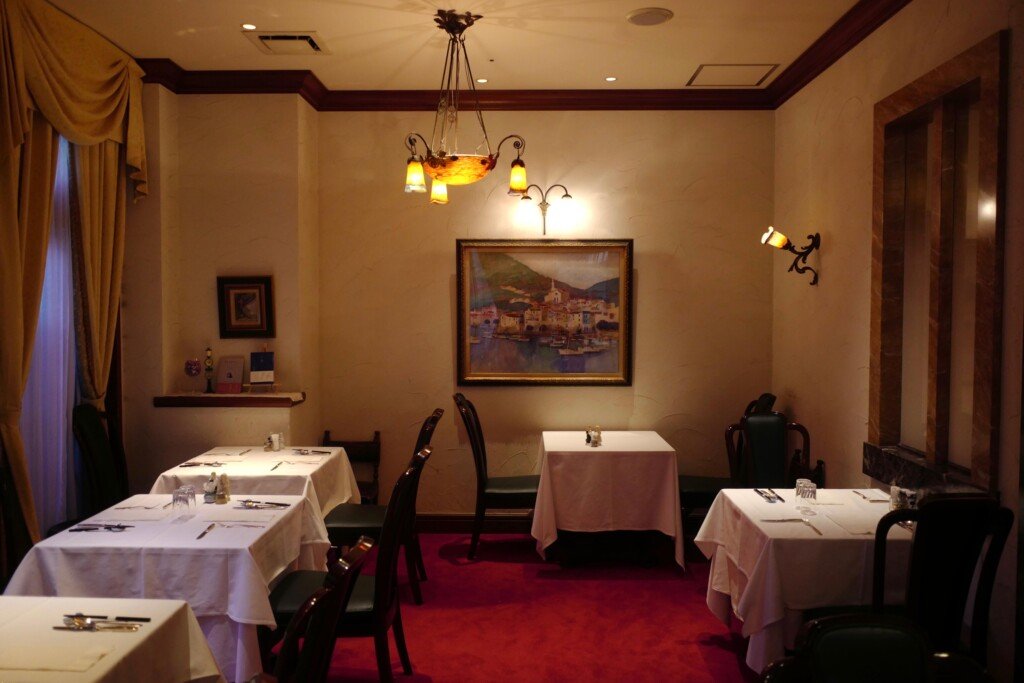
Once the repertoire of yōshoku dishes took shape, it became part of the everyday. Unlike many European cuisines, which continued to evolve through regional traditions and restaurant culture, yōshoku took root in the home, the café, and the set meal. There are, of course, both refined and casual variations, but most still revolve around a familiar set of dishes shaped by both Japanese history and foreign influence.
This is also why debates about whether any yōshoku dish is “authentic” tend to miss the point. Naporitan, after all, is less a corruption of Italian pasta than Japan doing American spaghetti right, in a very specific moment. Japanese curry may not taste like the Indian dishes that inspired it, but with its thick roux and bright red fukujinzuke it has long since become something entirely its own.
Seen this way, the more interesting question is how these dishes adapted foreign techniques and ingredients to the Japanese palate. And more importantly, where to find the best versions today? After all, if you want to understand a dish, the best way is simply to eat it.
To do exactly that, here are a few places I recommend in Tokyo.
Grill Grand, Asakusa – award-winning crab croquettes
Mikawaya, Ginza – perfect for a day in Ginza, fantastic consommé
Maronnier, Shirokane – delicious omurice
Grill Sakura, Asakusa – fork tender beef stew served on hot plates, fried seafood
Grill F, Gotanda – famous hayashi rice
Ponta Honke, Ueno – buttery tonkatsu and tongue stew
Coffee House Renga, Tsukiji – one of the best naporitans in town
Little Lima, Omotesando – classic hambāgu
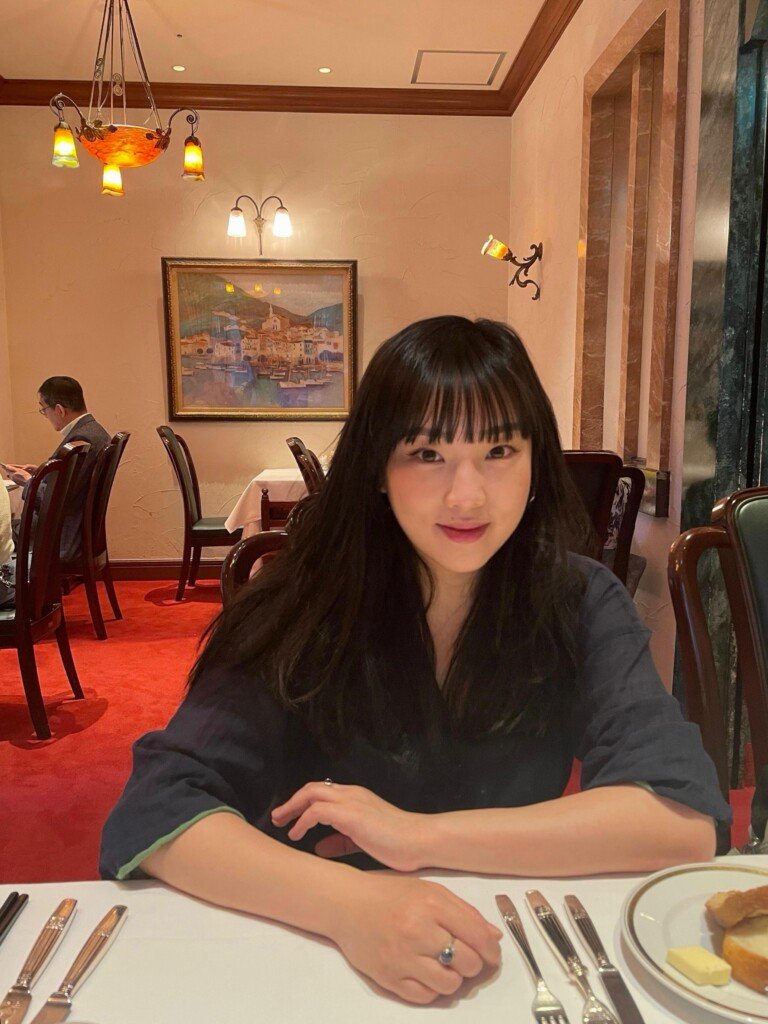
Roni Xu Mori explores food, culture, and philosophy, and runs Peridot, where she works with custom gems and pearls in Tokyo. She is co-author of Shōwa Guide Tokyo, a catalogue of 250+ surviving Shōwa culinary establishments in Japan.