by Anastasia Avramenko.
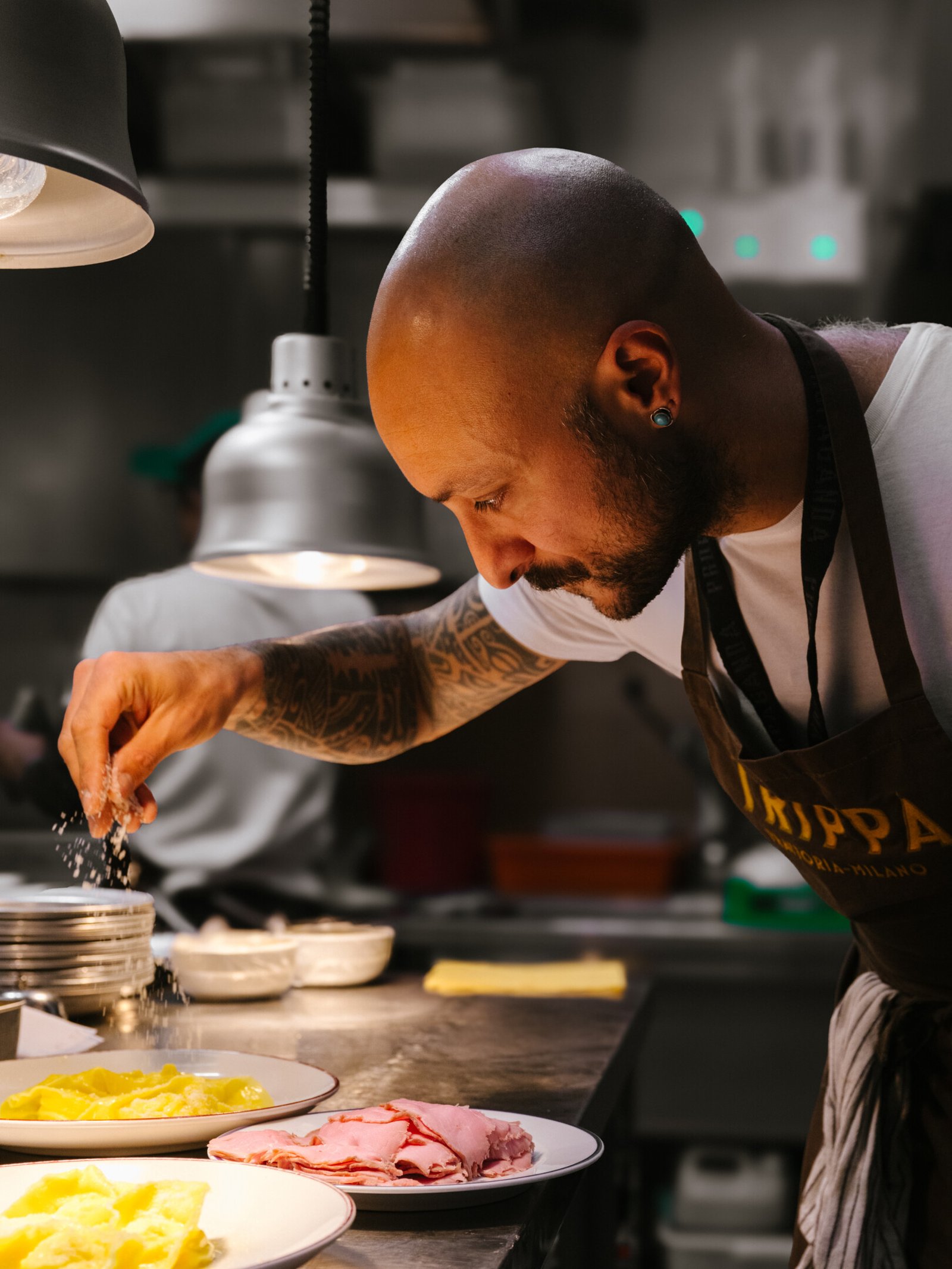
Ten years in, the chef behind Milan’s hardest table to book discusses shifting market dynamics, the turning overlooked regional ingredients into modern classics, and the concept of the “new trattoria” – where highly creative cuisine feels like a collective memory.
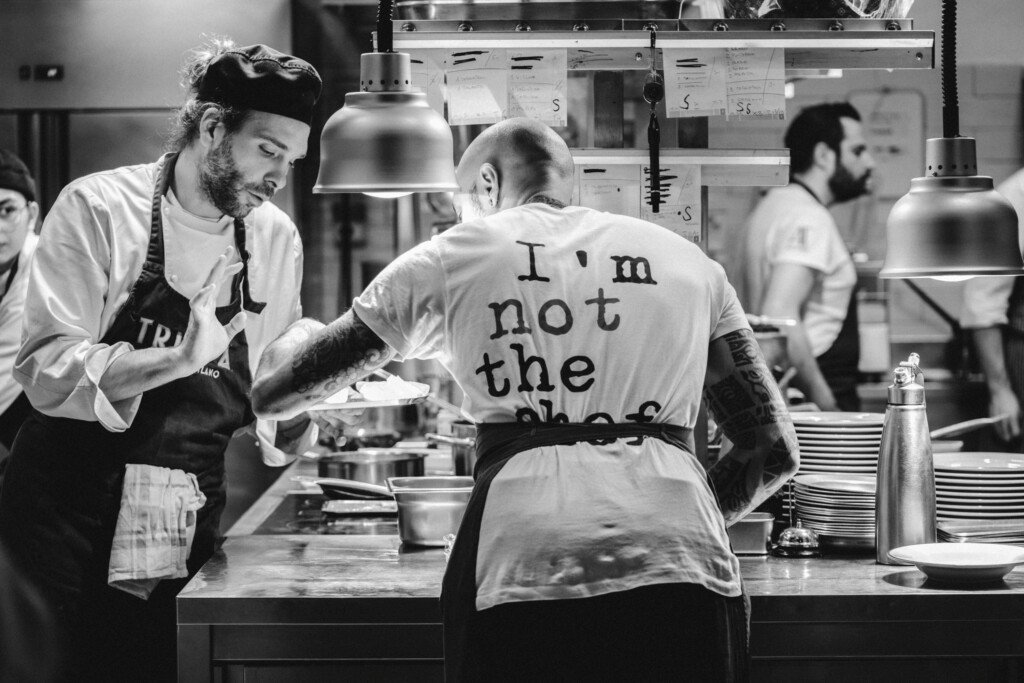
When Trippa opened its doors in June 2015, right in the midst of the Milan Expo, it marked a definitive turning point in the city’s gastronomic scene. It took the traditional concept of the neighborhood trattoria and injected it with extreme ingredient sourcing and technical precision, all while keeping the informal, boisterous format. A decade later, it remains one of the most coveted reservations in the city, even as Milan becomes increasingly saturated with new openings.
While Diego Rossi didn’t invent the use of offal and forgotten cuts, he undeniably amplified the trend across Milan and Italy, transforming once-ignored ingredients into highly sought-after items. But his real mastery lies in how he interacts with memory – taking a forgotten regional dish or an obscure ingredient and reimagining it for today’s palate, achieving consistent success by bringing a sense of belonging.
Anastasia: There’s a lot of noise in the culinary world right now. When you step back, what concepts or ideas are occupying your mind the most?
Diego Rossi: It’s chaos right now. But looking ahead, I believe that over the next few years, many chefs will fundamentally rethink their approach to restaurants. I think we’ll see a move out of the cities. People will relocate to the countryside or the mountains, working with smaller brigades – or even alone – in much smaller spaces. And I think this decentralisation is wonderful for the territory.
Instead of centralising everything in the city, we can create a network of small, focused establishments that elevate the surrounding landscape. You don’t have to source locally; you could still bring in fish from Puglia while sitting in Pavia, but being outside the urban centre naturally encourages you to buy locally, support regional artisans, and build something more meaningful.
A: What frustrates you most about the current state of gastronomy?
DR: Everything frustrates me, to be honest. The biggest issue is this relentless spread of cookie-cutter formats. You see places opening purely to churn out high volume – establishments that serve only pasta, or chips. It doesn’t belong to our culture. Italy is a nation of trattorias, and they differ completely depending on the region, the province, even the municipality. Milan is starting to feel homogenised, like London or Paris. It’s fine to have a lot of restaurants, but honestly, there are simply too many. Out of all these countless places, how many are actually worth your time? How many actually work with integrity?
A: Where do you look for inspiration?
DR: Architecture, photography, travel. Completely different passions. I love to travel, so different places influence me heavily. But honestly, cooking for me is deeply instinctive. I don’t seek culinary inspiration in a painting. A painting gives me profound emotions, but they have nothing to do with food. Instead, I search through my own memories. I recall the sensation of walking through a meadow in a particular season, or the feeling of browsing a market. That’s where the suggestions come from.
A: You use incredible, hyper-seasonal ingredients—rare flowers, obscure citrus, forgotten herbs. Where does that research begin?
DR: It begins with books, old recipe books, historical texts. I’ll look at Slow Food, searching for forgotten products or ingredients that have fallen out of use.
It comes from traveling and from talking to people. I’m inherently curious. I’ll stop someone on the street, and if they mention, “Oh, my grandmother used to make a dish with this specific herb,” I’ll immediately stop them and say, “Wait, what is that? Tell me more.”
It’s all improvisation.
A: What are you researching at the moment? What’s next for the menu?
DR: Right now, I’m focused on a deeper phase of thought. I’m thinking about ingredients in their most absolute, original state. I want raw, unpasteurised milk straight from the cow, not from a carton. I’m looking into fertilised eggs – which are currently illegal to sell for consumption because a chick could hatch from them. I’m not at the point of serving them yet, but I’m doing the research so that one day, perhaps, I can.
Look, we’ve been doing this for 11 years. You can’t magically pull a new ingredient out of a hat every single year. And honestly, this frenzy to constantly have something “new” is exhausting. We are moving too fast. In the past, it took ten or fifteen years to fully realise a concept or perfect a product. Today, the industry demands a new idea every single day, or else you’re deemed obsolete. It’s entirely wrong. This constant sprinting keeps us on the surface; we never truly go deep.
A: What’s exciting you right now?
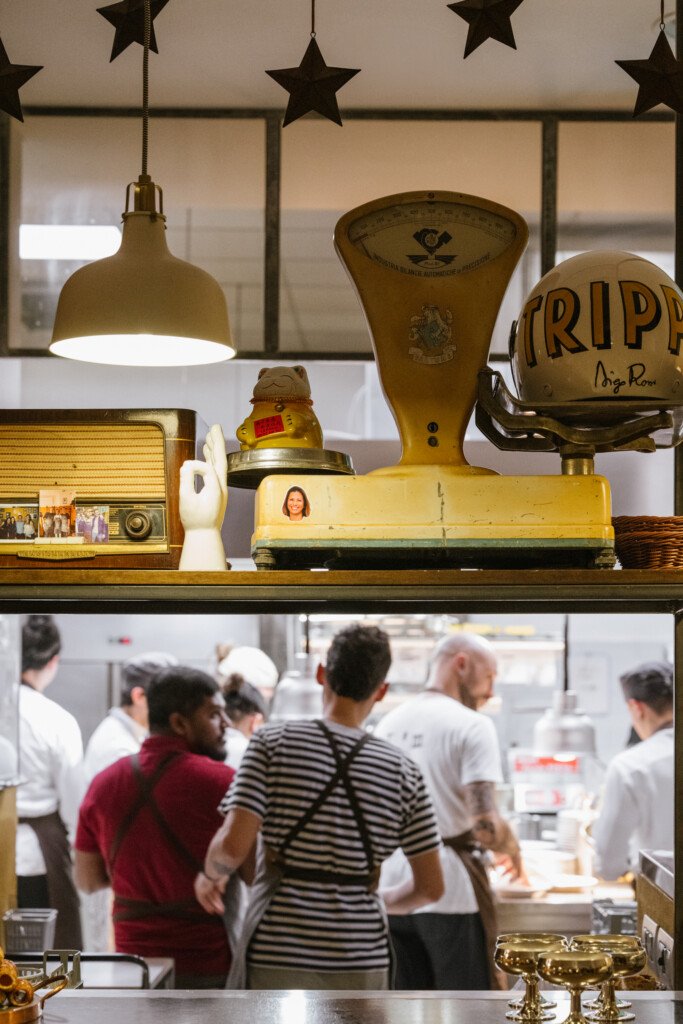
DR: It’s spring, so wild herbs are driving me crazy. When I walk in the meadows back home, I never look straight ahead; I’m always staring at the ground. My partner, Elena, always points it out. I’m constantly hunting for wild herbs. Just last Sunday, I went foraging and came back with a bag full of wild hops (bruscandoli) and wild garlic (aglio orsino). Here in Milan, you pay a fortune for a tiny bunch of wild hops. I gathered a whole bag in an afternoon.
When we started, I was the only one in Milan championing certain products. Then Guido Botticelli arrived. The chef Maurizio Zillo had sent him from Paris, telling him: “If you want to work in Milan, go to Diego.” So Guido started sourcing and bringing me exceptional things. This was about seven or eight years ago.
A: Trippa has had a massive influence on the market. Ingredients you championed years ago are now mainstream.
DR: It’s true. Ten years ago, nobody in Milan knew what olive nolche (a sweet Apulian olive) were. We brought them up here, and now you find them in supermarkets. Same with broccolo fiolaro. And the offal! Years ago, nobody cared about the diaphragm (skirt steak). I used to pay €5 a kilo for cow’s udder because the butchers just had to give it a price. Now it costs as much as tripe. Tripe used to be €7 a kilo; now it’s €14 or €15. Part of that is the cost of living, but mostly, it’s because we created demand.
A: That must be satisfying to know you’ve shifted an entire culinary movement.
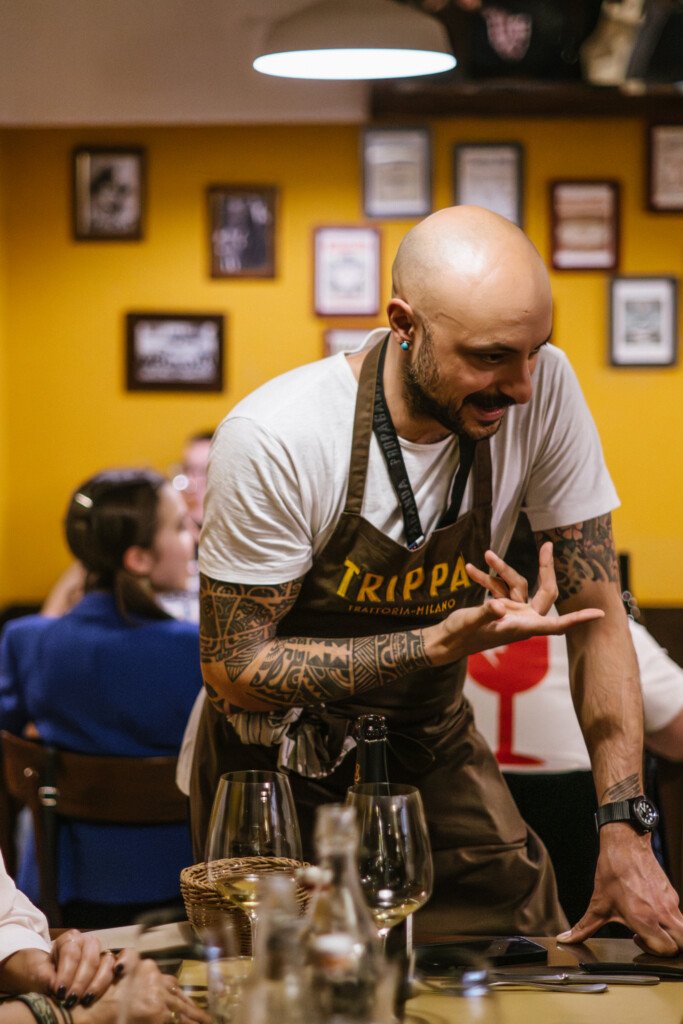
DR: By our second year, people were already saying we’d invented something new. Sure, there was St. John in London, but that’s an English approach to offal. Trippa isn’t just about offal. To reduce Trippa to “the offal restaurant” is missing the point. We launched the new trattoria—a level of casual dining that simply didn’t exist in Milan, or even really in Italy, before 2017. There were historical places doing great things, yes, like Consorzio in Turin. And if we look abroad to Paris, there was Iñaki Aizpitarte at Le Chateaubriand, and before that, La Gazette. They were pioneering “bistronomy.” But bistronomy is an entirely different beast. That was Michelin-starred chefs cooking almost star-level food in super-simple rooms, initially at low prices before those, too, increased. A trattoria, however, is inherently ours. It’s a popular Italian dining room rooted in a very specific, collective aesthetic memory. People walk into Trippa and ask how many decades it’s been open. We recreated that unspoken, collective memory.
A: How do you balance that rustic, historical feel with the fact that your cooking is actually highly creative?
DR: Our cuisine is creative. Ferran Adrià came to eat, and he kept saying, “This is avant-garde.” And I kept replying, “No, Ferran, this is a trattoria.” He finally said, “You call it a trattoria, but this is a great creative restaurant.”
The problem is that chefs, in particular, equate “creative cuisine” with something heavily constructed—foams, molecular gastronomy. That’s experimental cuisine.
Creative cuisine simply means bringing something into existence that wasn’t there before. We create dishes with hyper-seasonal, local ingredients that feel deeply traditional, yet they never existed before. People ask, “What region is this from?” And I have to tell them it’s not from any tradition; we just invented it.
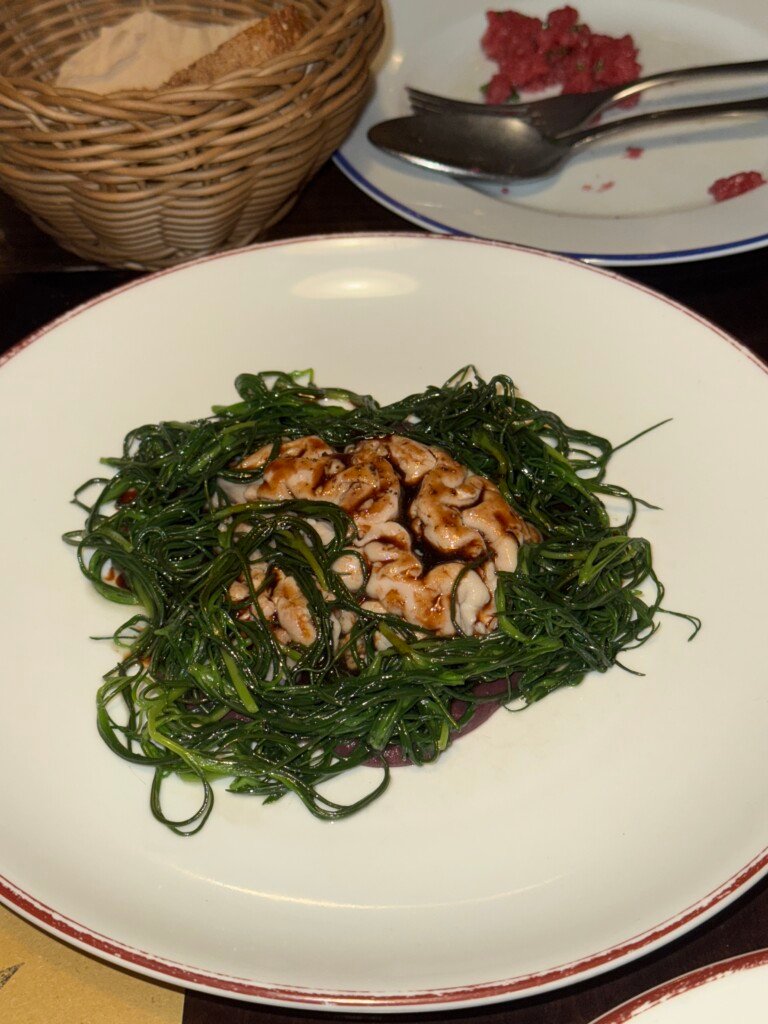
If you understand who you are, where you are, and why you are cooking, you can create a brand new dish that feels like your grandmother made it.
For example, we make gnudi (a traditional Tuscan ricotta dumpling). But we serve it with poppy leaves, wild garlic, pollen butter, and chamomile. The bitter herbs recall the countryside in spring, the pollen and chamomile bring the scent of the blooming meadows. It’s entirely new, totally creative, but visually, it looks like a classic, comforting bowl of dumplings.
We do this with many dishes. Take the cherry tortello, for instance – a deeply traditional concept from Emilia and Romagna, famously executed at I Due Platani. We simply refined the idea. Or the cardoon (cardo). It’s a staple vegetable in Piedmont, but we specifically source the cardo gobbo (hunchback cardoon). I’ve cooked it a thousand ways: with snails, with calf’s head, or simply trifolated. It’s phenomenal. Again, it’s about a new hand guiding an old recipe; with the right attention, the result is infinitely superior to how it used to be.
A: There’s a joy in refining those classics, too. Taking dishes we might have disliked as children and executing them perfectly.
DR: Exactly. The idea behind the old recipes was right; they just lacked technique. Take beetroot – nobody in Italy really likes beetroot because we grew up eating it boiled to death in salads. We roast it in the oven until it has the texture and depth of meat. It’s incredible. Or trifolated kidneys. Traditionally, they are chopped and pan-fried with butter, garlic, lemon, and parsley. But if you just fry them, they release that awful, urinal taste.
I cook them sous-vide first, sear them very lightly, and slice them incredibly thin. The flavour is entirely different. It requires empathy – putting yourself in the diner’s shoes and finding a way to make them love an ingredient they thought they hated.
A: But are your techniques strictly Italian?
DR: It depends. I rely predominantly on Italian techniques, with a few exceptions. Obviously, we use sous-vide for certain elements. But that is simply the application of a modern tool to elevate the final result – it doesn’t alter the inherently Italian style of the food. True Italian style is about how we approach the meal. It’s built on our culinary pillars: slow braises, stews, meats grilled over fire – not smoked, and certainly not cooked à la minute and drizzled with a jus. That is not our culinary language.
Our language is the arrosto, the umido, the brasato. What we have are intingoli and condimenti (dressings). In the South, that means olive oil; in the North, butter or lard. Above all, it’s about the method of cooking. It’s fascinating how dynamic and light food can be without relying on heavy sauces. Fundamentally, Italian cooking is driven by the depth of slow cooking and the absolute purity of the condiment.
A: Carlo Petrini says eating is a political act. Would you agree?
DR: Of course. Eating is a deeply political act. Trippa’s politics are democratic in that we aim to make this level of food accessible to a wide audience. But we are also dictatorial: I have my ideas, and I will serve them my way. True politics today is about being conscious of what we consume and what kind of world we are leaving for our children. You change the world by changing your own lifestyle and making drastic, personal choices. I decided I wouldn’t buy fast fashion anymore – clothes arriving from places where the labour is exploited. If you don’t step out of your comfort zone, you will never escape it.
A: You refuse to constantly chase “the new.” How do you maintain that momentum?
DR: The corporate mindset dictates that business must constantly expand. I reject that. At a certain point, you reach a beautiful plateau. And how do you maintain a business economically? By pouring passion into it every single day. That keeps the bar high. You don’t need to invent a new format every year.
Chefs always want to add more – more sophistication, more elaboration. My tendency is toward simplification. You start by trying everything, but eventually, you realise that the truth lies in simplicity. The goal is perfection through repetition, like an artisan. The true exercise is repeating the same gesture every single day, improving it imperceptibly over time, rather than constantly overcomplicating it.
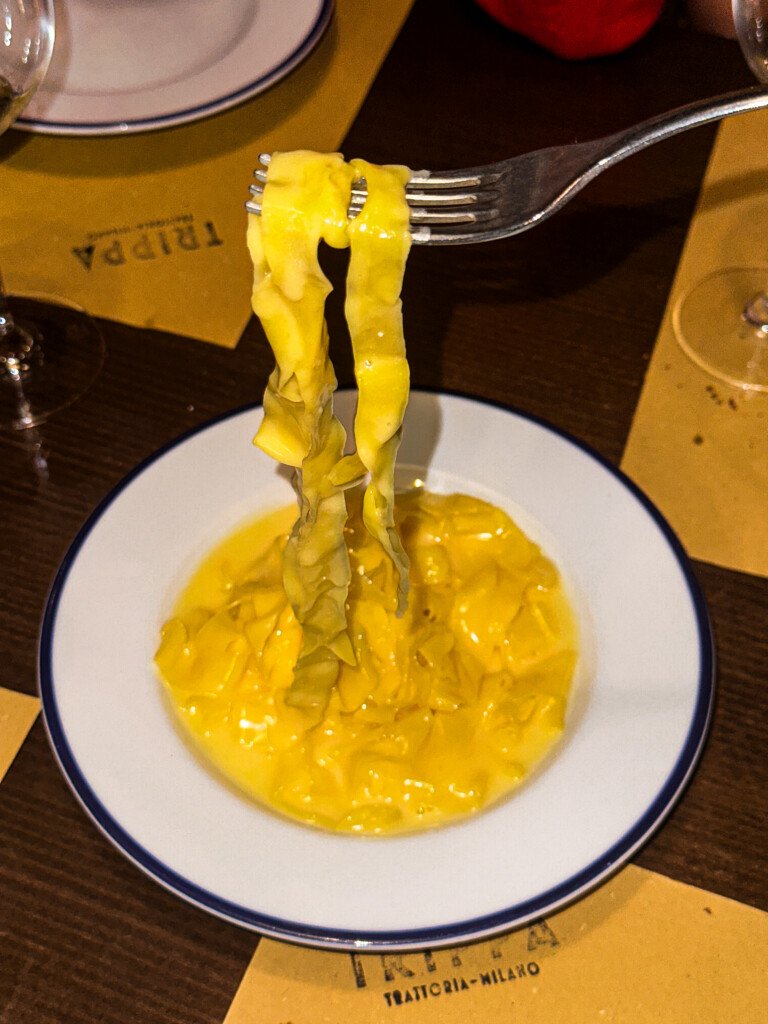
A: And one last question about the menu. The now iconic tagliolini. How did you arrive at that specific dish?
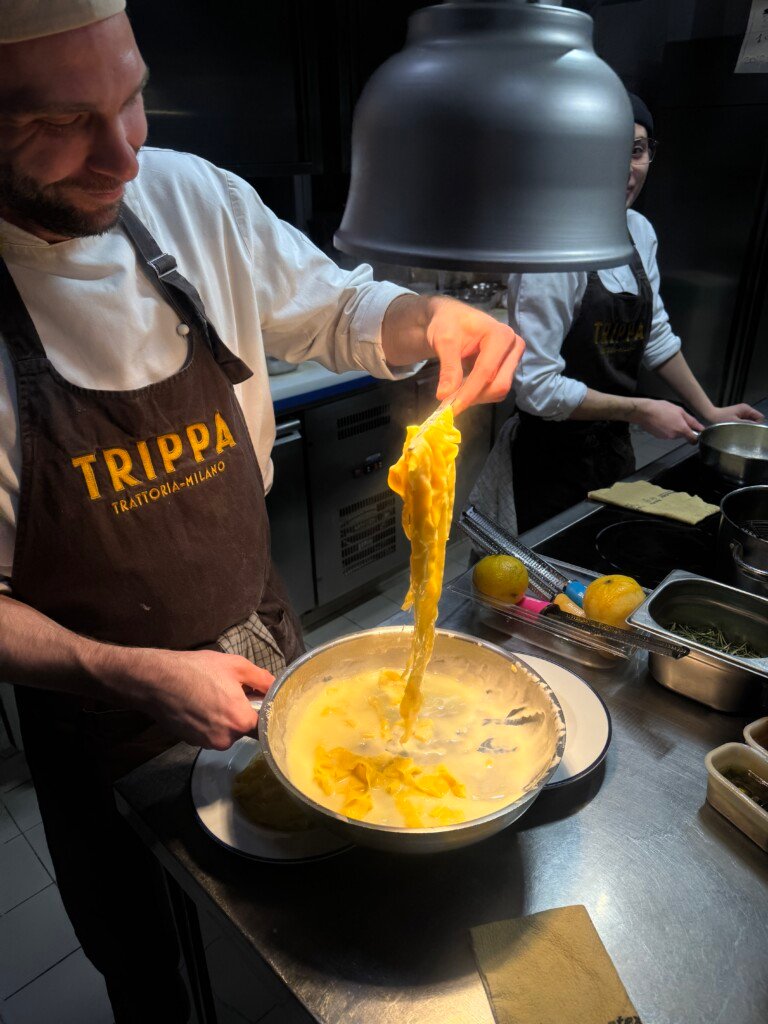
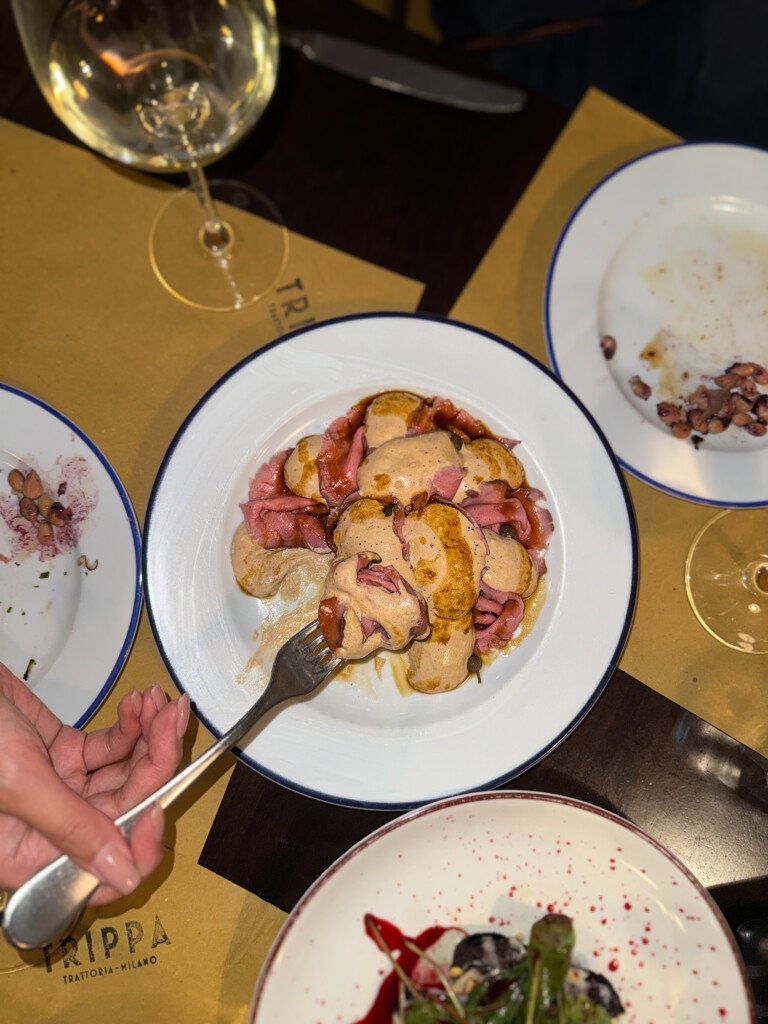
DR: It started almost as a joke. We were doing tagliolini with white truffle. When I eat tagliolini with truffle, I want a sauce. I don’t like the way it’s sometimes served in Piedmont – just dry pasta with truffle shaved on top and a little bit of butter. It lacks that deep, indulgent satisfaction; the elements don’t connect. So, to bind it all together – especially since truffle demands fat—we decided to add more butter, use Parmesan almost as a seasoning salt, and then asked ourselves: what is missing to truly amplify this?
Umami. We gave it that umami hit with a severe reduction of chicken broth. Essentially, we asked ourselves: how on earth do you improve a simple pasta with butter? You add umami. You play on the balance of sweetness and savouriness. When we tasted it, we looked at each other and said, “Damn, this is incredible even without the truffle.” So we put it on the menu.
A: One final piece of advice?
DR: Open your eyes. Start thinking with your own head. Develop a critical mind, ask questions, and stop taking everything for granted. There is no single rule for how to live, but everything should be underpinned by respect, love, and common sense.
And stop believing the myth of a singular “Italian cuisine.” It doesn’t exist. What exists is an Italian style. It is communion. It is sharing, discussing, and living. That is what we absolutely must preserve.
Anastasia Avramenko is a culinary contributor and hospitality advisor based in Milan for over 10 years. With a background in Food Business, she travels the world to assess and cover noteworthy restaurants and food events, driven by a passion for discovering dedicated people who master their craft regardless of global trends.