By Aiste Miseviciute.
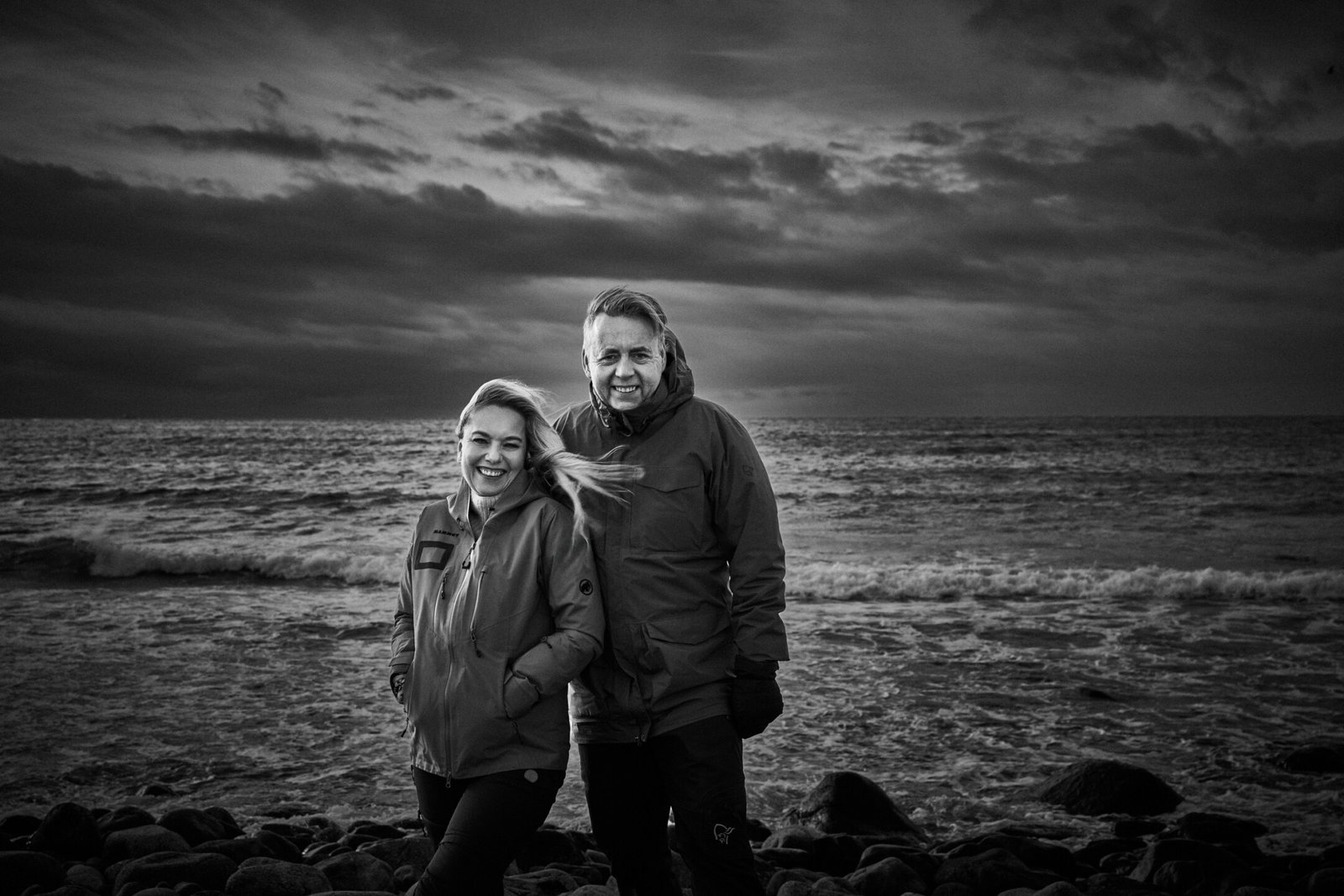
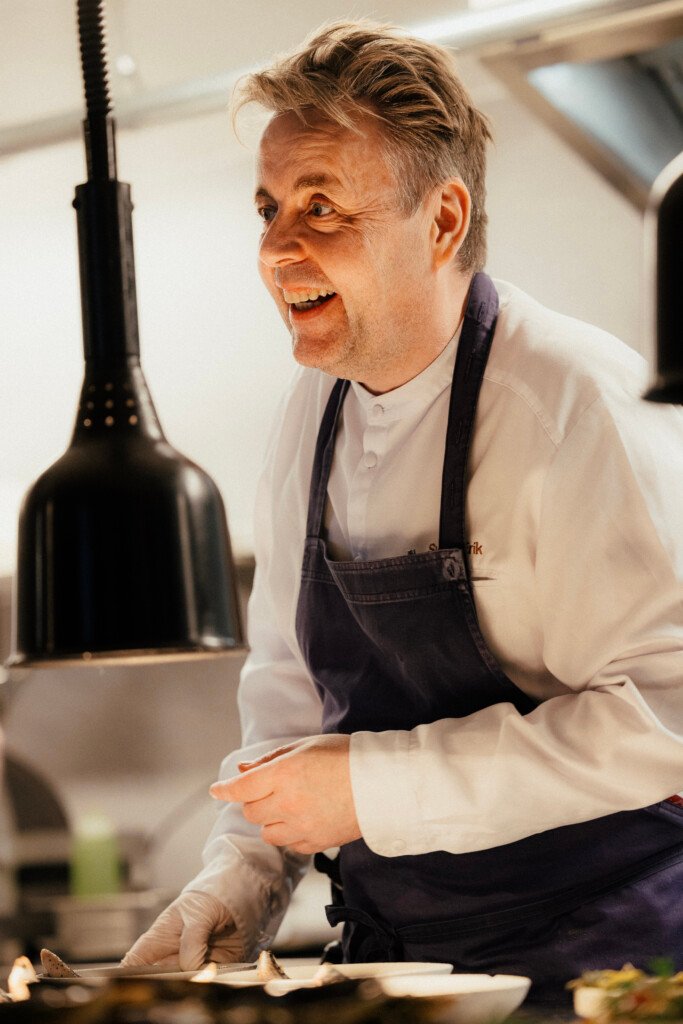
RE-NAA is one of only two three Michelin star restaurants in Norway and was named Restaurant of the Year this year by Falstaff. Far from the usual fine dining circuit, it is run by chef Sven Erik Renaa and his sommelier wife Torill, and has turned Stavanger into a culinary destination, with a deeply personal approach to cooking anchored in nature, seasonality, and a thoughtful interpretation of classical foundations. The stellar fish and crustaceans from the local cold waters are a focus here, defining a cuisine that is both precise and deeply connected to its surroundings.
In this conversation, chef Sven Erik Renaa reflects on his early influences, the impact of the Nordic movement, and the philosophy that defines his kitchen today.
What was your first food memory?
Oh yes, that’s easy. My grandmother… my grandparents were farmers, so we had pigs and chickens. One of my first memories is simply the good food from my grandmother in general. I can still remember everything -the blood pudding, for example- especially when the slaughtering took place in autumn, before Christmas. The ribs were saved for Christmas, but the rest was made into sausages and all these things.
So this is what I remember. This was probably my first memory. My mother, though… maybe I don’t want to mention these memories, because she was not present often. She was a waitress, so she had a busy, hectic life, working nights, taking shortcuts. She wasn’t preparing food like my grandmother did. In the 70s, there was the invasion of canned food, dried products, freeze-dried things. So I also have memories of that. And bad food too.
So it’s both. But my favourite early memory is my grandmother’s cooking. When I was younger, I always said I was going to be a cook. I wanted to move to the hotel closest to my grandmother’s farm – in the north of Trondheim. I said that when I was six, I could become a chef and work at that hotel, because then I could go home to my grandmother and eat dinner.
As with all Italians, at least the ones I knew growing up, they have a very focused and conscious approach to food. Planning is everything: when we have breakfast, we are already planning lunch, and when we have lunch, we are planning dinner, it’s always about what we will eat next.
You are half Italian?
On my father’s side, yes, I’m Italian.
Do you have memories or influences from your Italian side?
Absolutely. I mean, as with all Italians – or at least the ones I knew growing up – they have a very focused and conscious approach to food. Planning is everything. When we have breakfast, we are already planning lunch. When we have lunch, we are planning dinner. It’s always the main topic -what we will do next, what we will eat.
My father is from Emilia Romagna, a region famous for rich pasta dishes. I remember my grandparents and those spinach lasagnas. It was fantastic. The way they made it – because making a proper lasagna from scratch is a lot of work – I remember how they worked together: making the pasta dough, blanching the spinach, crushing it, mixing it into the dough, sheeting it, blanching it again, then making the sauces, assembling everything in layers, and baking it carefully. It never tastes like what you get in cheap places. The lasagna and the ragù were proper. It’s not just a tomato sauce with meat.
You worked in several kitchens before opening your own restaurant. What did you learn, and what still influences you today?
I think everything you learn throughout your career influences you in some way. You bring the essential things with you to the next job. Some things you leave behind, some you keep. And the sum of all that shapes the way you cook- or at least the way I cook. I think it’s extremely important for young chefs to travel, to see different kitchens, to train everywhere – not only in Europe, not only in the US, not only in Asia. Try to mix it. Now it’s easier to travel than before. Distances feel shorter. The more variety you experience, the more you can choose for yourself in the end – what you want to do. For me, this is essential.
What is your cooking philosophy?
My philosophy is to use the nature around me. I’ve thought more about it in recent years. Before, I changed my cooking many times. When you’ve been cooking for more than 30 years, you carry a lot of experience. You’ve seen a lot, and you don’t want to define yourself too rigidly. But now, I try to work with what nature gives me here.
You can see where we are- the scenery, the fjords, the coastline. This inspires me deeply. Everything connected to the coastline as well, and taking care of it. We have incredible seasons, but they are very short. As we discussed, now we have more pride and confidence in using what we have. I’m not afraid to serve something that you might never eat in London or Paris. But it’s ours.
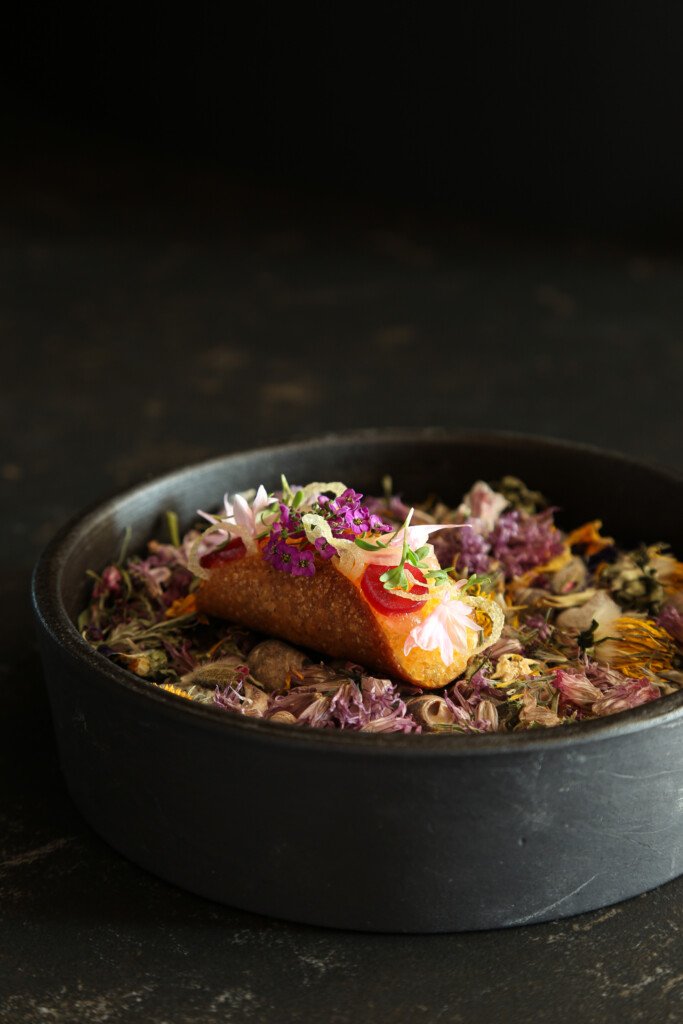
How you turn it into a dish, how you create flavours and combinations – that is what matters most. My kitchen is based on what surrounds me. I live, in my opinion, in one of the most beautiful places in the world. I follow seasons, even micro seasons. Over the last ten years, we have worked a lot on foraging and preserving. But these elements are more like a perfume, something that gives identity and separates my dishes from others.
You can see where we are, the scenery, the fjords, the coastline, and this inspires me deeply. Now we have more pride and confidence in using what we have; I’m not afraid to serve something you might never eat in London or Paris, but it’s ours.
Before, we even imported fish from France, despite having fish here. But then I must thank the Nordic movement – Noma, Klaus Meyer- for pushing us to realise that what we have is not inferior. We just need to explore it more. I am not cooking like Noma, but they gave me the confidence, especially in the early 2000s, to move away from classical thinking. Now we are more confident in our produce and our style. We are not restricted by how a dish should look.
Stavanger is not usually the first-place people think of for global gastronomy. What does it mean to build a restaurant like RE-NAA here- now a three-star destination?
When we opened 15 years ago, there was no Michelin Guide in Norway. Only local guides and newspapers. But from the beginning, we wanted to create a destination- a food destination. I never saw boundaries. I didn’t worry about location.
Stavanger is small, yes. Not Paris, not London. But it’s a business hub, especially for the oil industry, so there has always been a solid food scene, mainly for locals. That allowed us to grow and establish ourselves.
My goal was never to get Michelin stars. There were no guides anyway. And that’s important- your goal should be to cook as well as you can. I’ve never cooked for Michelin, even now. That’s why it always surprises me. I always thought they were looking for something different from what I do. My confidence in that sense was never strong, but I am confident that we are doing good work. Now we have three stars, so it’s okay.
How did RE-NAA evolve over the years?
Many things, including my cooking. I trained in a classical French style for about ten years. Then I went to New York and came back with new ideas and new products. It was the late 90s, still early in that sense. New York was a melting pot- very inspiring.
Where did you work in New York?
At Park Avenue Café- it’s no longer there. It was near Daniel, on the Upper East Side. It was a very creative kitchen. For me, as a Norwegian cook at the time, it was the first time seeing ingredients like yuzu juice, bok choy, and many others. Things we simply didn’t have in Norway. It opened my mind.
Did three Michelin stars change you?
No, it hasn’t really changed me. There is more pressure now, yes, I can feel it. But it hasn’t changed how I think. I never expected even one star, then two, and three was completely unimaginable. And then, suddenly, it happened. It puts you in a different league, but personally, I feel the same. Maybe even calmer.
Before, we even imported fish from France, despite having fish here. I must thank the Nordic movement, Noma, Klaus Meyer, for showing us that what we have is not inferior, and for giving me the confidence in the early 2000s to move away from classical thinking.
What are your biggest challenges now?
There is more pressure. And like many others, we feel it. One of the main challenges is having enough guests, especially in the winter season. Summer is busy, everything works well, but winter needs more consistency.
There is also the financial aspect. The price of produce has increased significantly. Before, our ingredients were much cheaper compared to places like Paris or Madrid, but now we compete on the same level. Even local products have become more expensive. So balancing everything while keeping the restaurant accessible for Norwegians is not easy. People here are careful with spending, so this is probably the biggest challenge.
When you see a beautiful ingredient, what is your instinct?
The less I do, the better. If I see a perfect ingredient, I will never change it. I will add my touch, but I won’t transform it into something else. I cook very naturally.
Does the New Nordic movement influence you?
Not directly. I was cooking long before it happened. The way I cook has not changed that much. What has changed is technique and execution. We are sharper now. But in terms of flavour, I don’t think we are necessarily better than before. Flavour is personal. You cannot learn it in the same way.
Do you think the New Nordic movement is still relevant?
As a concept, maybe not, but its impact is permanent. The knowledge and the way we cook have changed forever, and that will not go back. I think the movement as a defined idea is over, but many great restaurants came out of it, and they are all different. So its influence remains, just in a different form.
What is the future for you and RE-NAA?
It’s a difficult question. I hope to keep RE-NAA as stable as possible and continue building it as a true destination, bringing people to Stavanger. I also want to grow other projects – my bistro, my bakery. I have always loved all kinds of food, not just high-end cuisine. As long as it is done well, with heart, that is what matters.