There are people who eat well, and there are people who spend a lifetime trying to understand why something tastes extraordinary. Vedat Milor, the Turkish food and wine critic and founder of Gastromondiale, an influential website devoted to independent restaurant criticism, belongs firmly to the latter.
Born and raised in Istanbul, his fascination with food stretches back to childhood, although, as he likes to joke, he was a remarkably skinny boy with little appetite. Growing up surrounded by exceptional produce from his family’s farm and a grandmother who cooked with instinct rather than recipes, he absorbed flavours long before he realised they would shape the rest of his life.
What followed was hardly a conventional path into gastronomy. A PhD in sociology at UC Berkeley, a law degree from Stanford, years in academia and economics, and a lifelong habit of asking questions eventually found their way to the dining table. For Milor, food has never been only about pleasure. It is a way of understanding culture, history, geography and human behaviour. Every remarkable ingredient raises another question, every memorable meal opens another door.
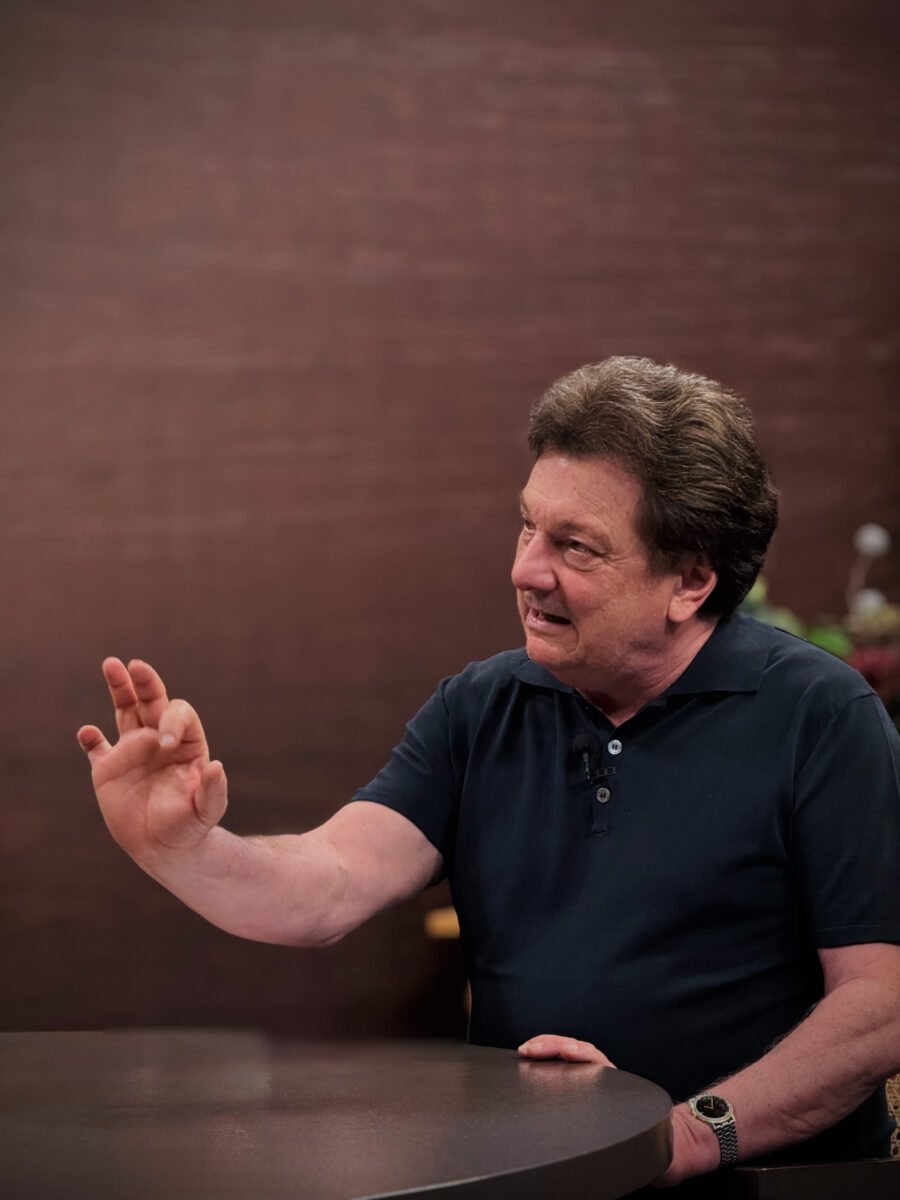
Over the past four decades, he has travelled relentlessly in search of exceptional ingredients, great wines and extraordinary restaurants. He has written extensively on gastronomy, reviewed hundreds of restaurants and remains one of most respected food critics in Turkey and beyond. Yet what makes speaking with him so compelling is not simply the breadth of his knowledge, but his enduring curiosity. Even today, he still takes notes, still asks chefs endless questions and still believes that claiming to be an authority on gastronomy would be, in his words, “rather pretentious.”
Our conversation ranged from forgotten ingredients and the changing philosophy of fine dining to Burgundy, Turkish cuisine and the restaurants that continue to excite him. But above all, it became a discussion about curiosity – the one ingredient that, according to Vedat Milor, should never disappear.
Aistė: First of all, Vedat, thank you for agreeing to this interview. Your blog was one of the first I read, and I learned so much from you. You have always been an inspiration and an example to me. Where did your interest in gastronomy come from? What is your background, and how did you fall in love with exceptional ingredients?
Vedat Milor: Probably partly from childhood. You know, I grew up with my grandparents, and we had access to very good ingredients because I was born and raised in Turkey. At the time, people didn’t call them “natural ingredients,” but they were pure, really good products coming from villages. In Istanbul, most people originally came from somewhere else. If you go back three generations, it’s actually difficult to find someone whose whole family was born in Istanbul. My grandparents were from Konya, and Konya had wonderful ingredients – amazing mushrooms, excellent meat and very special vegetables.
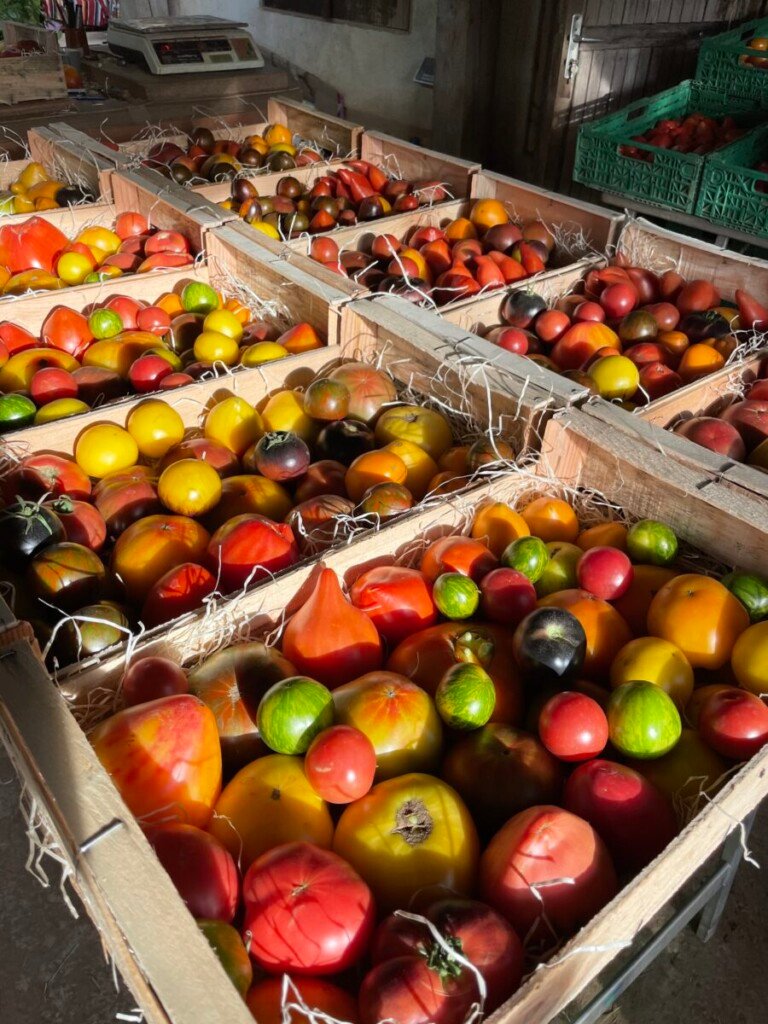
My grandmother, for example, used to make a cheese from yogurt without using any yeast. Years later I saw something similar in Italy with goat cheese, where they said, “We’re the only ones who make it.” It requires a particular hand-pulled technique. So we had many things like that around us. At the time, though, I wasn’t really a child with a big appetite. I saw all these things, but I didn’t fully appreciate them. Gradually, I became interested in understanding why one tomato could be unbelievable while another one wasn’t nearly as good. I started asking those kinds of questions.
Maybe it’s part of my academic training. I’ve always been predisposed to go deeper into the questions that interested me. That’s probably one of the reasons I pursued a PhD. I wanted to understand society and culture more deeply – that’s why I studied sociology. So I kept asking: Why is this more delicious? Why are we losing it? At the same time, I started travelling in Europe. It began during high school and continued through university, and that’s when I discovered wine. I realised there were wines far superior to Turkish wines. At quite a young age I became interested in Loire Valley and Jura wines – long before they became fashionable, as they are today.
Aistė: How many years ago was that? Thirty? Forty?
Vedat Milor: I’d say probably around forty years ago. So I developed this interest, and I also became fascinated by food and wine pairing. In a way, my student budget actually helped. When I was living in Paris doing research – part of my dissertation was about France in the post-war period, about economic planning and how the country tried to rebuild after the Second World War – I didn’t have much money. Because of that, I mostly ate in bistros. That’s where I really began discovering terroir and good ingredients. I still remember those days. In 1986, before the euro, even three-star restaurants could sometimes be surprisingly affordable.
The process of discovery is sometimes even more important than the food itself.
For example, at Le Jamin there was a lunch dégustation menu that cost the equivalent of about sixteen euros. Sixteen! Three courses, with rustic dishes like mijotés – but absolutely amazing. So I started discovering all these things. For me, it was also a form of relaxation. I was working hard, trying to finish my PhD, constantly thinking. Going out for lunch, drinking half a bottle of wine, enjoying a good meal – it became my reward. Every Monday I would tell myself: I’ve worked hard, so today I’ll treat myself. And once it starts, it develops very quickly. One interesting wine leads to another. One restaurant leads to another.
So I would say it probably started with my family, although nobody in my family were restaurateurs. I never cooked professionally – or even much at all. I was an only child, so I didn’t spend much time in the kitchen. But I do remember certain things. For example, my grandfather had a farm with chickens, so we always ate farm eggs. One day they ran out and bought supermarket eggs instead. I simply refused to eat them. The same happened when my grandmother once replaced butter with margarine in her cooking. I noticed immediately. Those experiences taught me something very important: you cannot deceive your palate.
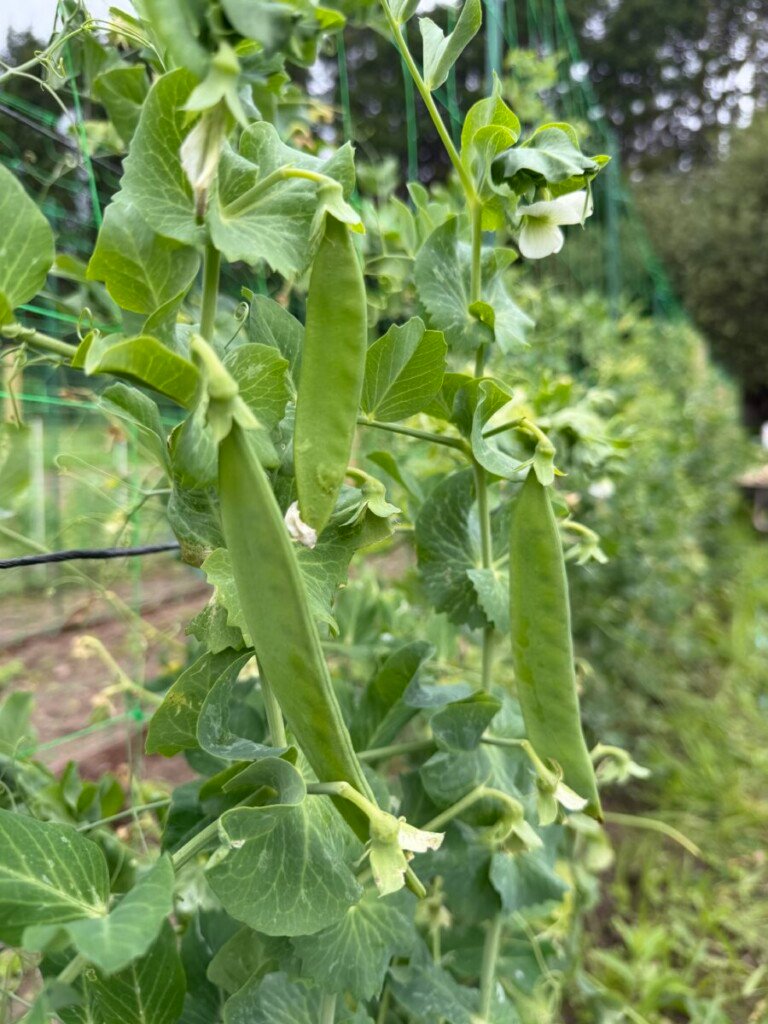
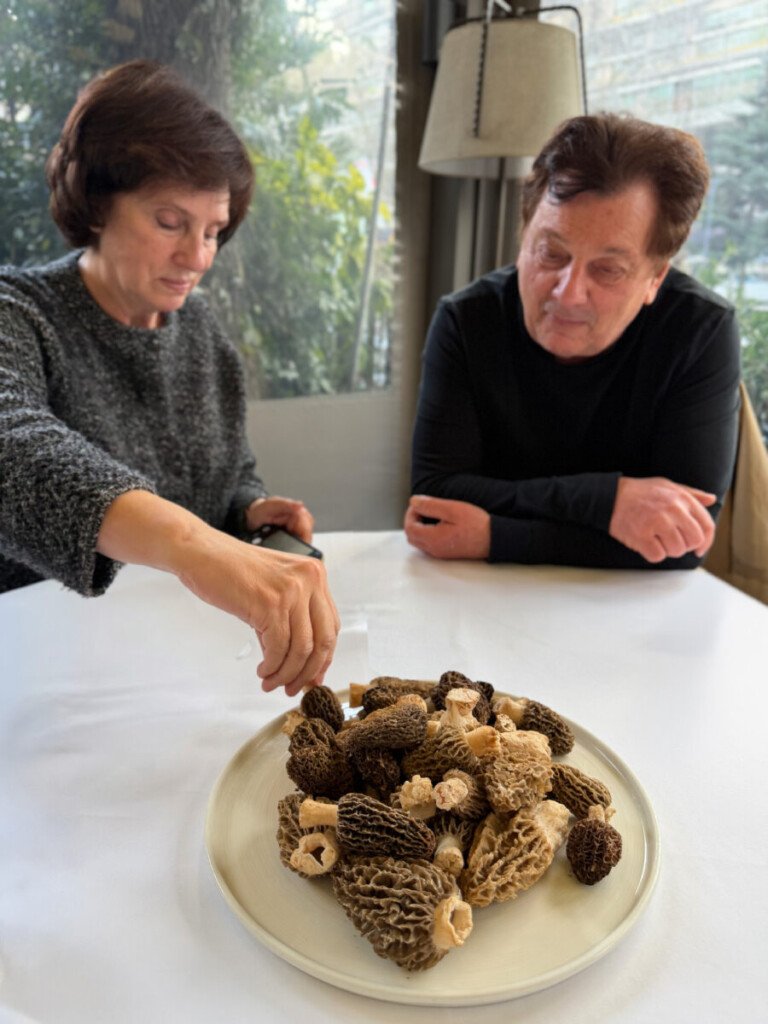
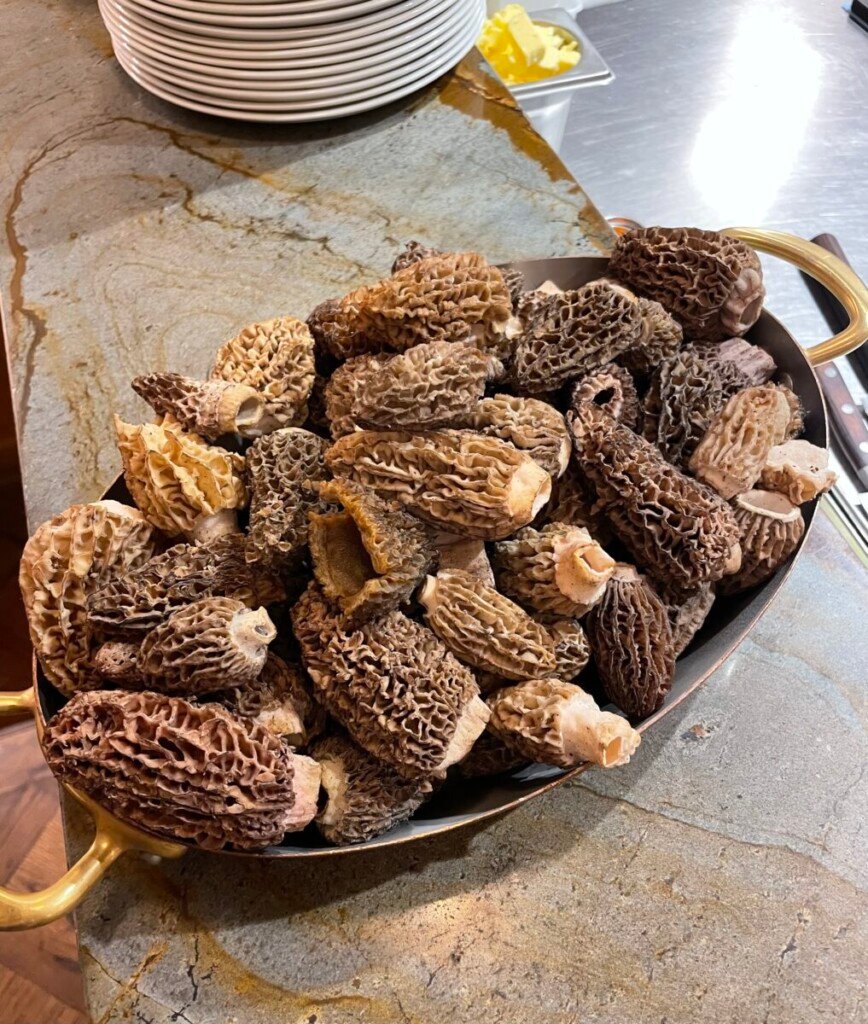
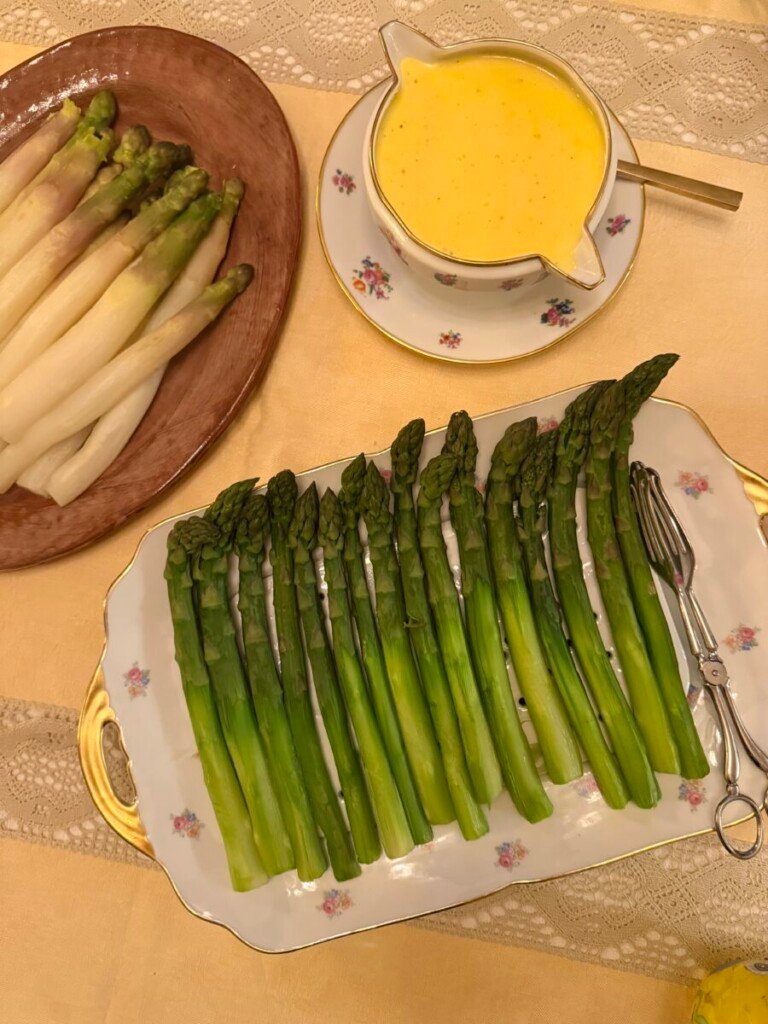
I wasn’t a child with a huge appetite, but somehow all those experiences stayed with me. Then I discovered French cuisine. That was a huge revelation. Suddenly there was wine and food together, and my tendency to ask questions created a kind of cascade. First I’d ask, Why are these peas so extraordinary? Then someone would say, Have you tried this particular variety of asparagus in season? I’d reply, No. Then I’d discover white asparagus in Germany with hollandaise sauce. One thing led to another. Then you start asking why certain ingredients belong together. Why do sweetbreads pair so beautifully with morel mushrooms and asparagus? What’s the theory behind it?
I gradually understood that combining different elements could create something greater – that one plus one shouldn’t simply equal two. That’s how it all started. And throughout all of it, interesting wine was always there alongside the food.
Aistė: That partly answers my next question. What, in your opinion, defines a truly exceptional ingredient? What are you looking for when you taste something for the first time?
Vedat Milor: Well, perhaps not necessarily the first time anymore. But whenever I travel, or whenever I discover a restaurant or a dish, I’m still constantly learning. For example, about a month ago I was in Puglia. We went to Pietro Zito’s restaurant, where I tasted an ingredient that resembles cucumber, but isn’t cucumber. I wrote down its name because I became fascinated by it. It had so much flavour. Later I discovered chefs had also started using it in New York. Whenever I visit a region, my very first question is always the same: What is unique to this place? Today it’s easy. With the internet – and now AI – you can find a lot of information instantly.
But when I started, in the mid-1980s, that wasn’t possible. Back then I always tried to find the right people. Often the best people were sommeliers, winemakers or chefs. In Europe, if they see that you’re genuinely curious and sincerely trying to learn, they’re incredibly generous with their knowledge. I’m also very comfortable asking questions. Perhaps that’s because I later became a professor. I’m never shy about asking. And people usually enjoy answering. I take notes. I ask them to write things down for me. I still do it today. For example, I once discovered how wonderfully Lambrusco works with certain pizzas, charcuterie, mortadella with pistachios and stracciatella sandwiches.
I remember being in Rome at a very good restaurant run by a woman chef who has since become quite well known. We started talking about Lambrusco. She knew a tremendous amount about it. I asked, “Which producers are your favourites?” She wrote down five names. When I got home, I searched for every one of them. Some no longer exist, but I found most of them. That’s how I learn. There is never an end to knowledge. I do exactly the same with ingredients. Whenever I encounter something wonderful, I ask: “What do you eat? What do you recommend? What do you like?” I did that before the internet, and I still do it today. Always ask questions. Be curious.
Because learning everything would take a thousand years – it’s impossible. But you should never close your windows. Even in academia, curiosity is everything.
Aistė: At what point do you think technique stops enhancing an ingredient and starts hiding a mediocre product? Because sometimes I also see the opposite – wonderful ingredients that aren’t presented in the best possible way because the technique isn’t there.
Vedat Milor: Actually, that’s what I see most often in highly ranked Michelin restaurants. Most of these chefs buy excellent ingredients. Sometimes they aren’t seasonal enough, but generally the quality is good. One example is a chef I like very much in Asturias, at Casa Marcial. Not the last time I visited, but the visit before that – it was April, the best season for those incredible teardrop peas from Getaria.
I once went into the fields with the farmer who supplies them. We simply picked and ate them. They were extraordinary. The combination of salinity and sweetness was almost like drinking a great wine. But then the chef transformed them using modern techniques. I asked him: “Why did you do that?” He replied that this is what people expect at his level. Perhaps they’re trying to be creative. I understand that. Maybe it’s also influenced by Michelin expectations. But I see this happening quite often – great ingredients being altered unnecessarily. I’ll probably say something provocative.
I’ve never really liked the way many Scandinavian restaurants cook fish – even some of the World’s 50 Best restaurants. They’re influenced by Japanese omakase techniques and often use steam ovens or other methods that create an extremely soft texture. For me, something is missing. Near the bone, fish has wonderful gelatin and collagen – that’s where much of the flavour is. When everything becomes uniformly soft, you lose part of its nature. It’s similar to pork belly. Yes, collagen is there, but something else disappears. Perhaps it’s simply a trend toward softer textures. But we still have our teeth. I enjoy experiencing different textures.
Today restaurants are doing ten times too much storytelling.
That’s one of the reasons I love dishes like tête de veau in France. One dish can give you six or seven completely different textures. So you have all the collagen, but it’s also balanced by the sauce, the vinegar and the capers. That’s what I see being lost quite often. When chefs play too much with texture, they move away from the natural character of the ingredient. Another problem is that when I started dining out, many dishes were designed for two people. You would have a beautiful whole fish cooked for two, or a whole duck for two. People don’t do that anymore. Nowadays, you often get small, pre-cut portions – little squares on a large plate.
That can work with certain ingredients. If you have an excellent, very fresh scallop presented in the best possible way, that’s fine. I can eat one, three or six. But with a duck, for example, if you receive only a small pre-cut piece, it isn’t the same as cooking and serving it on the bone. So my concern is that chefs may be starting with good ingredients, but then transforming their texture too much or applying too many modern techniques, which changes their nature. The challenge is to preserve the texture and collagen, but then enhance the ingredient through thoughtful combinations and good sauces.
That’s something I don’t always understand today. Chefs say that sauce is extremely important, but nine times out of ten, it doesn’t really deliver. French cuisine did this very well when I started dining out. For example, you might have a perfect vegetable, and they would cook it with a few small pieces of bacon. That gives it another dimension. They do that with many vegetables. They introduce some collagen or richness, and it becomes exciting. These are the kinds of questions I ask myself. First: has the integrity of the ingredient been preserved? And then: have the ingredients been combined in a way that creates something transcendent?
Aistė: Would you say you’re an ingredient purist?
Vedat Milor: Not one hundred per cent. Of course, I give great importance to ingredients. But at the same time, there are dishes where, even if you don’t have the most exceptional products, the way you put everything together can still create something very tasty. Take a restaurant like Sacha, for example. Honestly, it doesn’t necessarily work with extraordinary ingredients, but there is always some magic in the cooking. There’s a dish made with different peppers, eggs and zucchini. It is called “pistou”. In Turkey, there are several dishes like that.
Or take caponata. If you use a very good vinegar, it can be extremely tasty, even though today it’s very difficult to find truly excellent aubergines. So there are ways to compensate. I’m also very curious about the oil a restaurant uses. I accept that, in the modern world, you can’t always get the very best ingredients. Sometimes you have to settle for second best. But the oil is extremely important. Whenever I return to Turkey, I call people and turn over every stone to find good vinegar, good oil and good butter. Those three things are essential. At the moment, I have some amazing butter from Antalya. They age it inside a goat’s intestine, which gives it a slight flavour.
Extremely fresh goat’s butter is also very good. Whenever I go to Etxebarri, I always ask them, “Why don’t you bring it?” It’s one of the things I love most and always look forward to. The last time I went, it wasn’t ready. Before that, the director and sommelier Mohamed told me, “People don’t eat it, so they send it back.” At any rate, the category of the oil – whether it’s for cooking or finishing – is very important to me. Of course, the ingredient itself still matters. Sometimes, though, when something is very good, I become almost irrationally emotional.
The last time this happened was in Paris, on 9 July. I used to like Yam’Tcha, and the chef has now opened a bistro. We went there, and I think the last dish was lobster with nectarine. The nectarine was extraordinary. My wife Linda didn’t react, and I became very angry! Because for me, when something is that good, you have to share the excitement.
Aistė: Yes, exactly. Food brings people together. Each meal is a unique moment that can’t be repeated. No brand or luxury product – whether it’s a bag, a car or anything else – can reproduce that. A simple meal on a beach, or a meal in Paris shared with your family or your partner, can be extraordinary. You’ve written that some of the greatest restaurants you visited in the past had access to ingredients that many contemporary restaurants no longer use. Could you elaborate on that?
Vedat Milor: In the past, perhaps the key technique was roasting. Many chefs were great roasters. One of the very best was Alain Passard at Arpège. I still remember eating wild boar, venison and whole roasted duck there. They treated the ingredient as a whole. Later, chefs started using different techniques and smaller portions. Michelin almost created the idea that if we can’t measure quality, we can at least measure quantity – the number of courses in a meal.
Beyond that, there has also been a general decline in rural life and in the countryside in many countries. For example, some places now import snails from Turkey because they no longer have enough locally. It has also become very difficult to find crayfish.
Aistė: I’ve heard that Turkey also has very good bluefin tuna, but that it’s mostly exported.
Vedat Milor: What we eat locally is metallic, mushy and horrible. The best products are sent abroad. So for a combination of social and historical reasons, there is simply less available. We used to take those great ingredients for granted. Today, of course, you don’t find the same things. Fish and seafood are the same, and they’ve also become extremely expensive.
There is no longer the same reliable supply. You can’t always obtain the same level of quality across everything. There is simply less of it. For example, I love quisquillas. When I go to Andalusia, I usually try to order twelve of them raw and twelve a la plancha. They are extraordinary and, by the way, they go very well with Champagne. But they are becoming increasingly rare. Langoustines are another example.
The first time I went to Donostia, in 1998, you could find langoustines everywhere. The tapas bars were also much better then. The pintxos were far more interesting. Today, it’s difficult even to find percebes. I even saw camarones in Brittany in the 1980s. But now, who is going to risk their life gathering percebes? It’s extremely dangerous, and what price would they have to sell them for?
So I think we have to recognise that it isn’t only the restaurants’ fault. It’s a combination of Michelin criteria, quantity of courses being valued over quality, the disappearance of certain ingredients and the extraordinary prices of others. All of these factors make it extremely difficult to create a style of cuisine based entirely on the very best ingredients. Perhaps it simply isn’t realistic anymore.
Aistė: You’ve already touched on this subject, but what do you think about tasting menus being everywhere today?
When a wine is that good, I don’t think food and wine pairing is important.
Vedat Milor: Well, obviously, in Japan the kaiseki meal has a tradition and a theory behind it. It’s historically grounded. I think it’s extremely difficult to create a good tasting menu. Of course, it’s easier for the chef. It’s a cost-control mechanism, among other things. And perhaps it can work, if you accept certain trade-offs. But I think the most successful tasting menus aren’t based on twelve, twenty or thirty different things. They’re based on four or five ideas that can create a more unified menu. Too often, I see repetition in long tasting menus. There are too many redundancies.
I’m also against the fact that, at the end, they give you far too many sweets. I don’t think it’s very well thought out. More often than not, I don’t find tasting menus particularly well conceived. When I eat a kaiseki meal in Japan, I may not always go to heaven or become extremely excited by it. Sometimes I like it more than others. But I can understand why each element is prepared and served in a particular way. There is a clear logic behind it. In the West, however, it can sometimes feel as though a famous celebrity chef has several people in the kitchen, each making one dish, and then they simply put everything together and try to impress you again and again.
But there are menus that are very well conceived. For example, Le Gabriel, Plenitude and Virtus in Paris are all well conceived. To me, Etxebarri too is well conceived but I prefer the old days, when it was more à la carte and generous portions. But the tasting menu format still works because the ingredients he uses can be served in smaller portions, while the steak at the end is substantial.
Aistė: It has a very good progression of lighter dishes.
Vedat Milor: Exactly. The progression is good. That’s what I look for: progression. I probably shouldn’t name them, but recently I visited two very highly regarded Madrid restaurants – not DiverXO, because that’s something different and we love DiverXO. Both Linda and I were very critical in these Michelin star restaurants. By the end, we found there was too much repetition and almost an obsession with certain ingredients. Perhaps there was also too much umami. Umami is a wonderful thing, but like everything else in life, excess isn’t enjoyable. There was simply too much of it. By the end of both meals, we didn’t feel good.
Aistė: It sometimes feels as though Western chefs take a concept from Japan – Japan has been such a major trend in the West in recent years – and then overuse it. They forget their own style and identity.
Vedat Milor: There is one chef in Spain whom I really like, and his menu has around twelve courses. There are always exceptions, which is why I try to be careful with generalisations. I’ve been there four times because I really like the chef at Bagá.
Aistė: I love Bagá. He’s excellent and still so underrated.
Vedat Milor: Yes, and I hope it stays that way. His idea is to serve small portions, but the progression is so good and the menu works beautifully as a whole. It’s deceptively minimalist because he has clearly thought deeply about every element. By the end, you understand that he’s a very intelligent person with very good taste.
Aistė: That’s quite a rare combination, isn’t it?
Vedat Milor: Yes, as it is in every area of life.
Aistė: What do you think contemporary fine dining has genuinely improved over the course of your dining career?
Vedat Milor: What has it improved? It has definitely improved in several areas that I appreciate very much. Here in Turkey, I’m lucky because we still have access to fresh herbs and good vegetables. Chefs are now using more plant-based ingredients and making them more central to a dish. Just before coming here, I was talking with a friend. He was showing me a beautiful retreat-style place with bungalows near Antalya – or rather, slightly outside Antalya, in a very beautiful region. He showed me a lahmacun, which is a little like a Turkish pizza. He said, “This was amazing.” I asked, “What made it so amazing? How good can a lahmacun really be?”
He explained that it contained many different herbs, all grown in their own garden. You have lamb, which can be quite fatty and rich, but then all these herbs make it appetising and fresh. They balance the richness of the meat. Compared with when I started dining out, I think this is one of the positive influences of East Asian and wider Asian cuisines. There are now so many new spices and herbs available. When used judiciously, they can be wonderful. We’re seeing more refreshing elements in cooking. I also think people understand wine better today. I don’t usually choose wine pairings because I prefer to order a bottle and then perhaps have a glass of red wine with the main protein course.
Chefs say that sauce is extremely important, but nine times out of ten, it doesn’t really deliver.
But sommeliers now know more about wine, and sometimes they combine food intelligently with sake or other drinks. When I started, many people – even in France – knew very little about Loire Valley wines. Today, if you can’t decide what wine to order, you can often choose a good Chenin Blanc. It works with so many kinds of food. In the past, the focus was mainly on Bordeaux and, occasionally, Burgundy. Now there is much more diversity. Unlike some people, I often welcome the use of spices or Japanese citrus fruits. They can be wonderful. French cuisine is so rich, self-confident and deeply rooted in history that it can integrate new influences without losing its identity.
There’s no reason to become angry about that. Japanese cuisine is similar. The Japanese can integrate butter, for example, without losing their identity. That kind of cross-pollination is generally a good thing. And it’s possible to do it intelligently. If Alain Chapel had had access to the same ingredients we have today, I don’t think he would have rejected all of them. He probably would have used a few. I never met Fernand Point, of course, but I imagine he would also have adopted certain things if they improved the food. Greater access to herbs and other ingredients can be very positive. What I dislike is when it becomes a form of brainwashing, a trend or almost a fetish.
But when these ingredients are used carefully, they give us an opportunity to make cooking more dimensional and, in some ways, more seasonal, because many of these products are highly seasonal. Scandinavian countries didn’t always have access to fresh ingredients throughout the year, so they had to preserve and ferment them. That helped people rediscover something very important. The funny thing is that in Turkey we’ve always loved fermented ingredients. My favourite soup, for example, is tarhana çorbası. Tarhana is made from yogurt, tomatoes, peppers and other ingredients. It can be used fresh or fermented.
I’ve always loved it, but people didn’t necessarily recognise how complex it could be. The same is true of pickles. Traditionally, almost every Turkish household had pickles. Today we understand more about how pickles can be combined with other foods, including dairy products. Turkish people love yogurt, but unfortunately we’ve lost much of our traditional yogurt. Supermarkets are now filled with horrible, industrial yogurt. But I still have access to very honest, old-fashioned yogurt. I bring it to my home and use it not only on its own, but also in desserts, food and sauces. Turkish cooks, however, would often never think to use it in a different way. That’s really my point.
People grow up believing that yogurt is eaten only with certain dishes. They become very rigid. If someone tries to do something different, that person is almost publicly attacked. People are figuratively lynched, so eventually they give up. There’s no incentive to experiment. But some foreign chefs understand the potential. They take an ingredient or an idea and ask: Why can’t I use it with something else? Take sumac, for example. In Marseille, I saw it used in a paella-style dish with fish and mackerel. I think the chef used sumac. If I told many Turkish people that sumac worked well in that dish, they would say: “You’re crazy. That’s almost a sin. Don’t do that.”
People within a culture can be unable to imagine an ingredient outside its traditional context. But someone from outside that culture, who didn’t grow up with sumac, can look at it objectively and understand its potential. So I think cross-pollination is one of the best things about modern cooking. It allows good chefs to test the potential of ingredients. Let me give a completely different example. Imagine women in a conservative society who aren’t permitted to attend school. You have an enormous amount of human capital locked away. They are unable to show their potential or creativity. Then, if you introduce a modern education system, the entire country can develop.
You suddenly benefit from all the talent that had previously been suppressed. You may discover scientists, chefs and talented people in every field. Before that, nobody had recognised their potential. They were restricted to a very limited role. National cuisines can be similar. A great deal of potential remains locked inside them. Cross-pollination can release that potential. So I would say that this is one of the genuinely positive developments of modern cuisine. There are many good things as well. I don’t know if I answered the question.
When chefs play too much with texture, they move away from the natural character of the ingredient.
Aistė: That was very clear. Thank you. I hadn’t thought about it that way, so that’s another thing I’ve learned from you today.
Vedat Milor: In sociology, there’s this idea of questioning or debunking what appears to be true. You take something you believe to be a fact and then develop an alternative hypothesis. Sometimes, when I was teaching, I would give students a factual story and ask them to come up with three different theories to explain the same phenomenon. Then I would present my own hypothesis, challenge it and try to disprove it myself before considering another one. It’s similar in cuisine: trying new things is good for the mind. It prevents you from becoming narrow-minded.
Aistė: Let’s talk a little about Turkey. I learned so much about Turkish cuisine thanks to you. Thank you for the wonderful addresses you recommended for my last trip. I’m still dreaming of going back to Fauna, for example. There was also another restaurant in the city serving traditional Turkish cuisine. It was amazing, but I can’t remember the name.
Vedat Milor: Was it Seraf? Hünkar? Sahil?
Aistė: Sahil, yes. It was fantastic. I fell in love with all those restaurants because, before visiting, I had this image of Turkish cuisine as mostly kebabs. But it’s so much richer than that. Could you name one or a few restaurants or chefs in Turkey who deserve much more recognition, and explain why?
Vedat Milor: One is definitely Fauna, which you’ve already visited. The chef is extremely meticulous and very focused on ingredients. He doesn’t overreach. He understands what he does well, and that’s why it works. Another is a place called Nazende. The chef is Uluç Bey -He’s a self-made man, and he changes his menu according to both quality and seasonality. Again, he’s very conscious of ingredients. I know him well, and he makes an enormous effort to buy the best products in season. The cooking is relatively simple, but very tasty.
There’s also a restaurant in Antalya. The chef’s name is Tuncay, and the restaurant is called Cayote. It’s slightly more modern cooking, but very good. None of these restaurants has a Michelin star, which is why I’m deliberately mentioning them. Another very good restaurant in Antalya is 7 Mehmet – “Yedi Mehmet” in Turkish, because yedi means seven. The restaurant itself is quite large, so perhaps it’s better to reserve a table upstairs or in a quieter area. But it’s an excellent Mediterranean restaurant.

Aiste: If you had to choose your favourite ingredients without thinking too much, what would they be?
I probably couldn’t live without onions and garlic.I also love corn and cucumbers very much. My daughter and I were recently talking about that. So: corn, cucumber, onion and garlic. Those are probably the main ones.
Aistė: They’re quite humble ingredients.
Vedat Milor: Yes, although I also like Alba truffles.
Aistė: I wasn’t expecting you to say only Alba truffles or caviar.
Vedat Milor: I love good caviar too. When I was seven years old, I remember eating caviar from an albino sturgeon fish in Turkey. But that kind of caviar doesn’t exist there anymore.
Aistė: Perhaps it doesn’t exist anywhere in the world now. Everything seems to be produced in the same places.
Vedat Milor: Yes. But as with everything, there is very average caviar and there is extraordinary caviar.
Aistė: And what about countries or destinations? Which are your favourites? For food, I mean.
Vedat Milor: Of the places I know, for ingredient-focused cuisine, I particularly like Spain. In northern Spain, I love the entire stretch from Donostia through Santander and Asturias to Galicia. I also like Andalusia and Catalonia very much. In central Spain, you have other specialities, including excellent meat. So Spain is one of my favourites. I still love France for its technique, its sauces and, sometimes, some of the best offal in the world – les abats. Then, of course, there are the wines and everything surrounding the cuisine. I still love classical French cooking very much. In Germany, I enjoy restaurants such as Waldhotel Sonnora and Christian Bau. I also like Piemontese cuisine in Italy. For pasta dishes Piedmont and Emilia Romagna are the two best in Italy.
Michelin almost created the idea that if we can’t measure quality, we can at least measure quantity – the number of courses in a meal.
As for Japan, I find it difficult to comment because I don’t think I know enough. I’ve visited Japan three times, and I certainly love omakase meals. It’s one of the styles of dining I enjoy most in life. But Japanese cuisine is so deep and has so many variations that I don’t feel competent enough to make broad statements about it. Perhaps I focus too much on sushi and great omakase meals because that’s what I naturally look for. You like them too, I believe?
Aistė: Yes, I do.
Vedat Milor:In Turkey, I’m especially interested in places close to the Syrian and Iraqi borders – Antakya, Antep, Urfa, Mardin and Hatay. In Antep, particularly, I mean home cooking rather than the restaurants. That cuisine is closely connected to the cooking of Aleppo. I would say its origins are largely in Aleppo, just south of Turkey. It’s a very powerful cuisine. Many dishes rely on good tomato paste, pepper paste, different spices and pomegranate molasses. Even the small dishes and appetisers are extremely sophisticated. It’s a cuisine that can be difficult to find in its authentic form. But in terms of character, richness, multidimensionality and sheer flavour, I would put it on the same level as the other great cuisines.
Aistė: I have two final questions. First, a quick question about wine. What are your favourite wines?
Vedat Milor: I love wines from many different regions. But the first truly great wine I drank was a 1985 red Burgundy from Henri Jayer. I didn’t know at the time that it was famous. That wine represented a real rupture in my life. Since then, I’ve been very particular about great Burgundy. Burgundy can be both incredibly disappointing and completely ecstatic, because some of the worst winemakers also come from Burgundy.
But when Burgundy is great, it’s extraordinary. Even two bottles of the same wine can be completely different. Last year, for example, I had two bottles of 1990 Domaine Dujac Clos de la Roche. One bottle smelled like a dirty barnyard. The other took us to heaven. So even with the same wine, you can have enormous bottle variation. With white wines, it’s probably a close call between white Burgundy and some of the finest Mosel Rieslings. Those are wines I enjoy very much. I think certain categories are quite difficult for people who are new to wine. It may be easier to understand the terroir or quality differences in Burgundy and Bordeaux. Of course I am also a fan of Northern syrah and great Barolo wines.
It’s harder to distinguish quality in Champagne, Riesling and Sherry – although Sherry is technically a fortified wine. Those three categories take longer to understand. I also enjoy slightly oxidative white wines, but it took me a long time to appreciate, evaluate and understand them. I still have much more to learn about Sherry. I certainly don’t consider myself an authority, but at least now I can differentiate between different styles and make some judgments. I drink many different things. Today, for example, with meat, I might drink a Cerasuolo.

But if you ask about the very top wines, then, of course, if you can get your hands on a bottle from Domaine d’Auvenay, Leroy, DRC or one of the other great producers, that’s different. Arnaud Ente and Coche Dury also make extraordinary wines. If the bottle is in perfect condition, it gives you a kind of pleasure that is difficult to describe or communicate to other people. I call it ecstatic. It takes you to heaven. Sometimes I even use the word “orgasmic.” But it’s rare. It doesn’t happen often. When a wine is that good, I don’t think food and wine pairing is important. In fact, the food and wine can detract from each other. When the wine is extraordinary, you almost want to dwell inside it.
Perhaps you need only a little grissini – nothing more. You simply want to meditate with the wine rather than trying to match it with food.
Aistė: Is there one single greatest meal you’ve ever had – one you still think about?
Vedat Milor: Perhaps this wasn’t actually the best meal of my life, but it was my first experience of a truly great meal. Many years ago, I had just arrived in the United States for graduate school. Later, I had many great meals while studying there. But before that, when I travelled around Europe in high school, I was staying in student camps with other young people. Of course, I never had a great restaurant meal. I knew Turkish cuisine, but not much beyond that. Then I came to the United States to begin my PhD. In Berkeley, the best restaurant was Chez Panisse, Alice Waters’ restaurant. Sometime in early November, I think, they announced a special dinner. They said Jacques Pépin was coming.
Somehow, I found myself at that dinner. It was a revelation. There were three courses, in the Chez Panisse style. The first may have been some kind of salad – perhaps a raw fish with frisee salad. I don’t remember exactly. But the second course, prepared by Jacques Pépin, was brioche with white truffle – Alba truffle, Tuber pico magnatum. I had never eaten Alba truffle. I didn’t even know what truffle was. I had never tasted anything like it in my life. It was extraordinary. I didn’t know how to understand it. It was almost like seeing a Martian arrive and begin speaking to people in a science-fiction film. It was something completely outside my experience.
When I heard what the main course was going to be, I was disappointed. It was canard à l’orange. I had eaten duck once in Turkey, and it had been dry and tasteless. I never wanted to eat it again. Turkish people don’t eat much game today. Perhaps earlier generations ate more of it during the Ottoman period. But this duck was completely different. It was roasted whole, with the sauce and everything surrounding it. I remember thinking: My God, what is this? I’m very particular about meat and protein. I naturally prefer vegetables, herbs, fish and shellfish. With meat, perhaps my favourite cuts are offal. Other kinds of meat have to be extremely good for me to enjoy them.
But that canard à l’orange, after the brioche with white truffle – probably with butter or perhaps truffle butter, although I don’t remember exactly – completely blew my mind. I was recently talking about this with my wife. When I first began visiting good restaurants, there was also a Frenchman called Jean-Pierre Doignon – I still remember his name – who lived in Nevada because he loved skiing. He had a restaurant called La Cheminee in North Lake Tahoe. It was very good, very classical French cooking. At that time, visiting these restaurants felt like discovering Sri Lanka for the first time or travelling to Corsica for the first time. You feel incredibly excited and happy.
The process of discovery is sometimes even more important than the food itself. I remember the anticipation of that Jacques Pépin dinner. Seeing my first great French chef and beginning to understand that kind of cuisine was extraordinary. I would love to experience something like that again. Sometimes I ask whether we’ve become too experienced or too jaded. That can be a problem. I’d like to feel that sense of discovery again. It’s almost like talking about love at first sight.
Aistė: Do you think there should be much less storytelling in restaurants?
Vedat Milor: Please emphasise that. Just let us enjoy the meal. Sometimes it feels as though someone is constantly telling you how great they are. I remember one chef in particular. He prepared a wonderful meal and then quietly left. I didn’t even know his name at first. Afterwards I told my wife: “This is a very special person. Someone truly solid and multidimensional.” Later, a friend of mine – whose brother-in-law is an architect – asked me, “Do you know who that is?” He showed me a photograph and a very thick book written by that chef. He said, “He’s an icon.” I had no idea. What impressed me most was that the chef himself never mentioned any of it.
Even when my friend talked about how famous he was, he seemed almost embarrassed.
Aistė: That’s much better. Let me discover it for myself.
Vedat Milor: Today restaurants are doing ten times too much storytelling. Far too much. Sometimes it almost feels like brainwashing. Some of this really has to stop. The French generally do less of it. Outside France, restaurants tend to do it much more. America is probably the biggest example. London as well. I’ve noticed it there too. But maybe I’m just an old-fashioned person.
Vedat Milor’s Five Restaurant Recommendations in Istanbul
FAUNA – Open only for lunch, with no printed menu. Chef İbrahim Tuna is a true craftsman whose highly personal cooking brings Italian technique together with Turkish ingredients and traditions. His sourcing is exceptionally meticulous. The house-made pasta is outstanding, but Fauna is much more than a pasta restaurant.
NAZENDE CADDE – Chef Uluç Sakarya cooks what he himself most enjoys eating and refuses to compromise on ingredients. The kitchen is equally assured with mezes, seasonal vegetables, seafood, slow-cooked meats and offal. Do not miss the lamb sweetbreads or the seasonal kid dishes.
SERAF VADI – Chef Sinem Özler presents regional Anatolian cooking rooted in traditional recipes, excellent ingredients and disciplined technique. The kitchen displays unusual precision and consistency across a broad menu, with many dishes benefiting from the wood-fired stone oven.
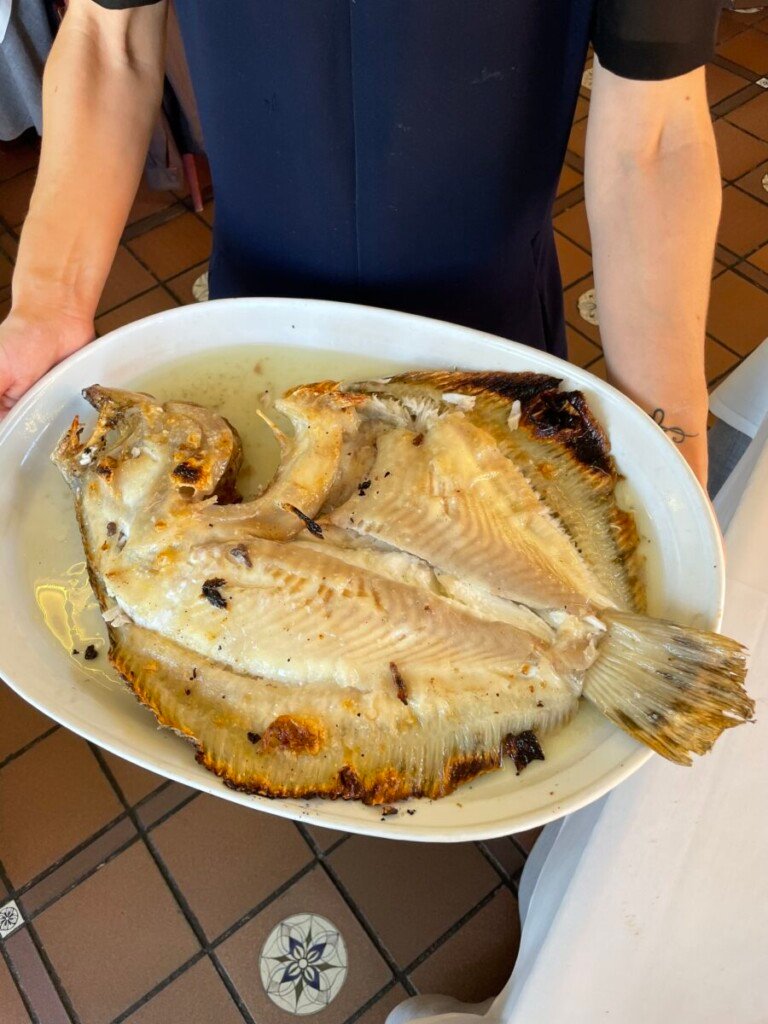
BALIKÇI KAHRAMAN – Located in Rumeli Kavağı, near the Black Sea end of the Bosphorus. It is famous for whole grilled turbot, but the lakerda, hamsi corn bread, seasonal tomato salad and other starters are equally important. Expensive, but still one of Istanbul’s great fish restaurants.
ADANA OCAKBAŞI – KURTULUŞ – My favorite kebab house in Istanbul. The meze selection is short and carefully executed; the lamb liver and sweetbreads are exceptional, and the hand-chopped Adana kebab achieves the ideal balance of lamb, seasoning and fresh tail fat. Reservations are essential.